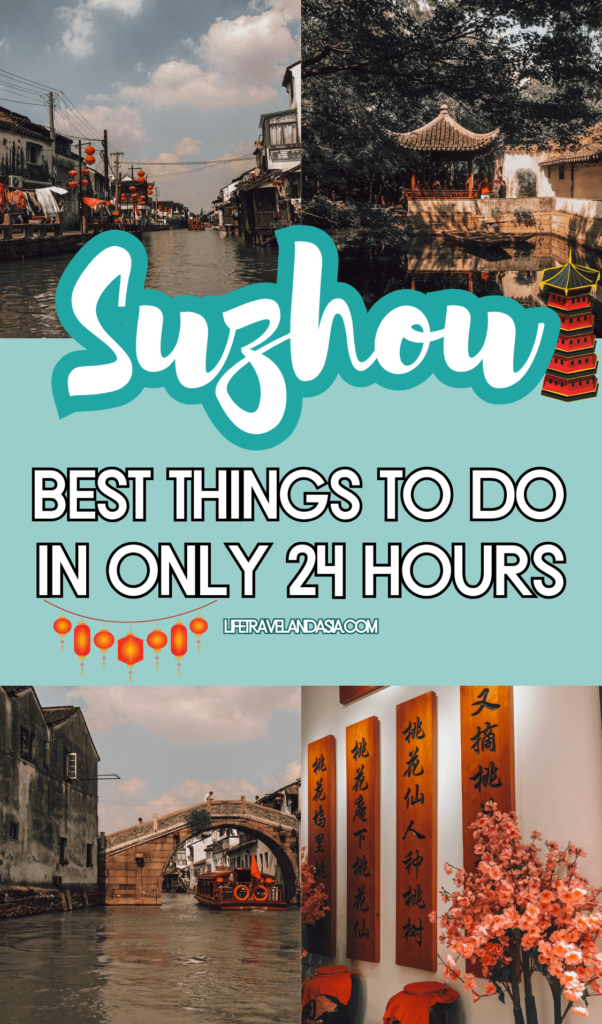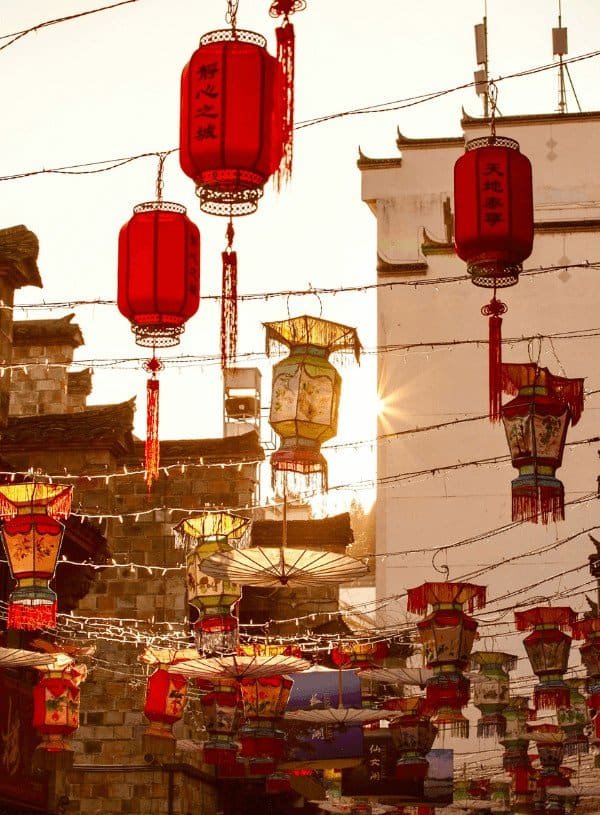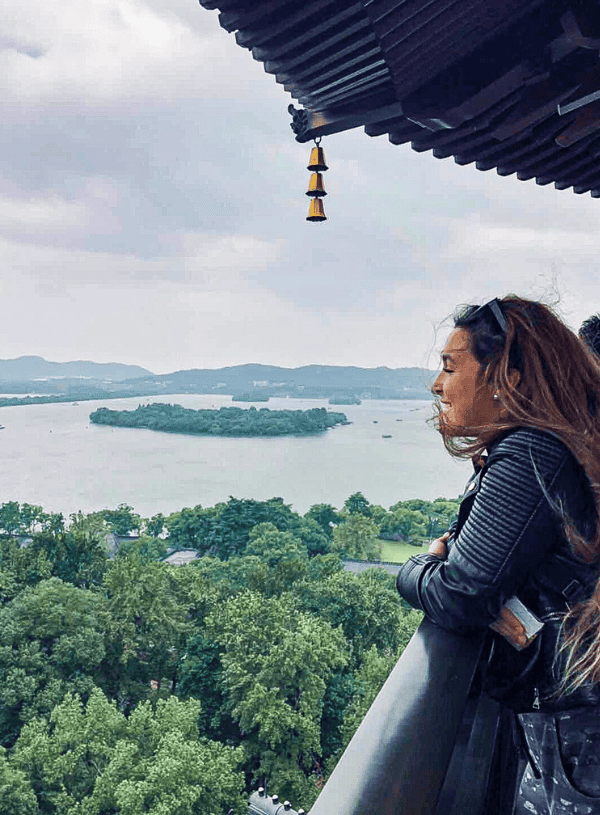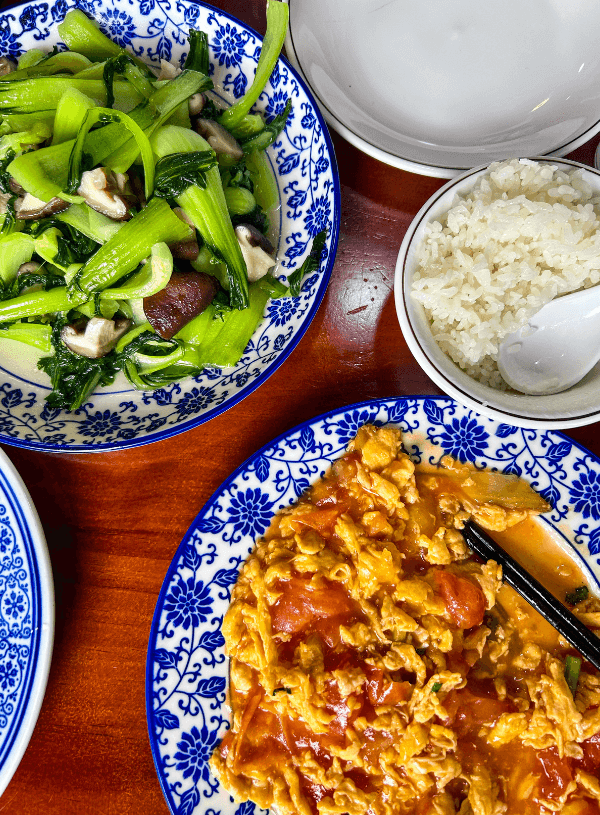
How to Spend One Day in Suzhou: 2 Perfect Itineraries & Travel Tips
Last Updated on November 8, 2025
Are you staying in Shanghai and considering a day trip to Suzhou? That’s a great idea! Spending one day in Suzhou is the perfect way to escape the non-stop energy you may have felt in the bustling neighboring city, even if just for 24 hours!
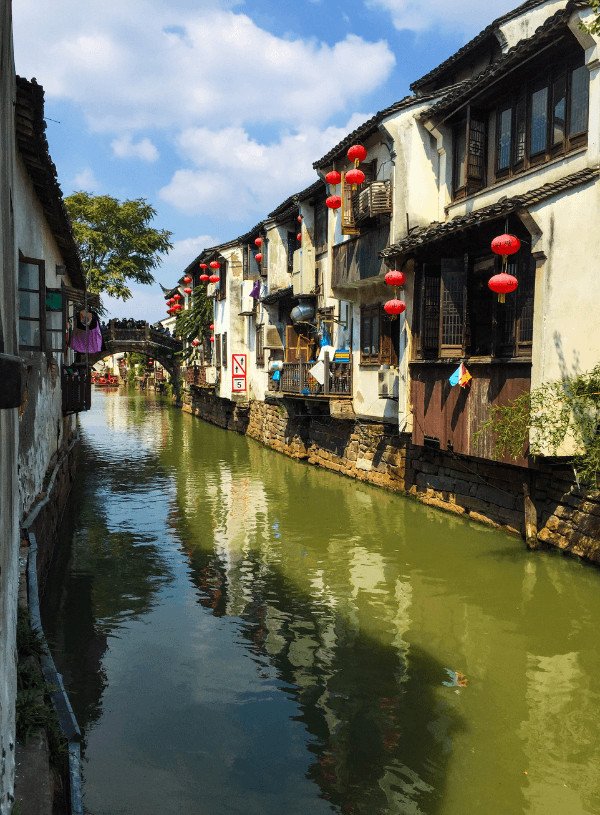
Suzhou is one of my favorite places I’ve ever visited in China. It’s so close to Shanghai yet so different, with a simple, laid-back vibe. Here, the streets are filled with locals playing with their grandchildren and enjoying the sun along the canal riverside.
You can spend the day wandering around its picture-perfect classical gardens, taking a relaxing boat ride across canals, or exploring its quirky shops. That’s what I’m sharing in this blog post, two one-day itineraries in Suzhou for a quick escape from Shanghai.
This article may contain affiliate links. This means that if you purchase through one of the links, I may be paid a small commission at no extra cost to you. Thank you for supporting the blog and allowing me to keep sharing meaningful travel experiences with you.
Don’t have time now?📌 Save it for later!
Recommended in This Article
Here are a few guided tours and useful links to plan your trip
Planning Your Suzhou Day Trip
1. How to Get to Suzhou from Shanghai
Suzhou is just a 30-minute train ride from Shanghai, and if you’re already there, as you likely are, it would be a shame not to make a stop. You have two options to reach Suzhou from Shanghai.
High-speed train from Shanghai to Suzhou
If you’re in Shanghai, the best way to get to Suzhou is by taking the high-speed train. The best way to book your tickets in advance is on Trip.com. There are plenty of morning rides, allowing you to arrive in Suzhou’s old town early in the morning.
Shanghai Hongqiao Railway Station has the best train rides to Suzhou. You can take a taxi from your accommodation or take the subway using lines 2, 10, or 17.
The best train station to arrive at is Suzhou Railway Station, located in the Gusu district, close to Suzhou’s main sights. From there, you can take subway line 4 and get off at Beisita, which is in the heart of the old town.
You can also plan to arrive at Suzhou North Railway Station, a bit further north but still convenient. From there, you can take a taxi, and it’s just a 13-minute ride.
Shanghai Pudong Airport to Suzhou
Wuxi is the closest airport to Suzhou, but Pudong International Airport has more international flights and frequent arrivals.
This option is relevant if you land there and want to go directly to Suzhou, or if you have a 24-hour layover in Shanghai and want to explore the water town instead of the city.
The best option (and most affordable) to reach Suzhou is to take a taxi directly from the airport or book a DIDI ride. If you need help figuring out Didi in the Alipay App, make sure to check out my guide on the applications you’ll need if you’re traveling to China.
2. How Many Days in Suzhou?
Two days in Suzhou is enough time to discover the old town’s main sights and wander its alleys. However, a 3-day itinerary is ideal if you want to explore more of its sights, such as Tiger Hill or the Pan Men scenic area, which are farther from the center.
A one-day itinerary in Suzhou can include a couple of its most famous gardens, wandering around, stopping by a teahouse or a snack shop, and enjoying a boat ride on the canals.
3. Best Time to Visit Suzhou
The best time to visit Suzhou is during the shoulder seasons, specifically in early Spring (March to April) and autumn (September to October). The weather is warm, and there are fewer tourists compared to the peak summer months.
Visiting on weekdays rather than weekends can also help you avoid the local crowds. Additionally, plan your visit outside major Chinese holidays, such as the Golden Week in early October and the Chinese New Year.
By planning your visit during these times, you’ll be able to make the most of your day in Suzhou and explore as much as possible without wasting time in queues. I recommend visiting in Spring to enjoy the town and its already beautiful gardens, covered in flowers.
4. How to Get Around Suzhou
Walking is the best way to get around and truly experience Suzhou, especially since you’ll only be staying for one day and want to explore as much as possible.
However, if you’re short on time and some sights seem a bit far, Suzhou has a subway system with six lines, numbered 1 to 6.
5. Food in Suzhou: Where to Eat
Below, you’ll find some of the best restaurants in Suzhou, so you can spend more time enjoying your meal and less time searching for the perfect spot.
Yi Ran Tang: This Buddhist restaurant is a great option if you’re vegetarian or want to enjoy a well-furnished vegetarian buffet for ¥10.
Yaba Shenjiang: This is the place for delicious noodles or dumplings. Its pork-stuffed dumplings are to die for. It’s also one of the longest-standing and popular spots in town. Be sure to queue early to avoid a long wait.
What to do in Suzhou in One Day
The ideal way to spend your morning in Suzhou is by visiting one or more classical Chinese-style gardens. In town, you’ll find over 60 of them, with eight being UNESCO-protected, giving you plenty of options.
Some gardens are more impressive and, therefore, more crowded than others. You might decide to visit the Humble Administrator’s Garden, the landmark of this garden-rich town, but be prepared for queues and crowds depending on the day of the week and the time of year.
Alternatively, you can explore some of the less popular gardens, which are smaller but equally charming.
As you may notice from the map, the sights I’ve included are located on the southern and western sides of the Humble Administrator’s Garden. To make the most of your time, I suggest the following itineraries:
- Southern Side: Humble Administrator’s Garden, Couple’s Retreat Garden, Master of The Nets, Luohan Twin Pagodas, and Pingjiang Road. Plus, additional sights if you have more time.
- Western Side: Humble Administrator’s Garden, Bao’en Temple, Lingering Garden, Shantang Street, and Boat ride. Plus, additional sights if you have more time
1. Humble Administrator’s Garden
I only had two days to visit Suzhou, but I knew I couldn’t miss the Humble Administrator’s Garden, a UNESCO World Heritage Site.
It’s a must-see if you’re in Suzhou, but be aware that the crowds and lines depend on when you visit, and they may turn your experience into one as peaceful as a noisy street market. While it’s the largest and most famous garden, others, less crowded gardens might offer a more calming visit.
To truly appreciate its beauty, plan your visit early in the morning on weekdays, avoiding peak seasons and national holidays. This way, you can experience the garden as it should be: tranquil, silent, and with ample space to absorb the surroundings.
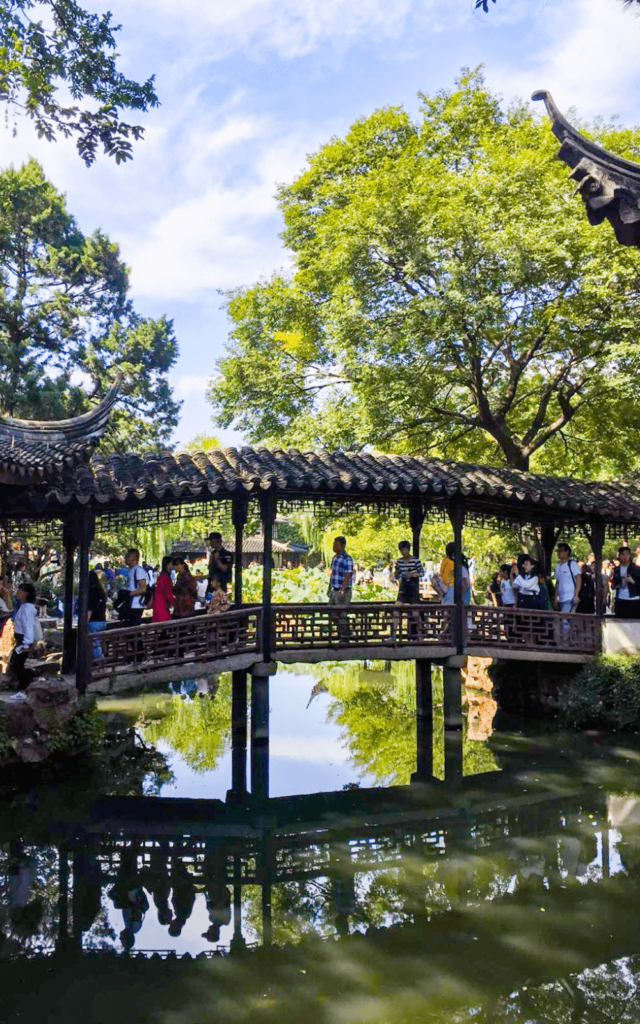
The Humble Administrator’s Garden is a masterpiece of Chinese garden design. It’s divided into three main sections: the eastern, central, and western parts, each with unique features.
The central section is the heart of the garden, featuring a large pond surrounded by greenery and rock formations. Meandering pathways lead you through bamboo groves and elegant pavilions painted in deep red.
If you’ve never been to a classic Chinese garden, you’ll be moved by the beauty that nature provides. It feels like stepping into a painting, where a pavilion with red carvings reflects in the waters of a lotus pond, and you become the figure admiring the scene from a cobbled bridge.
If you’re looking for another garden nearby, the Lion Grove Garden is on the other side of the road.
2. Couple’s Garden
The Couple’s Retreat Garden is located near the east leg of the Waicheng River and is surrounded by canals. It is farther from the center, which is likely why it’s one of the less-visited gardens in Suzhou.
This means you’ll (hopefully) be able to enjoy the tranquil atmosphere without hordes of visitors talking loudly or competing for photos next to you. The location and layout of the garden are truly unique.
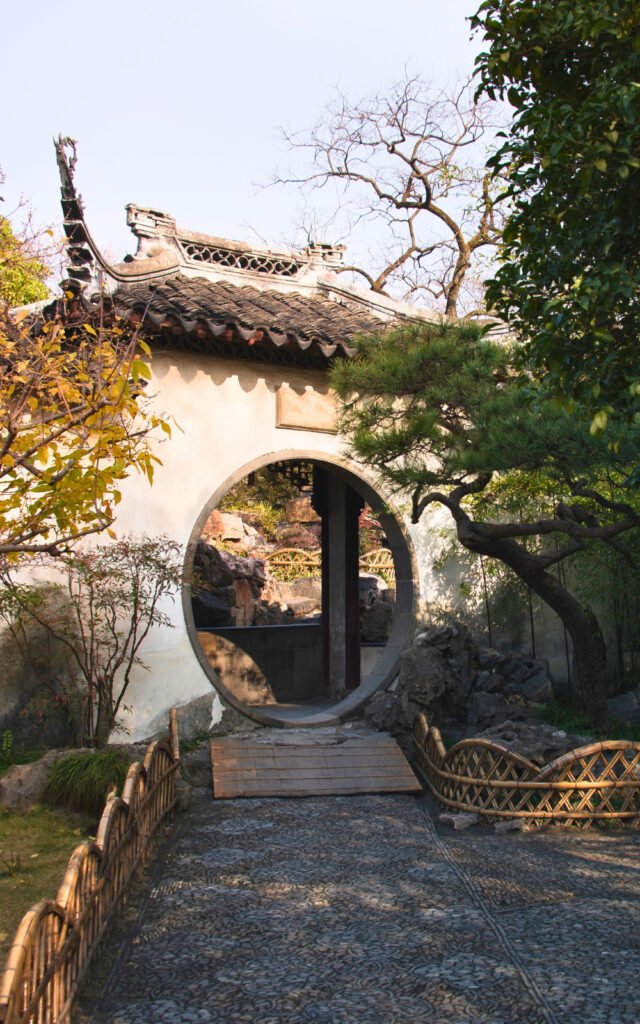
Everything is in pairs, symbolizing the theme of love. The garden is divided into two sections, separated by an elegant open pavilion at the center.
Within the garden, you’ll find a teahouse, a noodle restaurant, and all the classic garden architectural features that make Suzhou’s gardens so enchanting.
3. Luohan Twin Pagodas
Nestled within a tiny garden, you’ll find two nearly identical pagodas, each standing 30 meters tall, with one slightly shorter than the other—a rare find in China.
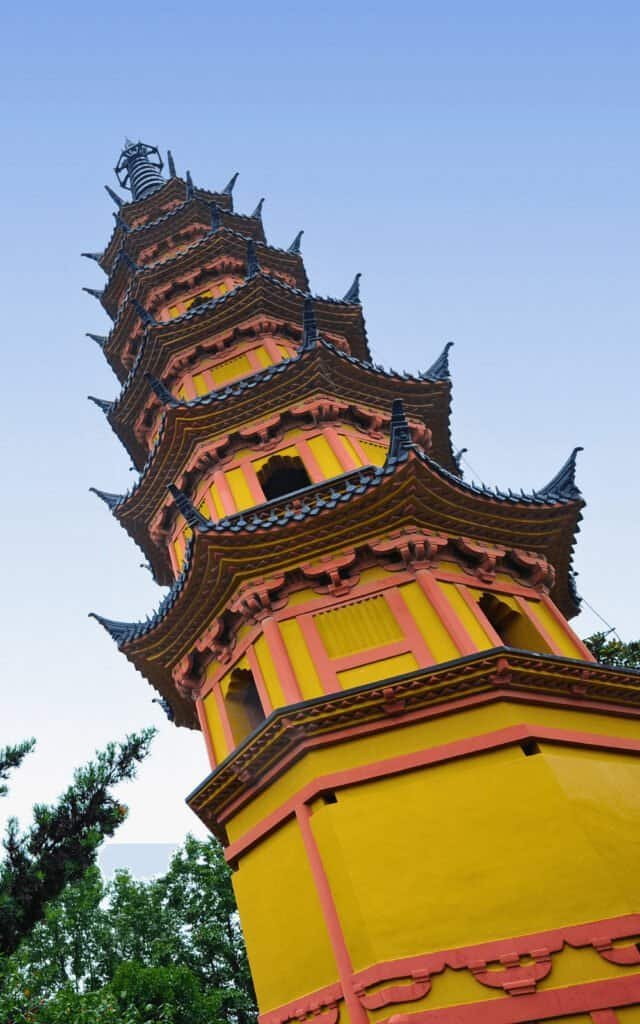
It’s uncommon to see a pair of pagodas side by side, especially at a former Buddhist site. Although you can’t enter the pagodas, you can stroll through the garden and enjoy the pink magnolias in bloom if you’re visiting during Spring.
4. Master of the Nets Garden
Like the Humble Administrator and the Couple’s Retreat Gardens, the Master of the Nets is also recognized as a UNESCO World Heritage site. This garden is admired for its creative use of limited space, achieving an effortless mix of art, nature, and architecture.
Though it’s relatively small—about one-sixth the size of the Humble Administrator’s Garden—the way its elements are arranged makes it feel much larger and full of surprises.
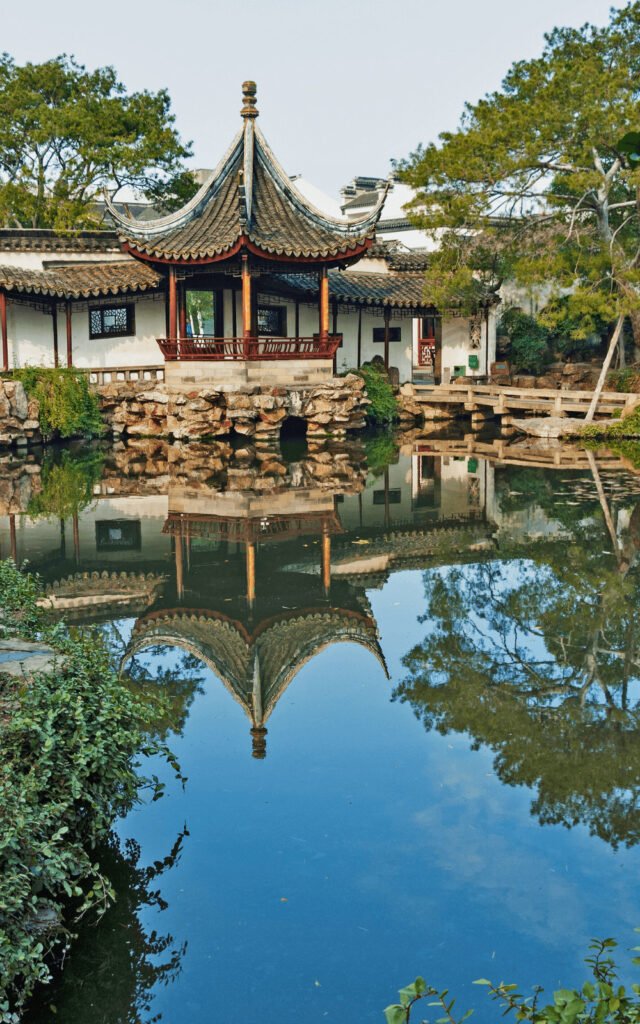
Winding paths lead you past ponds where koi fish swim lazily. Small bridges cross the water, and pavilions offer spots to sit and enjoy views of rocks and trees. Each corner gives you a new opportunity to take fantastic pictures that capture the essence of Suzhou.
5. Bao’en Temple
Baoen Temple is the city’s oldest Buddhist temple. I highly recommend visiting one in every town in China.
While the temple itself is a gem, offering the tranquility you’d expect from a peaceful Buddhist setting (unlike those in Shanghai), the spotlight is undeniably stolen by the 76-meter-tall pagoda, a stunning relic from the Song dynasty.
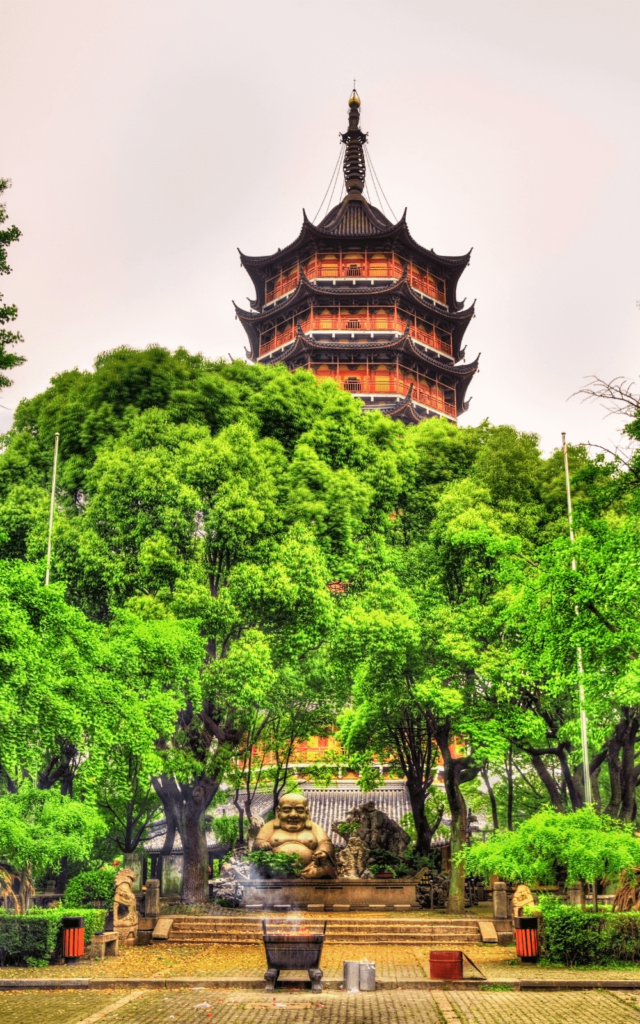
The temple grounds perfectly embody Suzhou’s garden style, with trees, a classical garden, a serene lake, and rockeries that fit the water town’s enchanting vibe.
And here’s a fun local legend: if you walk around the temple complex three times in a clockwise direction, you’ll be blessed with good luck. So make sure to give it a try!
6. Lingering garden
The Lingering Garden is one of China’s Top Four Classic Gardens, along with the Summer Palace, the Chengde Mountain Resort, and the Humble Administrator’s Garden.
The clever design makes it unique; despite its modest size, the architectural elements are perfectly positioned to fit naturally with the surrounding landscape.
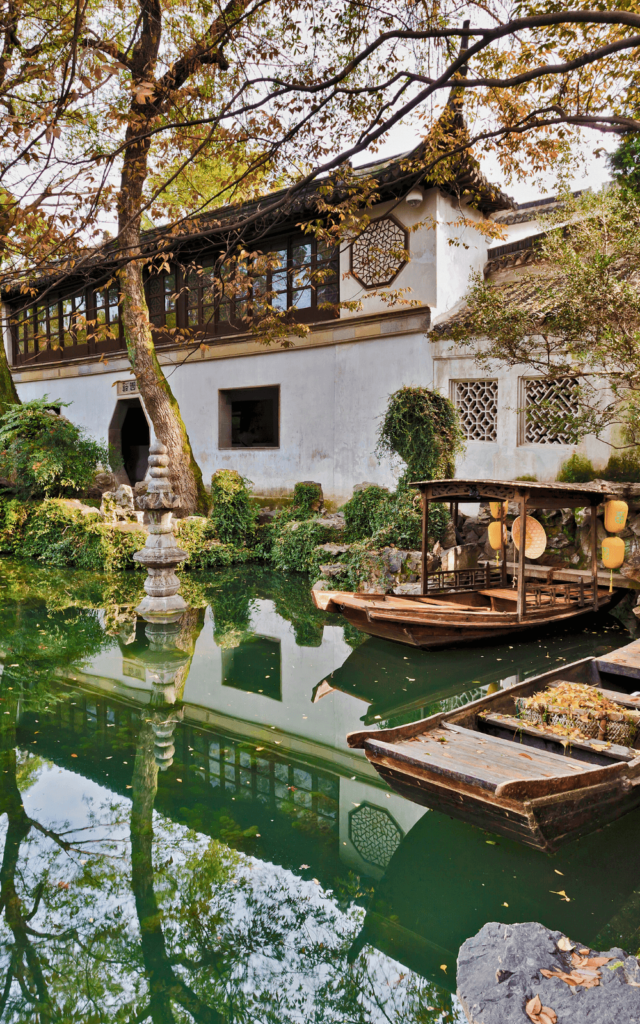
The garden is also designed with the human perspective in mind. A stunning scene unfolds as you walk through the narrow, dim corridor at the entrance, wondering if you’re in the right place. At every step and turn, you’ll encounter a new, picturesque view.
The garden is divided into four distinct sections. The eastern side is full of pavilions and hallways framed by open corridors. The central area feels like stepping into a Monet painting, featuring water, rock formations, and beautiful hanging flowers.
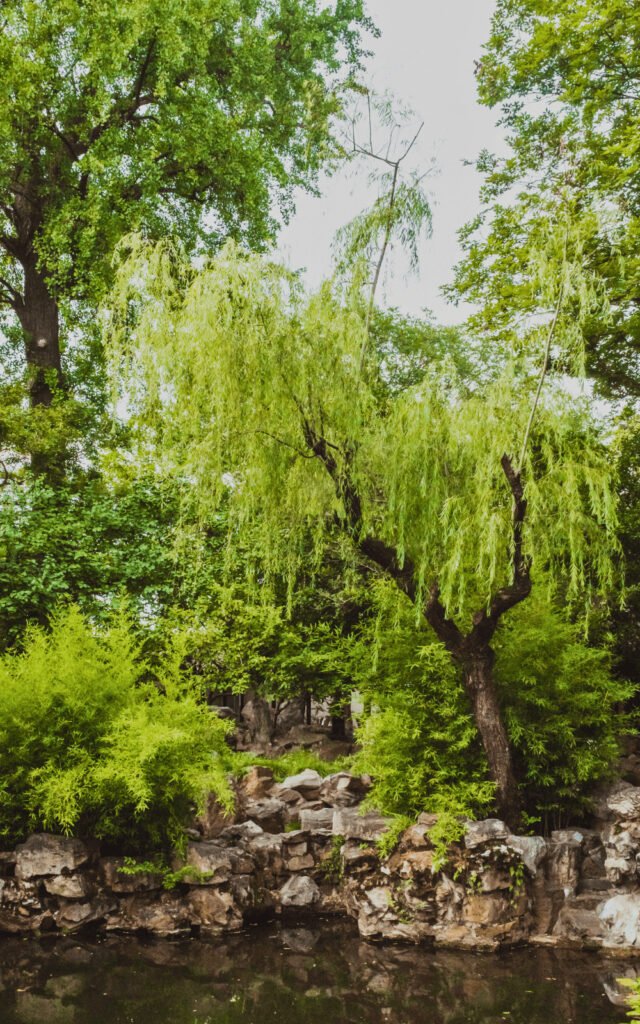
The western side is filled with high trees, creating a dynamic play of light and shadow. Meanwhile, the northern side has a pastoral charm and a bonsai garden.
7. Explore Pingjiang Road & Shantang Street
While I recommend simply wandering through the narrow alleyways and canal-side streets of Suzhou, there are two spots you should visit.
Pingjiang Road, or Pingjianglu, is located on the city’s eastern side, just south of the Humble Administrator’s Garden, and runs alongside a canal.
Here, you’ll discover a variety of elegant teahouses and cafes. It’s a wonderful place to stroll, people-watch, and observe the daily life unfolding on the side streets branching off the main road.
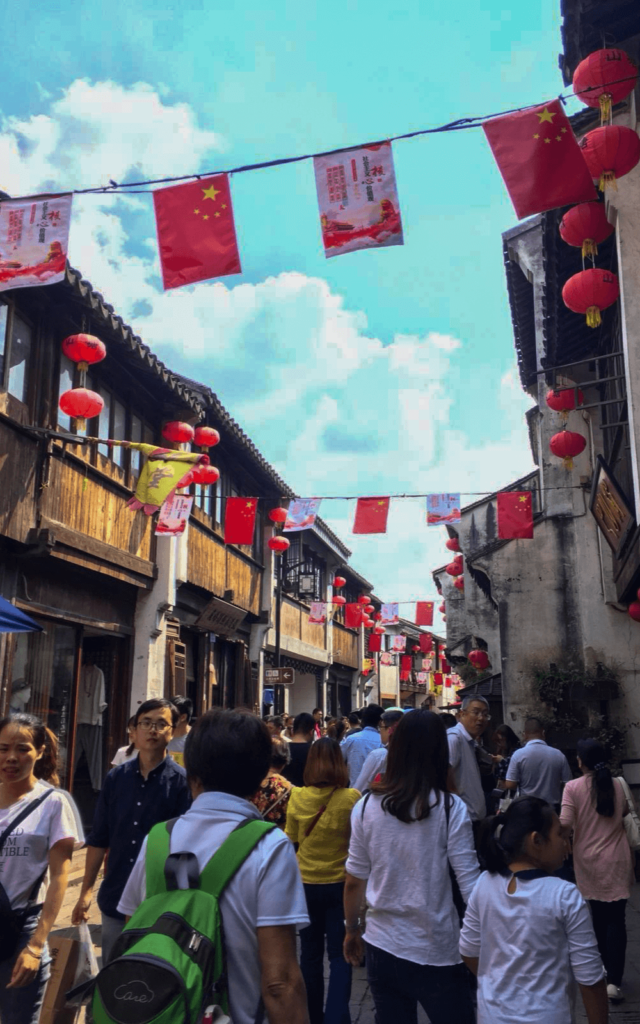
Shantang Street, or Shantangjie, is on the northwest side of Suzhou and is one of the oldest canal-side streets, dating back to the Tang dynasty, when people used the canal to travel to Tiger Hill.
Here, you can do the same as the old residents and take a boat ride to discover the canals from another perspective. You can purchase tickets directly on the riverbanks along this street.
From the tiny boat, you’ll enjoy this view: wooden and stone houses that seem to rise directly from the water, while elderly locals spend time with their grandchildren along the canal banks as if nothing is more important in life.
If you don’t want to take a boat ride, you can still wander around, sampling the many Chinese snacks in the various shops and soaking in the lively atmosphere.
Other Trips from Suzhou
If you plan to visit Suzhou, you will likely land in Shanghai and spend a few days there before heading to Suzhou.
But where to go after Suzhou? Hangzhou is just 2 hours away, or even less if you catch the right train. Similarly, you can reach Nanjing in about the same amount of time.
More About Traveling to Shanghai?
There you go —hopefully, the insight from this article will help you make the most of your day trip. One day in Suzhou is definitely enough to grasp the essence of this magical water town. If, after reading this article, you’re tempted to extend your stay, make sure to check this Suzhou 3-day itinerary
If you found this article helpful, don’t hesitate to share it on Pinterest or with other friends traveling to Suzhou soon. And if you have any questions about traveling around China, make sure to drop them in the comments. I’m happy to help!
Other Articles You May Find Helpful If You’re Planning a Trip to China
- China Travel Guide: Everything First-Time Travelers Really Need to Know in 2025
- 10 China Travel Tips for Non-Chinese Speakers (To Help You Overcome The Language Barrier)
- China Travel Apps: 7 Essential Applications You’ll Need in 2025
- China Packing List: 13 Vital Items To Pack for the Perfect Trip
- 11 Fantastic Ways to Discover China on a Budget Without Losing Your Mental Sanity
📌 Pin it for later