Zhujiajiao Itinerary: How to Visit Zhujiajiao Water Town from Shanghai
Last Updated on November 23, 2025
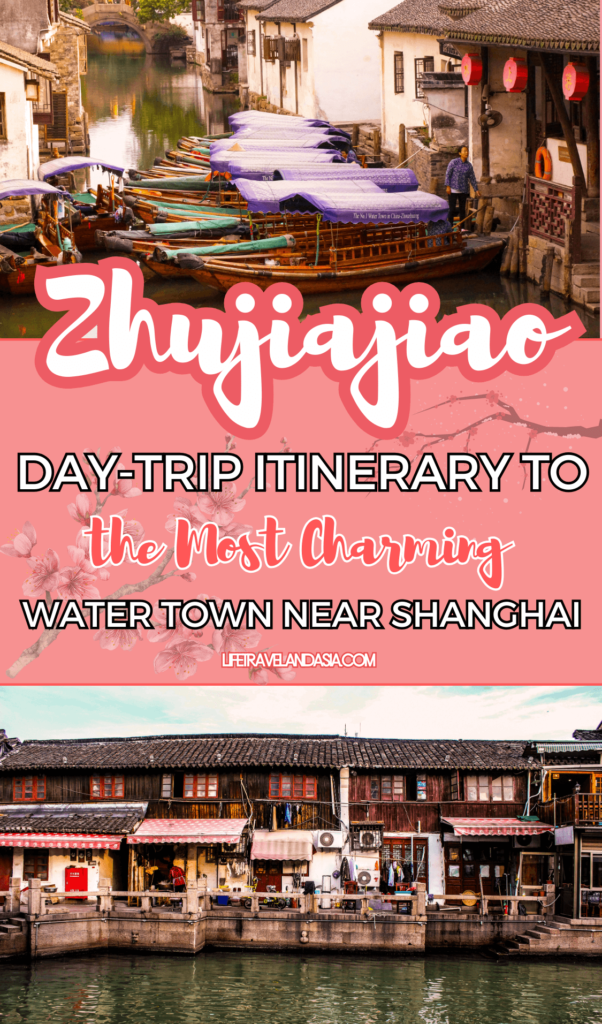
Are you planning your stay in Shanghai and considering a day trip to the nearby Zhujiajiao Water Town? Great idea! This Zhujiajiao itinerary will help you plan your day trip from Shanghai.
Let’s be honest: after three or four days in downtown Shanghai, you might need a break from its non-stop buzzing energy. I get it, and Zhujiajiao is the perfect change of scenery, offering a much calmer, slower atmosphere.
In this blog post, I will share tips for planning your day and guide you through what to do in Zhujiajiao to enjoy the vibe of this enchanting small corner of Shanghai.
This article may contain affiliate links. This means that if you purchase through one of the links, I may be paid a small commission at no extra cost to you. Thank you for supporting the blog and allowing me to keep sharing meaningful travel experiences with you.
📌 Pin it for later
Recommended in This Article
Below you’ll find a few guided tours and useful links to plan your trip
Is Zhujiajiao Worth Visiting?
While I wouldn’t specifically plan a visit to Zhujiajiao if you’re far away, a day trip from Shanghai is great if you’re craving a change of scenery.
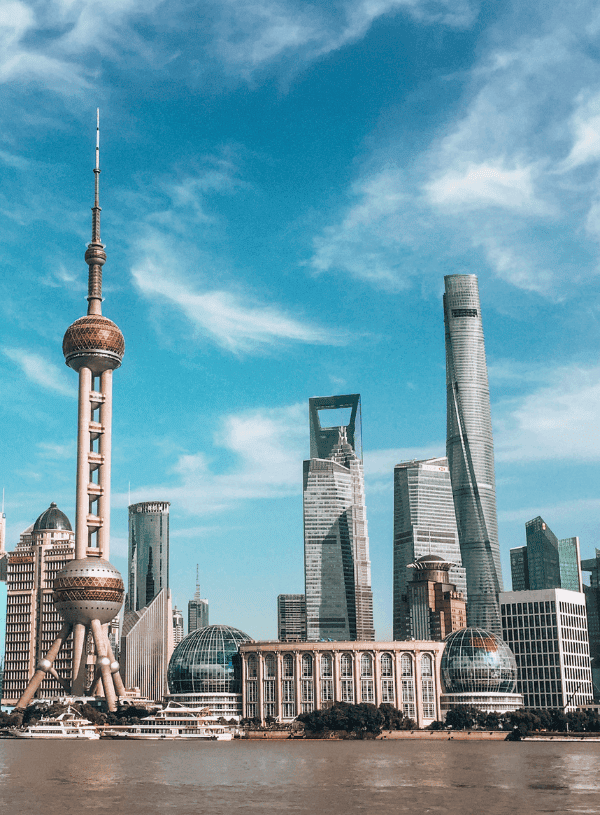
I visited Zhujiajiao for a day trip in the summer of 2024. It was so refreshing to leave the modern, futuristic, and busy Shanghai, to experience something different (and that I’d never seen before).
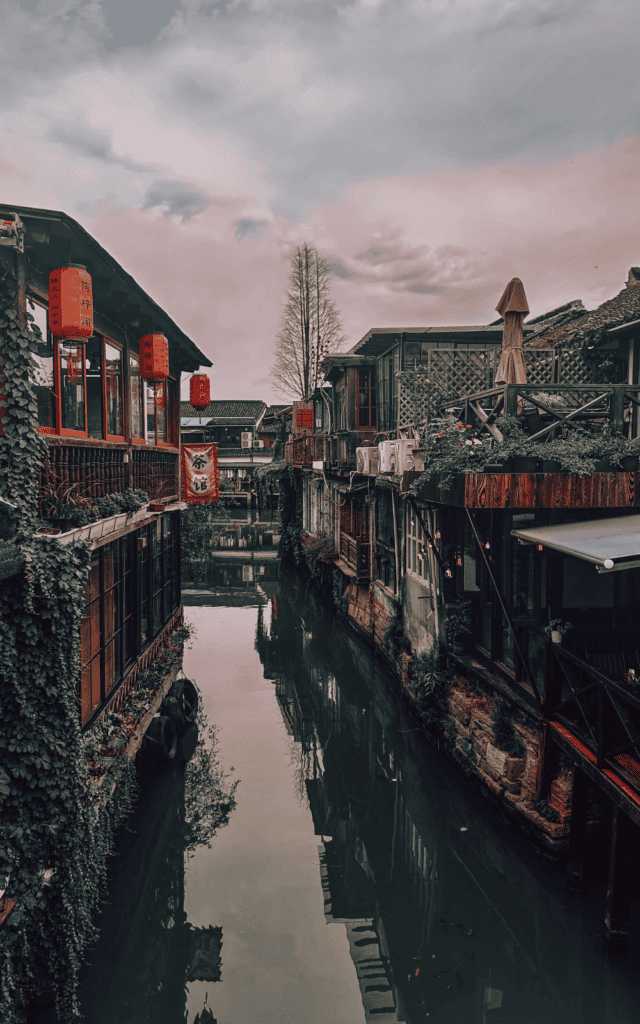
Having already been to Suzhou, I think I knew what to expect. Water towns in China usually have the same vibe, even if some are way more touristy than others.
However, if you’re a first-timer and have never been to a Chinese water town, visiting Zhujiajiao is a great occasion and may spark inspiration for some other small trips around Eastern China.
Just to set expectations, China isn’t just about super-modern and futuristic cities. Some of the most enchanting locations are actually the smaller towns where life moves at a slower pace, where locals still work simple jobs (and where toilets barely meet health and safety standards, lol).
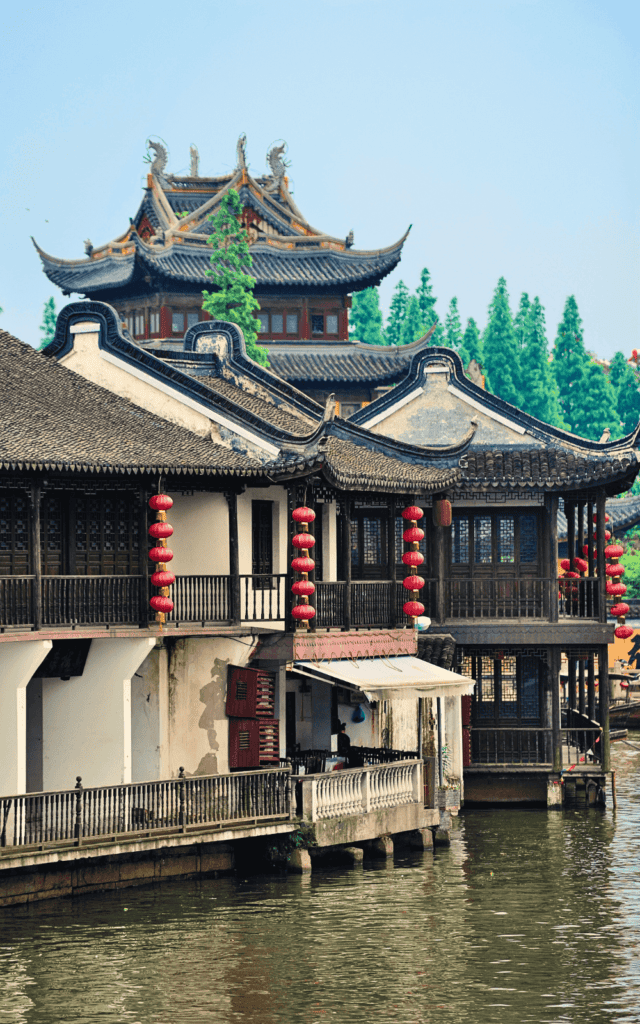
Zhujiajiao has certainly become a tourist attraction in the past decade, with its charming boutiques selling artisanal products and cozy coffee shops. Visitors are drawn to the lovely stone architecture, including bridges crossing the tranquil canals and the picturesque alleyways surrounding some historical sites from the Ming and Qing dynasties.
Yet, you’ll also find shops displaying insects outside and traditional street food vendors offering products you might never have considered trying.
Despite the tourist crowds that can detract from the experience (the alleyways are narrow), I believe Zhujiajiao retains its old-town charm. The residents often observe visitors with curiosity and warm smiles as they sit outside their tiny homes with open doors and windows.
Is it Your First Time in Shanghai? The Articles Below Will Help While Planning Your Trip
Planning Your Trip To Zhujiajiao
1. How to Get from Downtown Shanghai to Zhujiajia
Zhujiajiao is located in the Qingpu district of Shanghai, about 46 km west of downtown. To arrive from the city, you have two options:
Subway
The best way to get to Zhujiajiao (which is actually in Shanghai) is to take the subway to Zhujiajiao. Depending on your location, you’ll need to get to the Hongqiao subway station, and from there you can take line 17 to Zhujiajiao. The ticket price is ¥10-12.
The Water Town is within walking distance of the subway station. Depending on your starting point, the subway ride will take around one hour.
Taxi
Assuming there’s no traffic, you can take a taxi if you’re looking for a faster option.
The taxi ride from downtown Shanghai takes about 30 minutes. You can use your Alipay app to call a Didi and pay upfront to avoid any price surprises, or you can hail a taxi in the morning. Expect to pay around ¥200 for the taxi ride.
2. Best Time To Visit Zhujiajiao
As with many locations in China, the spring and autumn are usually the best times to visit Zhujiajiao.
The weather is comfortably warm, freeing you from being stuck indoors, and because these periods are considered shoulder seasons (excluding the first week of October, which is actually a very popular holiday period where everyone travels).
During spring or autumn, there are fewer holidays around, and locals don’t travel as much as they do in the summer, making your visit much more peaceful. You can also plan to visit on a weekday to avoid the weekend day trippers.
3. How Long to Spend in Zhujiajiao
You can easily explore Zhujiajiao in one day; you don’t need more time. This is actually one of the reasons why it is considered one of the best day trips from Shanghai.
If you’re looking for the best experience, I highly recommend going early in the morning to avoid the crowds. Many activities, like the boat ride around the canals, stop around 4 pm (which is quite early)
4. Where & What to Eat in Zhujiajiao
Zhujiajiao is renowned for its enchanting architecture and canals, as well as its rich culinary traditions. As you wander its alleyways, you’ll see many street food stalls selling Zongzi (rice-stuffed dumplings wrapped in bamboo leaves that I actually don’t like at all) and other very weird-looking snacks.
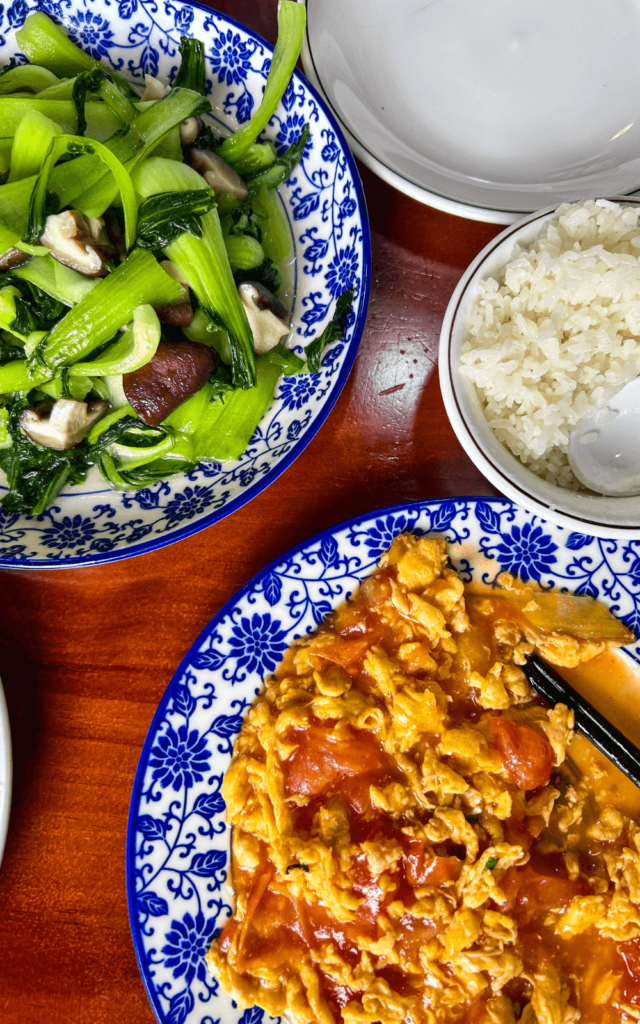
With its abundant waterways and proximity to Lake Tai, Zhujiajiao is also the perfect place to try fresh seafood and rice-based dishes. Some typical dishes of Zhujiajiao include lotus roots cooked in a sweet sauce, rice cake (Nian Gao), Zongzi, and Xiaolong Bao.
For an authentic, savory Chinese meal, consider lunch at one of the many restaurants on Beidajie.
5. Zhujiajiao Ticket Price
As another indication of how touristy Zhujiajiao has become, the local government has established combo tickets including the main sights. While you can access some areas of the water town for free, the main attractions require an entry ticket.
There are two ticket options:
- 8-Attractions Ticket (¥60): This includes access to Kezhi Garden, Shanghai Quanhua Art Gallery, Yuanjin Buddhist Temple, City God Temple, Qing Post Office, Humanistic Museum, Zhaxidawa Experience Museum of Tibetan Culture, Shanghai Handicraft Exhibition Hall, and Shanghai Helong Art Museum.
- 4-Attractions Ticket (¥30): This option covers Kezhi Garden, the Great Qing Post Office, Zhaxidawa Experience Museum of Tibetan Culture, and the Humanistic Museum.
Remember that all the sights close early at 4:30 pm, and the boat ride stops selling tickets at 4 pm, so make sure you arrive on time.
It might be a good idea to plan activities that don’t imply a closing time for later in the afternoon, such as a street food and shopping tour.
6. Zhujiajiao Opening Hours
Zhujiajiao opens at 8:30 am and closes at 4:30 pm. Make sure to book your boat ride before 4 pm as it will be closed by that time.
9 Best Things to Do in Zhujiajiao in One Day
1. Visit Kezhi Garden
Kezhi Garden is, without a doubt, my favorite sight in Zhujiajiao. If you appreciate the beauty and tranquility of classical-style gardens, you’ll love it too! It’s located on the northern side of the old district on Xijin Street and is easy to miss if you are not looking for it. You can plan to visit its five acres in around one hour.
If you’ve been to Yuyuan Garden in Shanghai or the Lion Grove Garden in Suzhou, you may notice that some features are downsized yet quite similar.
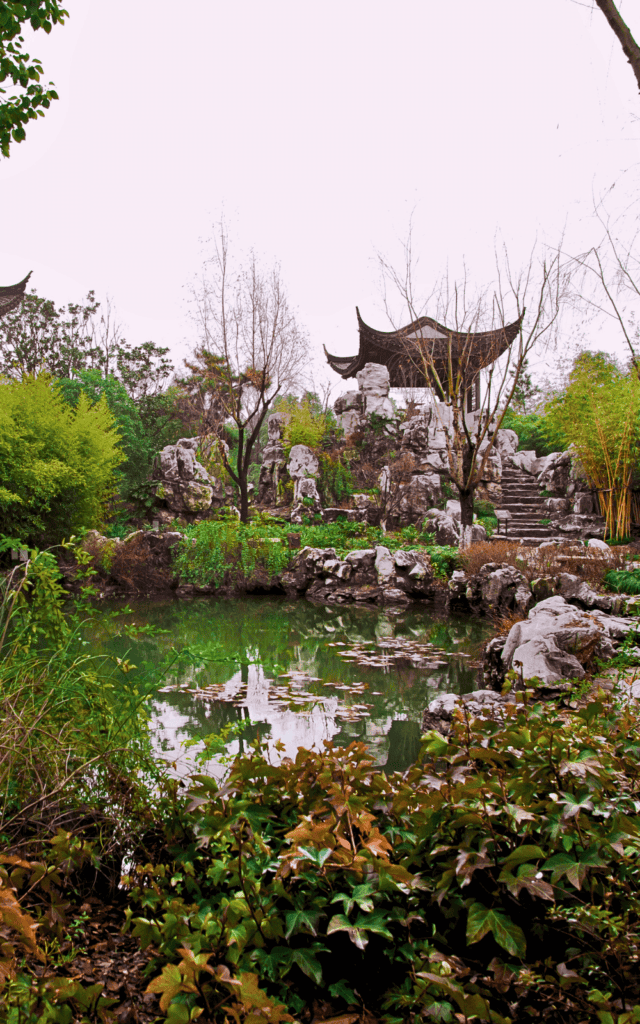
The garden’s creator, Ma Wenqin, drew inspiration from his travels around Shanghai and its surroundings to build this charming manor in traditional Chinese style, enveloped by the garden. You’ll see a more miniature replica of the nine-zigzag bridge from Yuyuan Garden and the inverted lion pavilion inspired by the Lion Grove Garden.
Built in 1912, the garden took 15 years to complete and showcases a rare mix of Chinese and European architecture. It’s not as common to meet Western influences in China.
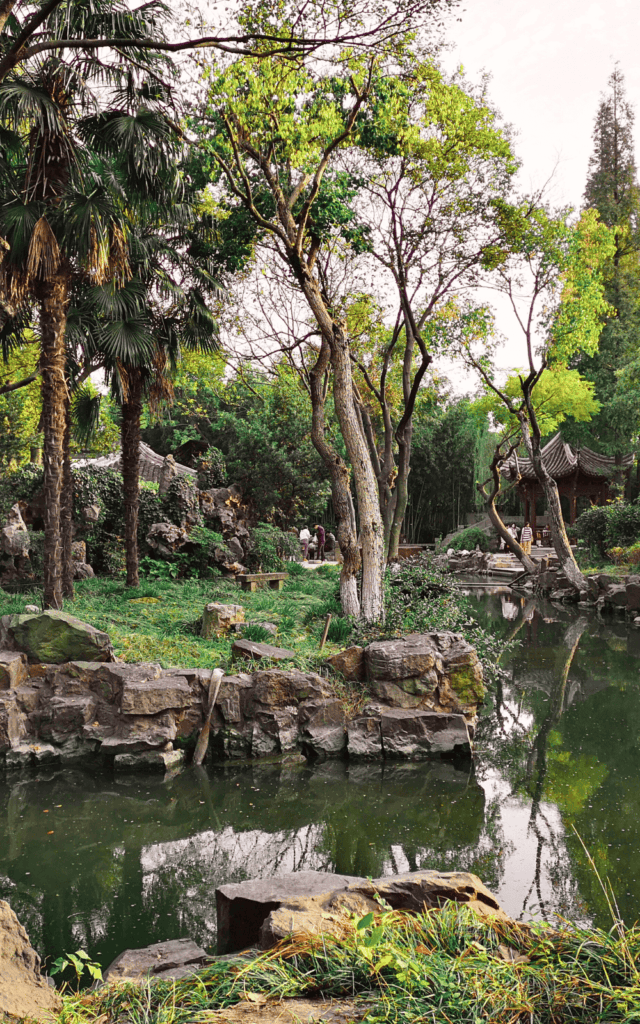
The name “Kezhi” literally translates to “don’t forget to learn and farming,” which perfectly represents the garden’s design, which includes a small farm where vegetables are grown.
It is one of the few sights in China with English signs explaining the history and purpose of every area around the garden. These signs make your visit much more entertaining as you wander around, imagining the lives of the old residents within those four walls and among those trees.
1. Cross The Iconic Fangsheng Bridge
In Zhujiajiao, you’ll find many bridges crossing canals, but Fangsheng Bridge stands out as the only one with five arches. This makes it a popular spot for tourists to snap pictures of the boats that slowly pass underneath. The bridge connects Beida Street and Xijing Street.
While many smaller and less renowned bridges offer more picturesque photo opportunities, crossing Fangsheng Bridge at least once is a must in Zhujiajiao.
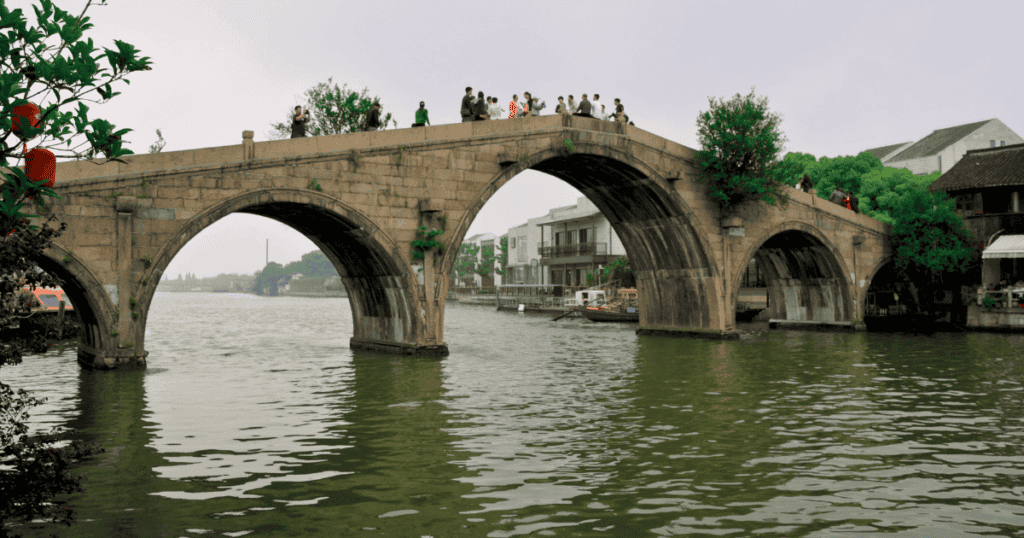
One interesting fact about this landmark is that it was built by a Buddhist monk in the 16th century. Initially, it was used to release fish and tortoises back into their natural habitat. Even today, fishing is prohibited on the Caogang River.
Locals still gather at the beginning and middle of the lunar month to release fish, a practice that gave the bridge its name, literally meaning “Releasing Life.”
3. Enjoy The View From The Yuanjin Buddhist Temple
Yuanjin Temple is the only Buddhist worship site in Zhujiajiao. The highlight of the internal main hall is the golden statue of Guanyin, which is why the temple is also called the Goddess Temple.
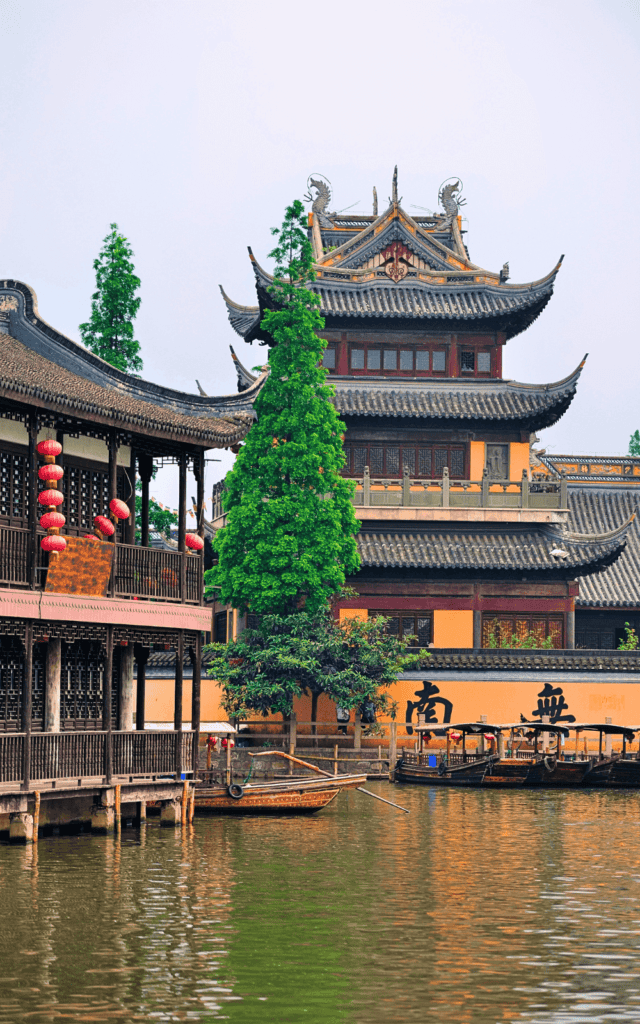
In addition, you have to go up to the Qinghe Pavilion to enjoy the view of Zhujiajiao’s canals from the top. This is one of the tallest buildings visible from many parts of the city.
4. Go Back in Time At Tongtianhe Pharmacy
If you’re intrigued by Chinese medicine, this site is a must-see. I’m fascinated by the Asian approach to medicine and the idea of observing nature to find patterns for inner healing. Exploring the pharmacy was a real treat for me.
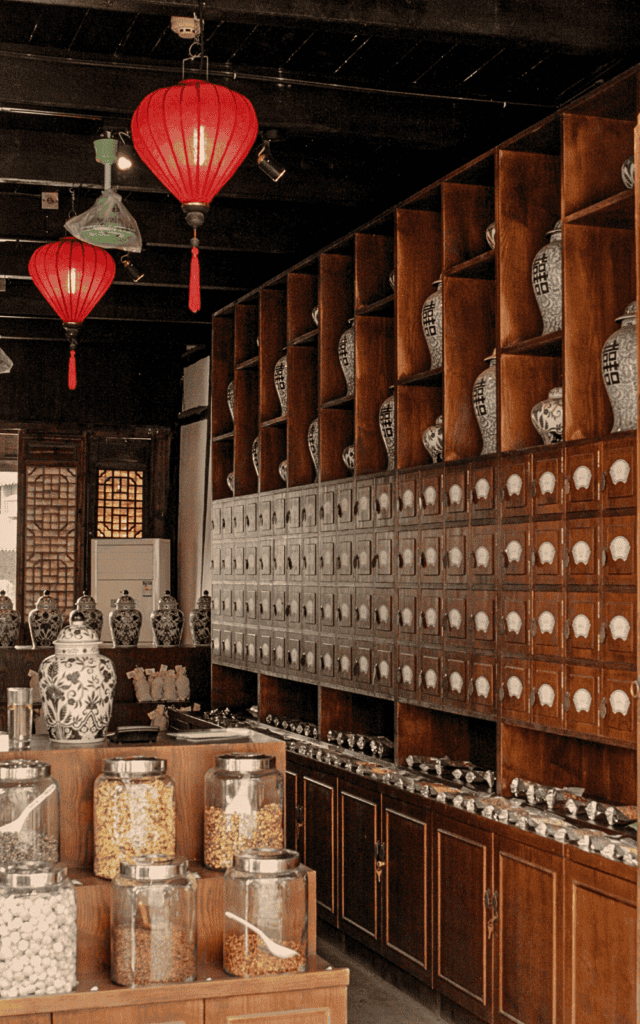
Locals have described this place for centuries as “healing pains and saving lives.” As I wandered around, I wondered what mysterious ingredients and herbs lay inside the Qinghua vases and jars scattered about—the typical Chinese blue-and-white porcelain.
Visiting the Tongtianhe Pharmacy feels like stepping back in time. Its grand and mysterious wooden furniture hides countless drawers, each potentially holding a remedy or secret.
5. Learn About China’s Mailing System At the Qing Post-Office
While exploring the stone-paved alleyways, you might miss—or hopefully not—a brick structure at the very end of Xinhu Road. Its design feels entirely out of place among the more traditional Chinese-style buildings.
This is an ancient Chinese post office dating back to the Qing Dynasty. It was established in the 19th century by Emperor Tongzhi and serves as a miniature museum of the Chinese postal system from a time when technology was nowhere to be found.
Inside, you’ll find a collection of historical relics that tell how mail was handled and the measures taken to protect shipments and ensure they were delivered safely.
The building is a charming piece of history, with its original wood floors and structure offering a tangible connection to the past. It’s easy to overlook if you don’t know about it, but this gem is well worth a visit for anyone interested in history and architecture.
6. Take a Hand Boat Ride to Explore the Canals
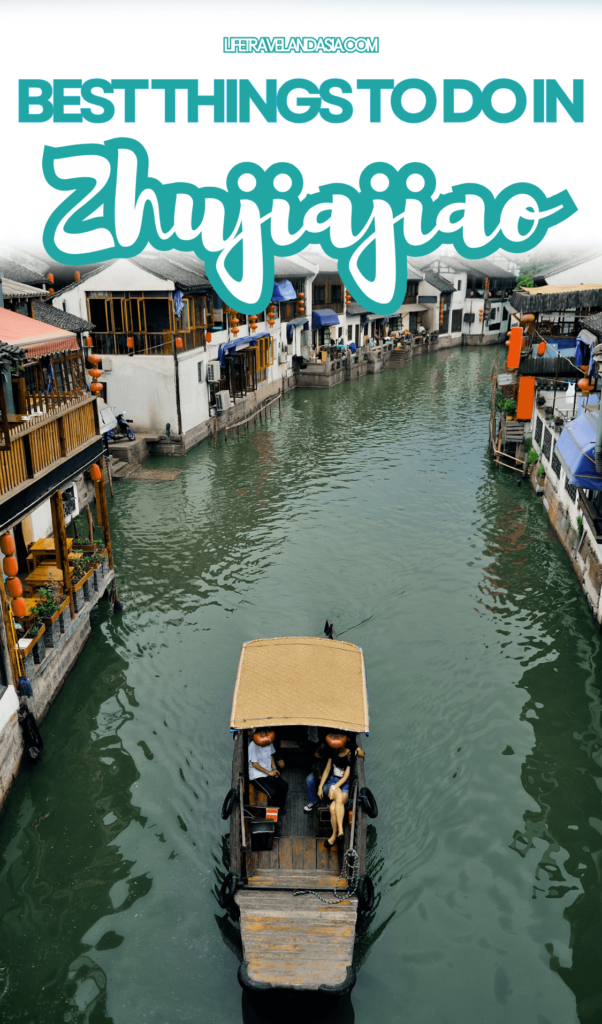
One of the best ways to explore Zhujiajiao, or any water town, is by riding a hand-boat on the canals. Exploring water towns on a boat is like walking through a garden in full bloom—it’s the way they were meant to be enjoyed. So yes, wandering through the stone-paved alleyways is a beautiful experience, but winding through its canals is something else entirely!
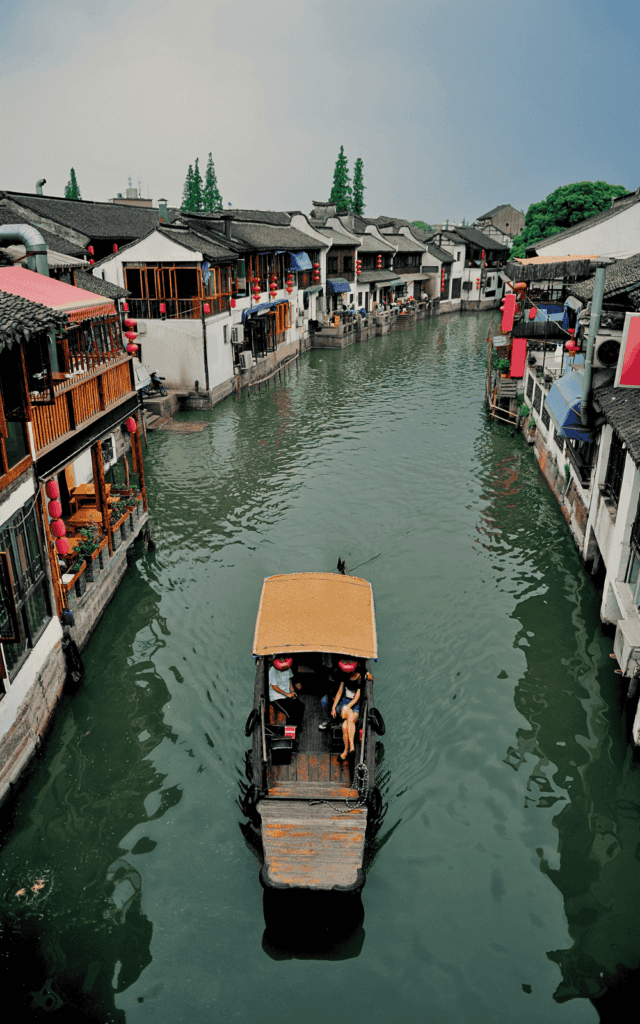
This allows you to observe the daily life of locals as it unfolds through their tiny open windows and to discover hidden corners accessible only by water. It’s a unique way to explore, revealing details you might otherwise miss.
In Zhujiajiao, you can catch a handboat from various locations, including the Kezhi Garden, the City God Temple, and Beidajie. No matter where you start, you’ll pass by some of the most interesting sights, including the iconic Fangsheng Bridge.
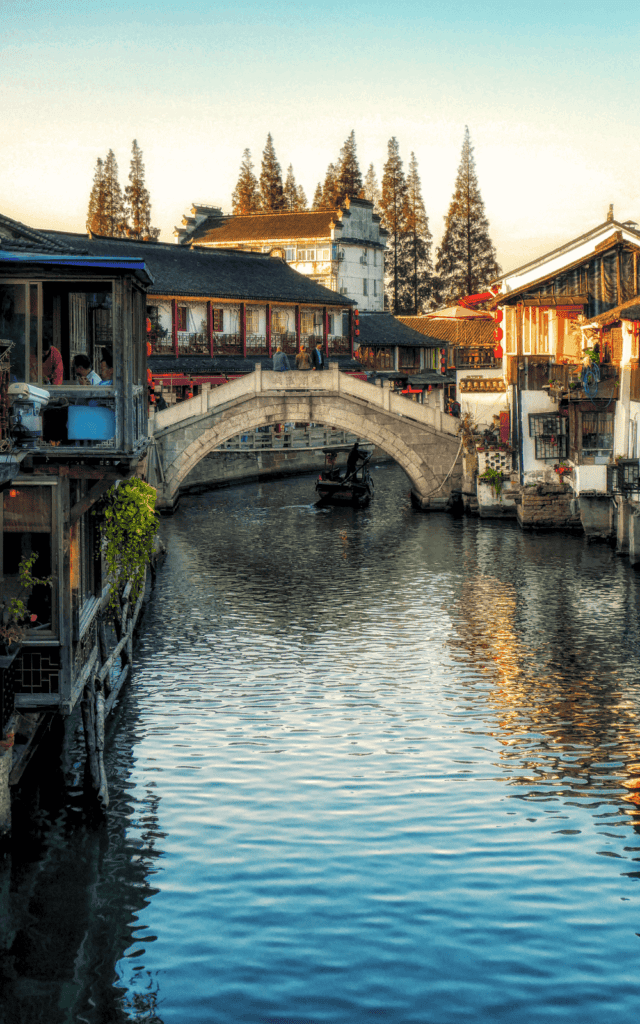
The price ranges from ¥200 to ¥300, depending on the boat, which can accommodate up to six passengers. Typically, the boat ride doesn’t include a return trip, but it can take you back to the pickup point for an additional half of the original price.
7. Discover Zhujiajiao’s Famous Pearls
Choosing an oyster, having a pearl taken, and witnessing the artisan creating jewelry pieces right before you is likely the most local experience here in Zhujiajiao (the river here is also named the Pearl’s Stream). I don’t think I’ve ever seen it anywhere else in China.
Even though the origin of the pearl itself is not as clear as the merchants make it seem (they, of course, tell you it’s authentic, but who knows), the experience is definitely one of a kind.
You can have a bracelet or an earring made from pearls, and they do it right in front of you so you can see the process, from taking the pearl out of the oyster to wearing the (hopefully) authentic jewelry— a unique souvenir from your trip.
8. Shopping Around Beidajie
Whether you’re a shopping enthusiast or not, when in China, you’ll often find something quirky to bring home, perhaps more often than you’d expect. Beidajie is the main shopping street in Zhujiajiao, an old-style, stone-paved, narrow street lined with low white houses.
It’s right alongside the Caogang River at its southern end. If you’re searching for it, it’s the road in front of the Fangsheng Bridge, across from Xijin Street.
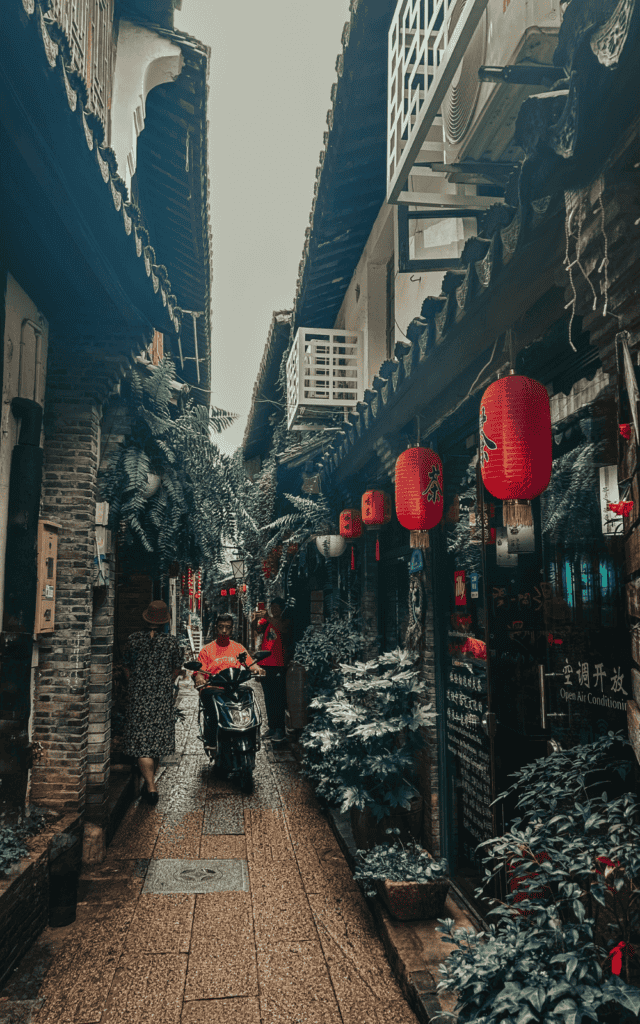
Numerous street food stalls here offer fruit juices, teas, and less-inviting snacks, including insects. Amidst this “food haven,” you’ll find local artisanal shops featuring wooden and bamboo handmade items.
However, before making a purchase, take a moment to look around. You’ll notice that many of these items are identical across different shops, which might make you question their authenticity. Ensure the pieces you want to buy are unique and genuinely hand-made, and don’t hesitate to bargain!
9. Street Food Tour
I know what you’re thinking. “…didn’t you just speak about insects and not-so-enticing snacks?” Yes, but Zhujiajiao is also well known for its culinary heritage as an ancient town where traditional culinary practices are much more alive than in big cities, where restaurant chains and fast foods have replaced long-standing eateries.
The zongzi is the most popular delicacy here. I tried it for the first time during the Dragon Boat Festival when I lived in Xi’an.
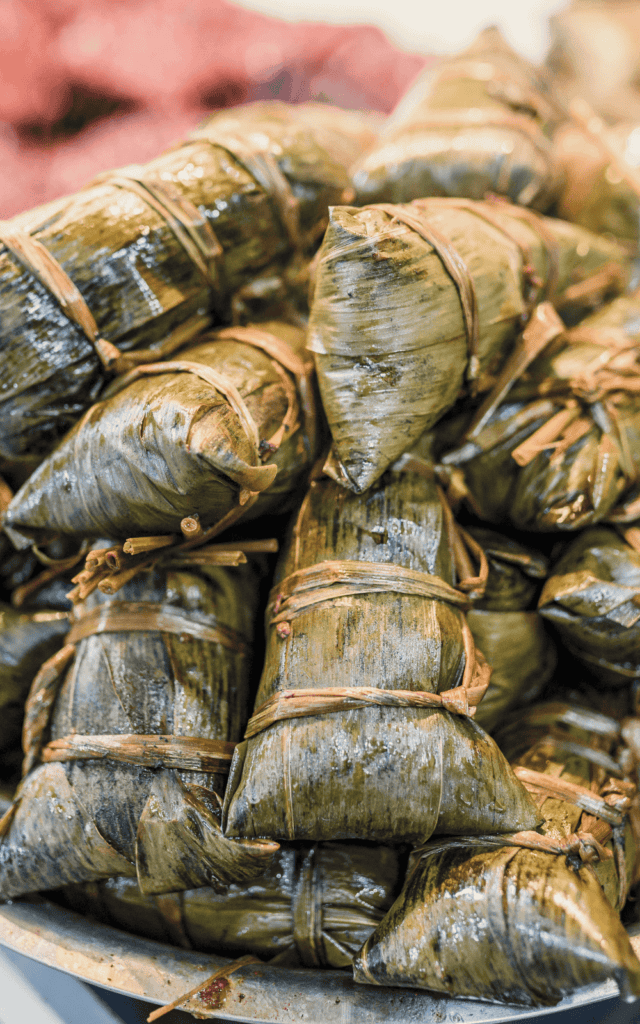
These sticky rice dumplings are stuffed with pork or other fillings and wrapped in bamboo leaves. The taste is quite good, though the sticky rice’s consistency can be a bit off-putting for some. However, I suggest you try it and stop by one of the stalls to watch a local expertly wrap the rice in bamboo leaves.
Being close to Shanghai, Zhujiajiao also offers traditional and delicious meat dumplings, xiaolongbao, and something I don’t recommend: stinky tofu.
If you’re wondering what this is, it’s fermented tofu with a pungent smell. If you catch a whiff of something unpleasant while exploring street food, it’s probably that…or Durian.
Zhujiajiao Itinerary Inspiration
Here’s how you can plan your day in Zhujiajiao
- The Kezhi Garden is the perfect way to start your Zhujiajiao itinerary. The water town opens at 8:30, and the earlier you go, the more peaceful your visit will be.
- Head to the Yuanjin Temple right after, on the same riverside, make sure to up to the Qinghe pavillion for the best view over the town.
- Cross Fangsheng Bridge. Here you can capture some photos before enjoying lunch at one of the many restaurants on Beidajie.
- After lunch, explore Tong Tianhe Pharmacy and the Qing Post Office, both on this side of the river.
- Once you’ve finished your visits, it’s time for a boat ride through the canals, so be sure to schedule it before 4 pm.
- Finally, wrap up your day with a shopping and street food tour, and enjoy some more wandering around the canals before heading back to the subway station to take Line 17 back to Shanghai.
There you go…here is the advice you need to plan your Zhujiajiao itinerary. Hopefully, this will make for a fun and unique day trip during your holidays in China.
If you’re looking for more information on traveling to China, make sure to check out my China Travel Guide. I’m sure you’ll find what you need. And if you need some itinerary inspiration after Shanghai, you can check out this 2-week travel itinerary. It’s the perfect way to discover China for a first timer.
Don’t hesitate to drop your questions in the comments if you have any doubts about traveling around China. I’m happy to help!
Other Articles You May Like While Planning Your Trip to China
- 11 Fantastic Ways to Discover China on a Budget Without Losing Your Mental Sanity
- China Packing List: 13 Vital Items To Pack for the Perfect Trip
- 10 China Travel Tips for Non-Chinese Speakers
- China Travel Apps: 7 Essential Applications You’ll Need in 2025
📌 Pin it for later