How to Get Around in Bali: A Complete Transportation Guide from an Almost Local
Last Updated on February 5, 2026
Here you are, you’ve finally booked that trip you’ve been dreaming about for ages, and now you’re probably trying to figure out the best way to get around in Bali. Especially after watching all those scary videos of endless traffic jams and scooters dangerously squeezing between stuck cars.
I’ve been living in Bali for the past six months, planning trips, booking cars, renting scooters, and yes, even getting scammed once or twice. I’ve pretty much seen it all. In this article, I’ll share my most honest and practical transportation tips to help you get around the Island of Gods.
I won’t just talk about how to get around in Bali. I’ll also break things down by area. Because no, transportation options aren’t the same everywhere on the island. They vary a lot. So stick around until the end.
Don’t have time now?📌 Save it for later!
This article may contain affiliate links. This means that if you purchase through one of the links, I may be paid a small commission at no extra cost to you. Thank you for supporting the blog and allowing me to keep sharing meaningful travel experiences with you.

What to Know About Traffic & Roads in Bali
Before diving into your transportation options, there are a few important things you should know. Bali’s traffic has a reputation. Some of it is true, some of it is exaggerated. Let’s clear things up.
Yes, traffic can be bad.
Major tourist and digital nomad hubs do get busy. Places like Ubud (city center), Canggu, Seminyak, Denpasar, and Uluwatu can get heavily congested, especially during peak hours.
Traffic often looks completely stuck, but it never is (locals say that “traffic in Bali is never stuck”; you just need a bit of patience). Those videos of hundreds of scooters crowding and waiting at intersections? They’re very real in these areas. Always factor traffic time in when moving around or planning day trips.
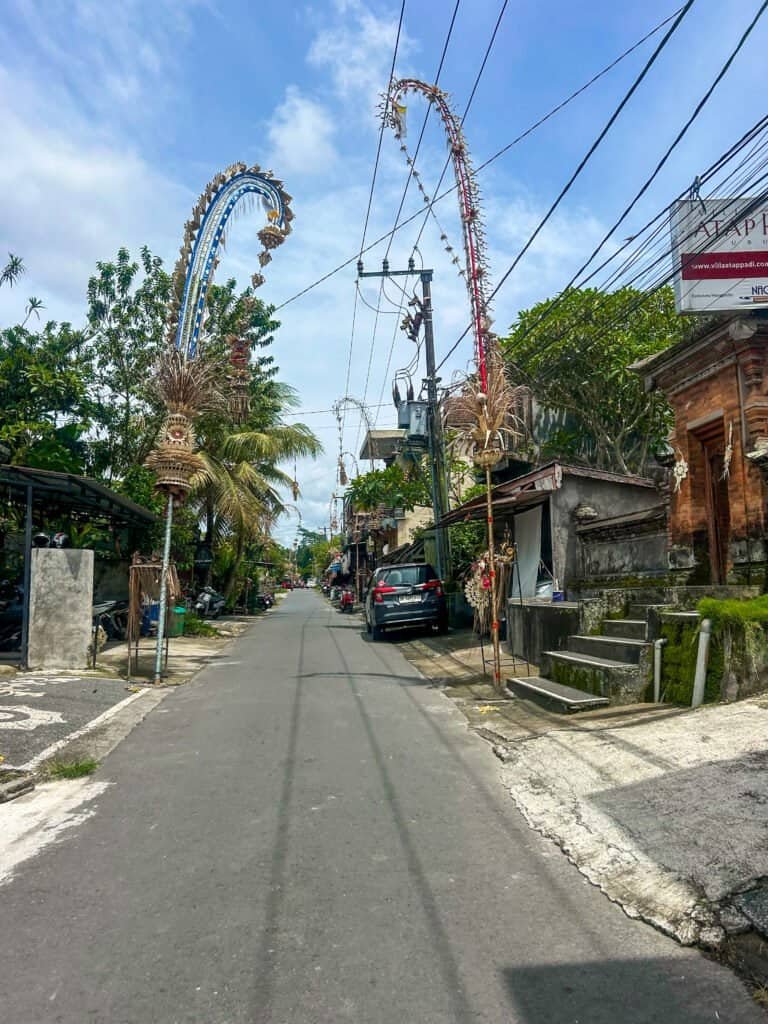
No, not all of Bali looks like that.
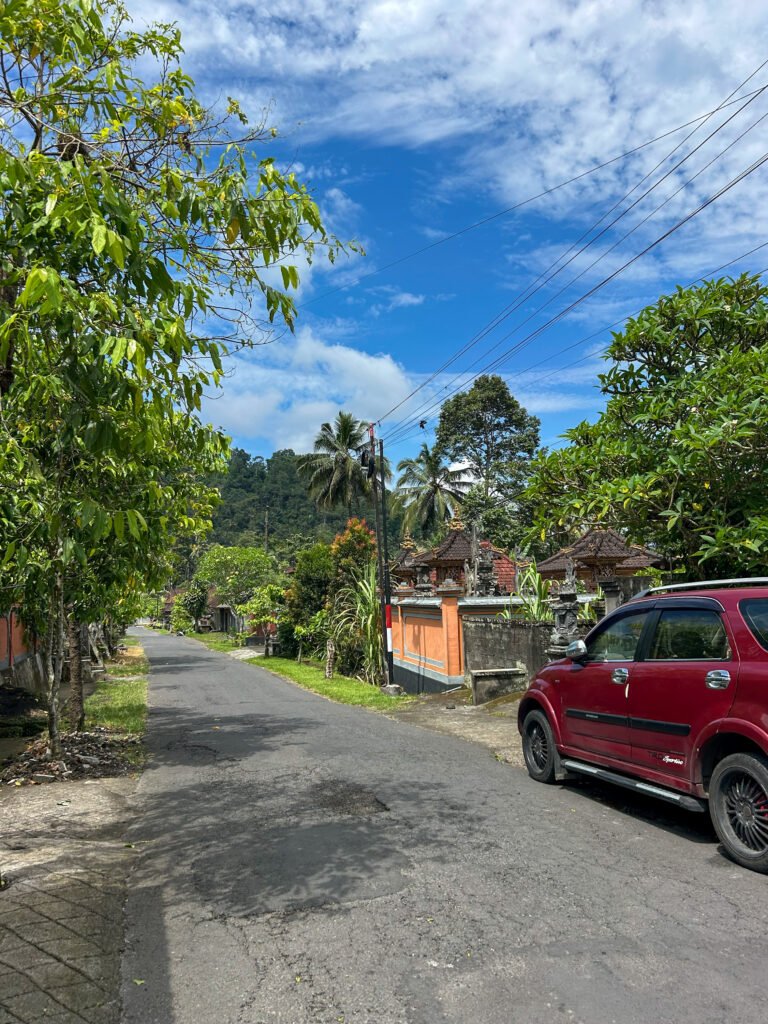
Large parts of the island are nothing like the traffic chaos you see online. Areas such as Sanur, Sidemen, Amed, Lovina, and most of Central and North Bali (north of Ubud) are generally quiet. Traffic there usually means a slow truck, a delivery van, or occasional road work.
Timing matters (a lot)
Traffic usually starts building up around 8:30–9:00 am. If you’re changing locations or heading out for a day trip, early morning is the best time to be on the road. You’ll avoid the worst congestion and move much faster overall.
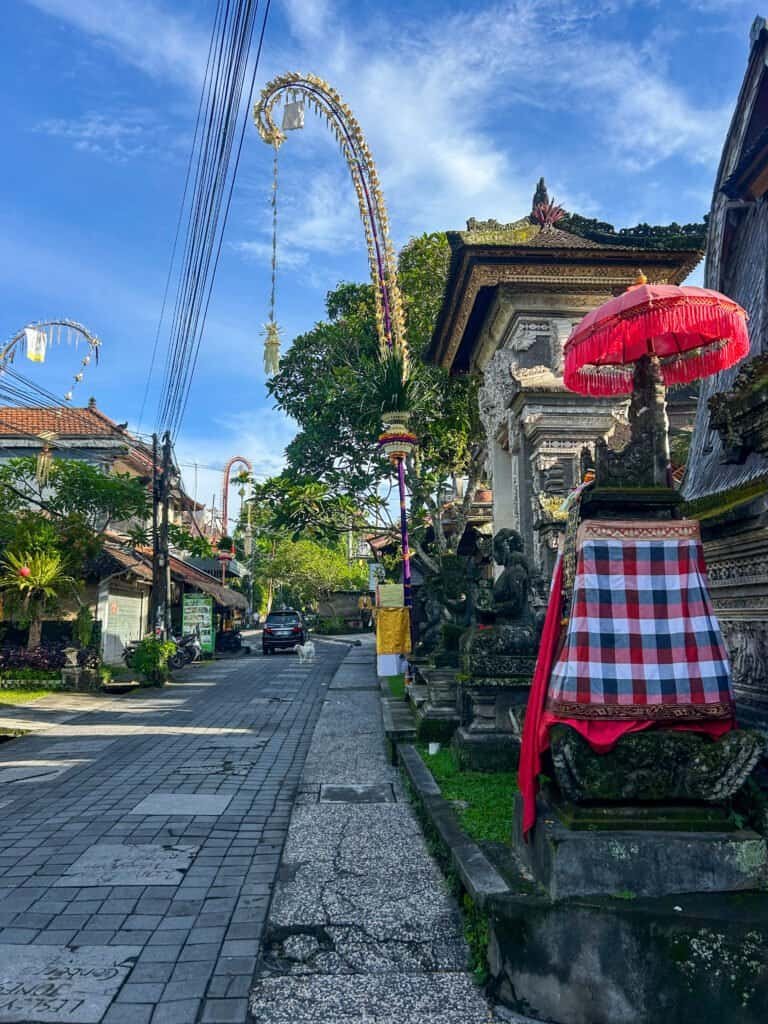
Avoid cars when you can
If you can, ride a scooter or book a scooter ride. It’s often the fastest way to get around and lets you avoid most traffic jams. Cars are significantly slower in busy areas. If you’re traveling by car, make sure to leave earlier than planned.
Road conditions vary across the island
In major cities and tourist hubs, roads are generally wide and well-paved. The further north or east you go, especially near rural villages, road conditions can get worse. Expect potholes, uneven surfaces, and narrow roads. In these areas, you should only rent a scooter if you’re confident and comfortable riding one.
The truth is, traffic in Bali isn’t only about the number of vehicles,
- Roads in many areas are very narrow
- In some places, two cars can barely pass each other
- Tour buses and vans often stop on the roadside, blocking traffic
- Bali’s road system was never designed to host that many tourists traveling around
How To Get Around in Bali: 7 Transportation Options
Now that I’ve set the scene and you know what to expect, here are the different transportation options in Bali, depending on how comfortable you feel getting around with the road and traffic conditions described above.
1. Scooter
A scooter is the most popular way to get around Bali. It’s affordable, offers maximum flexibility, and lets you bypass most traffic jams.
Renting a scooter in Bali is incredibly easy. Most accommodations offer scooters for rent, and if not, there’s almost always a rental shop nearby. No need to book in advance. Once you arrive, drop off your luggage and simply ask your accommodation for the closest rental service.
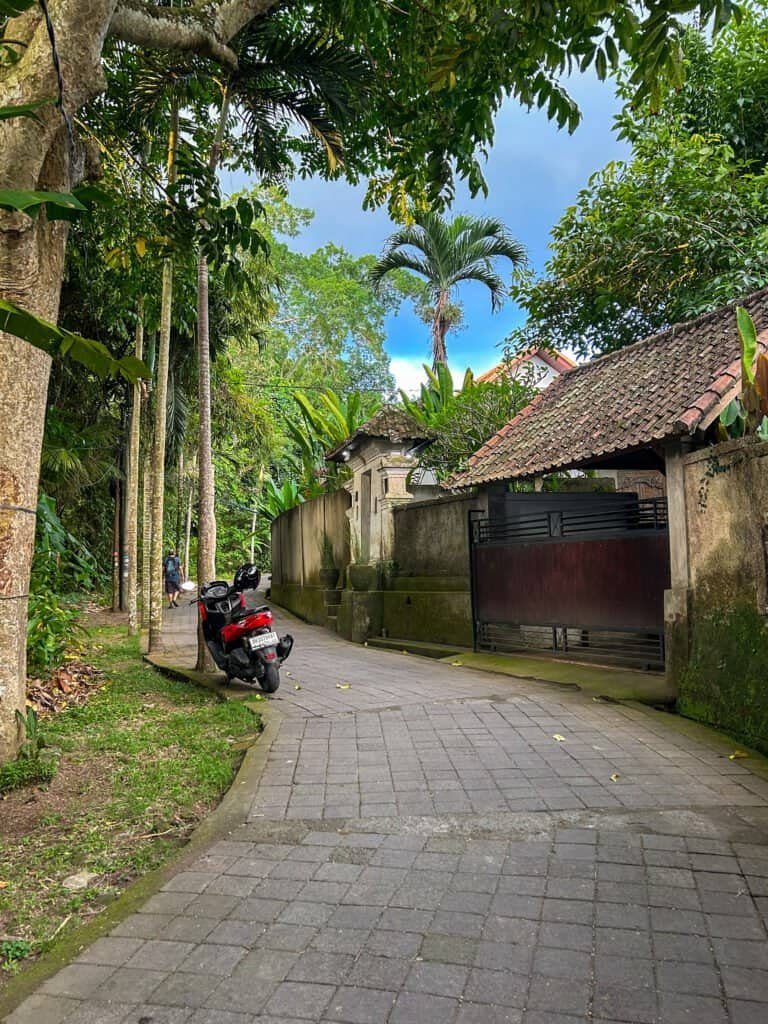
Daily rental prices usually range from IDR 80,000 to 150,000 (around $5–15 per day), depending on the model you choose, from smaller scooters like the Scoopy to larger ones such as the T-Max, which can also be shared.
You’ll find proper petrol stations in bigger cities, especially in the south. In more rural areas, petrol is often sold at small roadside stalls, usually in plastic bottles.
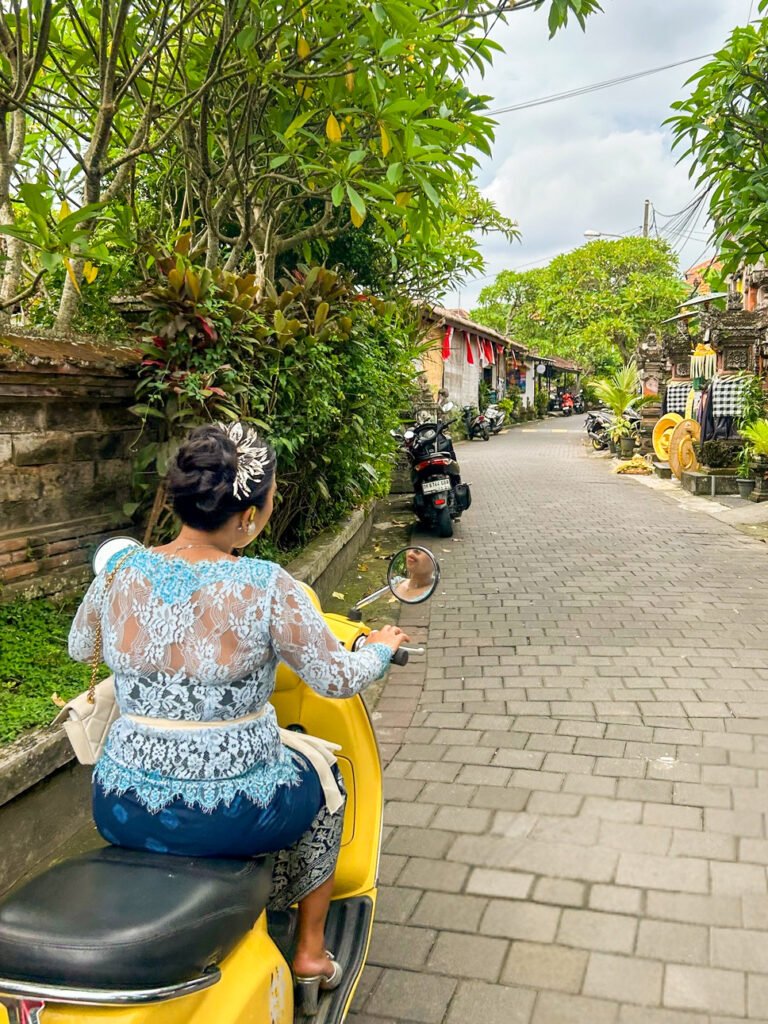
You can use a scooter both to get around within cities and for day trips, as long as you’re comfortable riding longer distances. Be aware that in some areas you may end up riding behind slow trucks, which isn’t ideal, especially since you’ll be exposed to their exhaust fumes.
Some rental services even allow you to rent a scooter in one location and drop it off in another, which can be useful when changing areas.
2. Ride Hailing Apps: Grab or Gojek Scooter Rides
Ride-hailing apps are extremely common in many areas around Bali to get around within a location.
The main difference between Grab and Gojek is the company behind them and, at times, small price differences, but the concept is the same. You download the app, link your credit card, book a ride, and the payment is processed automatically through the app.
I recommend downloading both apps. Availability and prices can vary depending on the area, and having both allows you to compare and find a ride more easily.
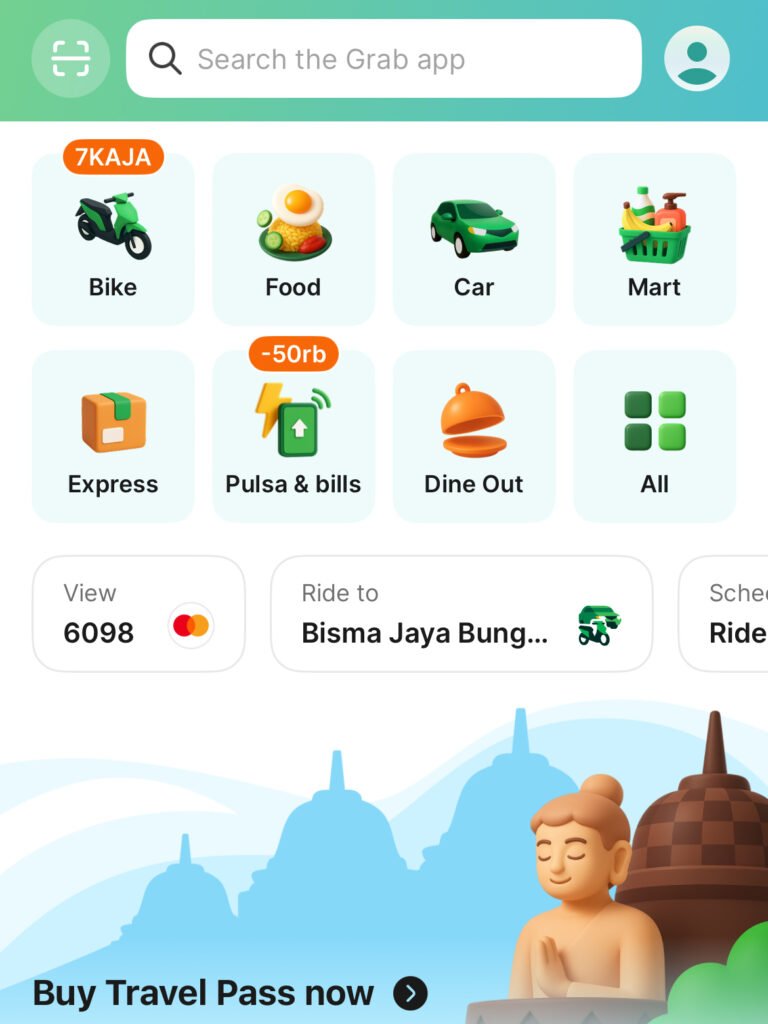
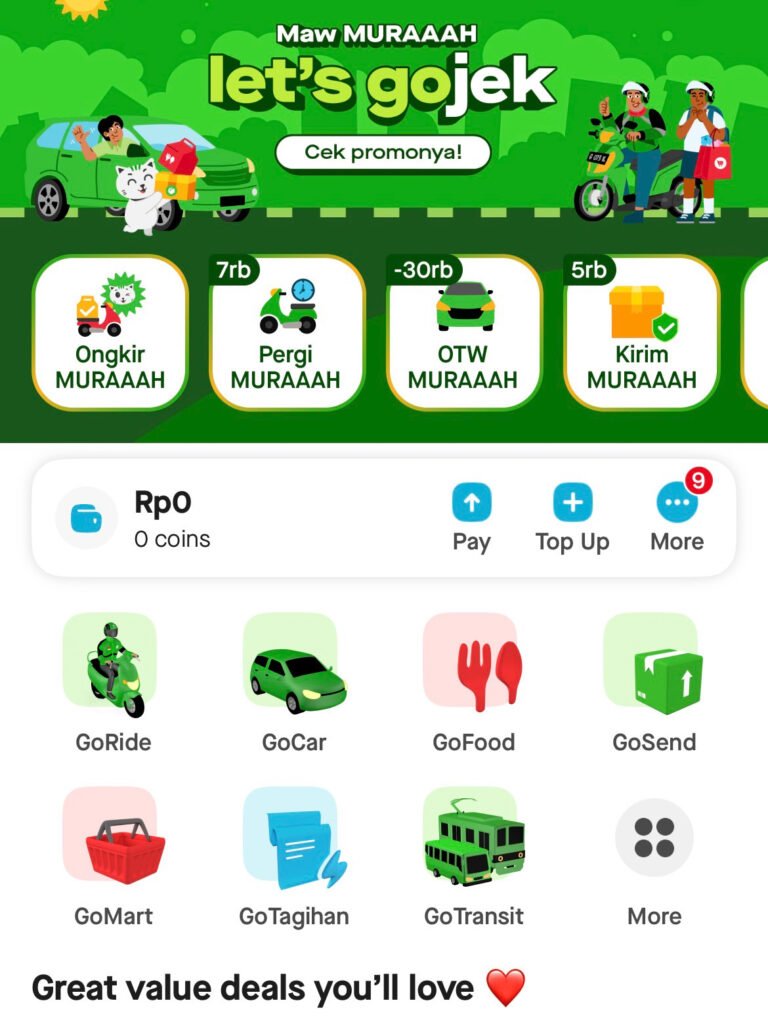
Personally, I find ride-hailing apps very safe. While some drivers’ riding styles can be a bit questionable, I’ve never had any issues.
Always wear a helmet (drivers usually carry one), and if you want to feel more secure, opt for XL rides, which use larger scooters and offer more space.
Prices obviously depend on distance, but for short rides, you can expect to pay around $1 on average, making this one of the most affordable ways to get around.
If you’re staying in areas like Canggu, Ubud, Seminyak, Sanur, or Uluwatu, availability is usually not an issue. The only thing to watch out for is requesting rides from locations slightly outside the main centers, where drivers may be harder to find, especially later in the evening.
In these cases, it can be helpful to ask your driver for their phone number, so you can contact them again if you struggle to find a ride back.
3. Ride Hailing Apps: Grab or Gojek Car Rides
Another feature of ride-hailing apps is the option to book car rides.
These are especially useful when changing locations (if you’re not renting a scooter) or when booking your ride to the airport before flying back home.
As mentioned earlier, it’s best to avoid cars whenever possible. That said, you’ll quickly notice that for longer distances, cars are sometimes the only option available on the apps. This is often the case when traveling north or east.
I personally never used Gojek for car rides, but with Grab, you can book a car well in advance, up to 90 minutes prior to your ride.
Prices are generally fair and much cheaper than hiring a random driver on the street. I usually paid between IDR 200,000 and 300,000 (around $12–17) for day-trip transportation, often involving 2–3 hour journeys through less touristy areas.
Cars are typically spacious, air-conditioned, and comfortable.
Just like with scooters, booking a car from more remote locations can be tricky, especially in advance. In those cases, you can try booking on the spot or arrange a ride through a local taxi or your accommodation.
4. Hire A Driver (For Day Trips)
While in Bali, it’s very common to plan day trips without changing locations. If you’re not renting a scooter, hiring a driver is often the only realistic way to explore an area.
You could also “hire” a Grab scooter driver for the day. This means agreeing on a daily price off the app, of course. If you find a driver you trust, this can be a great way to explore nearby spots, especially for shorter distances. It’s usually not ideal for longer trips, but it worked perfectly for me when I planned a waterfall-hopping day trip around Ubud.
When longer distances are involved (roughly 1–2 hours from where you’re staying), hiring a driver is the best option. You can agree on the itinerary in advance, make sure it’s realistic for the number of hours you’re booking, and then simply relax. The only thing you’ll need to do is get in and out of the car.
Hiring a private driver is more expensive. Prices usually range from IDR 600,000 to 1,000,000 (around $36–60 per car), and they vary depending on the area you’re visiting.
Day trips to East Bali or North Bali tend to cost more than trips around Ubud or the south, simply because they’re less common and drivers need to travel further to get there.
If this is how you’re planning your day trips, I highly recommend agreeing on all terms in advance, including overtime charges and any location-based extra fees. This was actually one of the main issues I ran into when hiring drivers in Bali. Having everything clearly agreed on beforehand makes a huge difference.
This is one of the few hiring services I used that felt transparent from the very beginning, in case you’re looking for a reliable option.
5. Hire A Driver (For The Entire Trip)
If you’re moving around a lot during your trip to Bali, it may be worth looking into a service that helps you get around the island throughout your entire stay, especially if you’re changing locations frequently. This way, you don’t have to plan and book every single ride separately.
That’s essentially how group tours work. Transportation is taken care of from start to finish. But even if you’re traveling independently, having a consistent driver or service can make things much easier.
It often means better overall prices, more flexibility with schedules, and the peace of mind that comes from already knowing who you’re traveling with.
This can be especially helpful when visiting more remote areas, where finding a ride back isn’t always guaranteed and can take time.
6. Tours
Another common way to get around Bali, without worrying about rentals, petrol, traffic, bumpy roads, or anything else, is by joining tours.
Booking a full-on Bali tour for the entire duration of your stay is quite common (I’ve actually joined a tour during my first trip here.)
These tours usually include everything, from transportation to accommodation. That said, if you’re the kind of traveler who loves flexibility or likes to wake up and change plans based on how you feel that day, this isn’t always the best option.
Tours, however, can be a great solution for day trips. Sometimes, for just one day, you may not want to think about logistics or wonder whether you’ll be trusting the right local driver. You just want to sit back and enjoy, even if that sometimes means visiting places with more crowds, since tours usually follow the same schedules.
You can easily book tours through your accommodation, or via platforms like GetYourGuide and Viator. My personal favorite, though, is Seek Sophie, a company focused exclusively on Asia and known for offering more off-the-beaten-path experiences. I’ve joined a couple of tours with them, including my Mount Batur sunrise hike, and can honestly recommend them.
7. Ferry
This is especially relevant if you’re planning to visit the Nusa Islands (Nusa Penida or Nusa Lembongan) or the Gili Islands, located off the coast of Bali and administratively part of Lombok.
Both island groups can be reached by ferry. To get to Nusa Penida or Nusa Lembongan, ferries depart from Sanur and take around 30 to 45 minutes. The ride is usually smooth and quick; ferries are fast, relatively small, but generally comfortable.
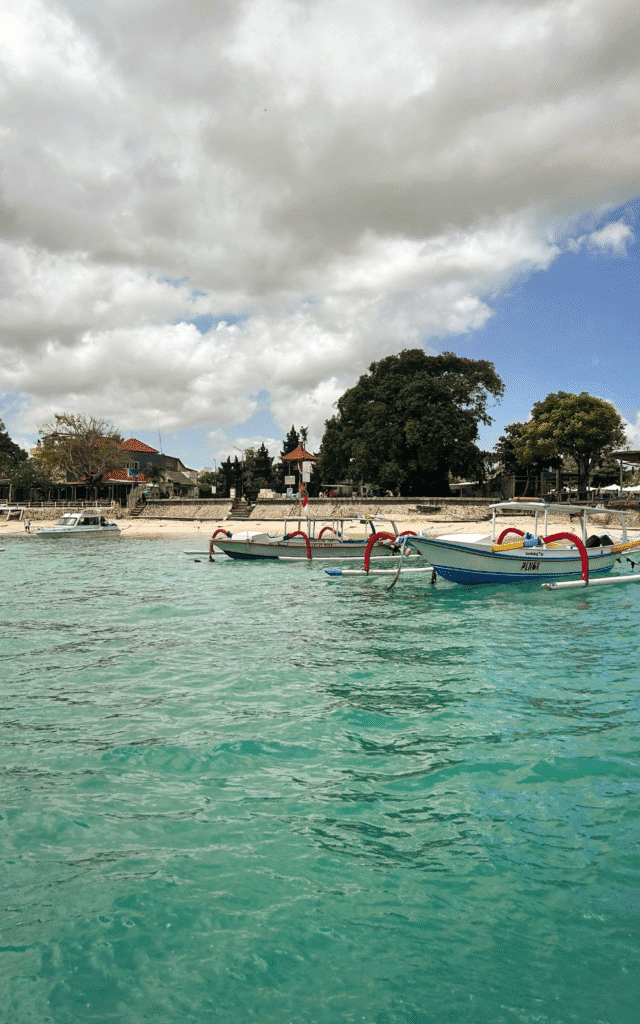

Getting to the Gili Islands takes more time. First, you’ll need to reach Padang Bai in East Bali, then hop on a ferry that takes around 2 hours. On this route, ferries tend to be much larger and more stable.
I’d recommend booking a morning ferry. Sea conditions are usually calmer earlier in the day, as the weather tends to be more stable in the morning.
To book your tickets, you can use Bali Ferries, where you’ll find most available routes and operators. If you’re looking for specific companies, I’ve personally traveled with Ostina Fast Boat to the Gili Islands and Dream Beach Express to Nusa Lembongan, and had good experiences with both.
Ride Hailing Apps in Bali: Where They Work
In Bali, it’s important to distinguish between main tourist hubs and more off-the-beaten-path areas. The biggest difference between the two? Ride-hailing apps.
In some locations, apps like Grab and Gojek are widely available. In others, they’re limited or don’t work at all. And if you’re not comfortable riding a scooter yourself, this means you’ll need to rely on private drivers, which can have an impact on your budget, especially if you’re traveling solo.
In these areas, ride-hailing apps are usually easy to find, both for scooters and cars:
- Ubud
- Canggu
- Seminyak
- Sanur
- Denpasar
- Uluwatu
- Most of Southern Bali
If you’re unsure about availability, one of the best things you can do is save the number of a driver you find reliable and ask if you can contact them again when needed, as long as you’re staying in the same area.
In these areas, Grab and Gojek may be unreliable or not available at all:
- Amed
- Kintamani
- Sidemen
- Bedugul
- Lovina
- Munduk
- Rural areas of Central Bali
- Most of West, East, and North Bali
- Islands: Nusa Lembongan, Nusa Penida, and Gili Islands
In these locations, the best options are usually:
- Hiring a private driver
- Renting a scooter
- Arranging transport through your accommodation
If you’re unsure how easy it will be to get around, always ask your accommodation whether Grab or Gojek is available in the area. They’ll usually give you the most up-to-date information.
How to Get Around on Bali’s Islands
Most of the transportation options I’ve mentioned so far don’t really apply when it comes to getting around the islands near Bali, such as Nusa Lembongan, Nusa Penida, and the Gili Islands.
Nusa Lembongan
When it comes to getting around Nusa Lembongan, things work very differently compared to mainland Bali. There are several ways to move around the island, but ride-hailing apps or cars simply don’t exist here.
The easiest and most flexible option is renting a scooter. It’s what allows you to explore the island properly and reach areas that would otherwise be hard to get to.
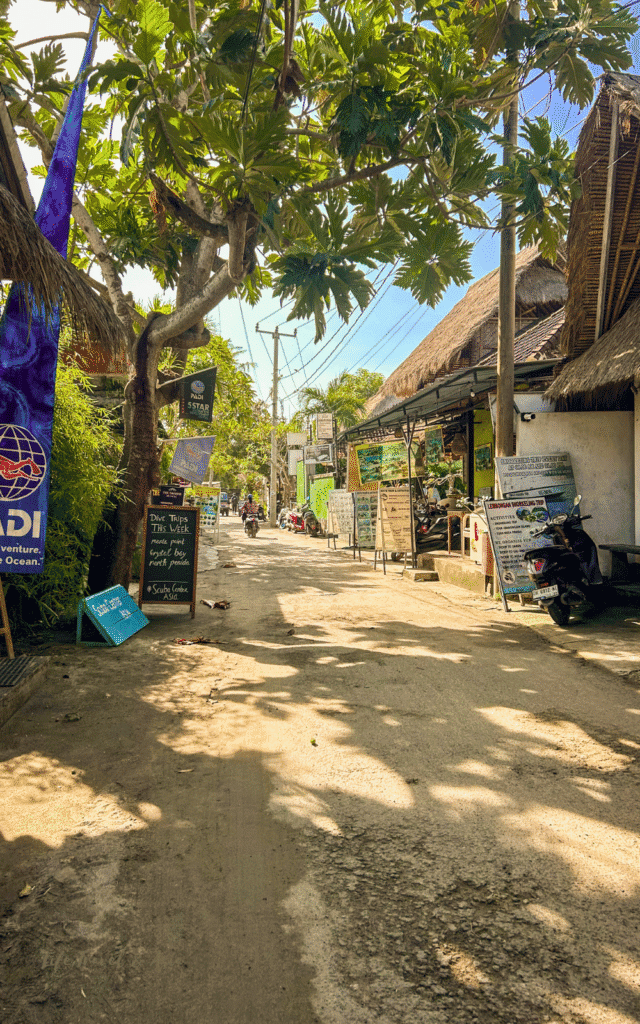
Some parts of Nusa Lembongan are walkable, but you definitely can’t see everything on foot. Cycling can work too, especially around the Jungut Batu area, where the terrain is mostly flat.
If you don’t want to rent a scooter, you’ll need to rely on a mix of pick-up trucks, buggy rentals, or local motorbike taxis. It works, but it’s less flexible and often means adapting to what’s available.
I’ve written a full guide on transportation in Nusa Lembongan if you’re including it in your itinerary and want to go deeper.
Nusa Penida
Nusa Penida is the big sister of Nusa Lembongan. You’ll find more cars here, but ride-hailing apps still aren’t available.
The most common way to get around Nusa Penida is by renting a scooter. That said, it’s very different from riding on Nusa Lembongan.
Roads are rough in many areas, especially inland and toward the more remote eastern side of the island. On top of that, it can take up to two hours to drive from one side of the island to the other, which makes getting around by scooter more demanding.


It’s still the option most people choose, but only if you’re comfortable riding a scooter in challenging conditions.
Private drivers and organized tours are also available and are often a better choice if you don’t feel confident riding.
I’ve written a full guide on transportation in Nusa Penida if you’re including it in your itinerary and want to dive deeper.
Gili Islands
The Gili Islands include three small islands off the coast of Lombok: Gili Trawangan, Gili Meno, and Gili Air.
They’re all very small, and cars and motorbikes aren’t allowed, mainly to preserve the environment. That’s why the only ways to get around are on foot, by bicycle, or by electric scooters, which have been introduced more recently.
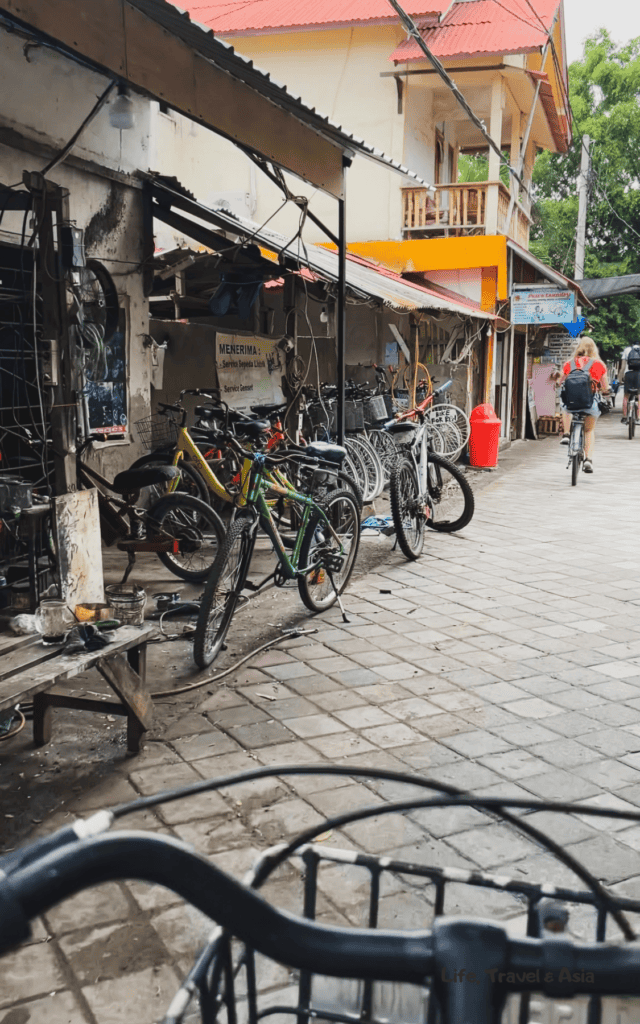
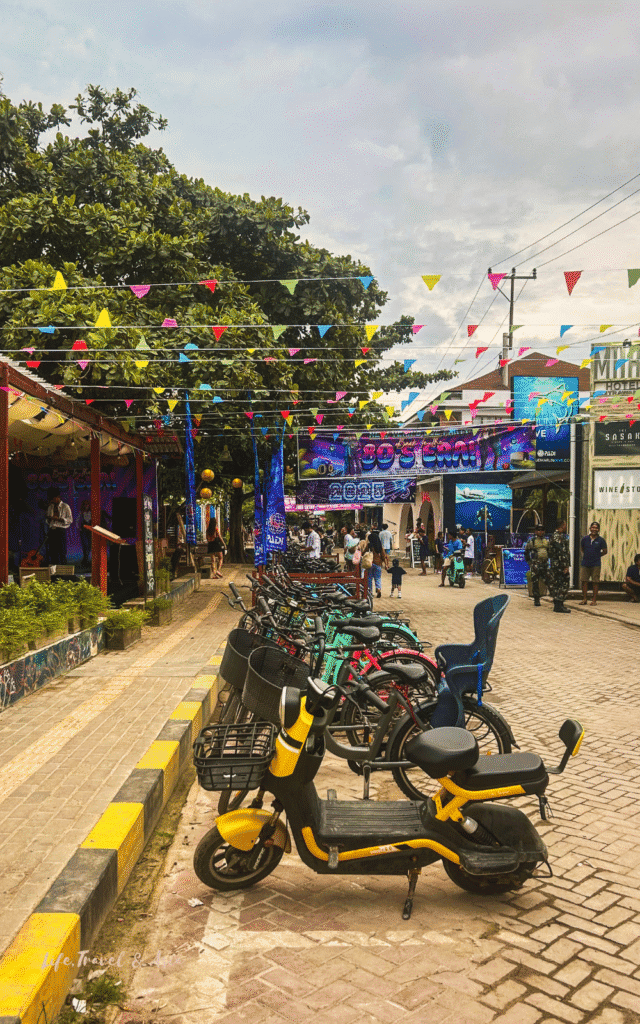
On Gili T, you’ll also see horse-drawn carts. Personally, I don’t feel comfortable recommending this option, as it doesn’t seem very ethical to me, so I’d leave it out.
You can easily cycle around the perimeter of Gili T, the largest of the three islands, in about one hour, following a well-paved road that runs along the beach. The inner paths can be muddy or a bit messy in places, but it’s still easy to find your way around and get from one side of the island to the other.
FAQ Section
1. How to Get From The Airport to Your Hotel in Bali
Once you land in Bali, you’ll have several options to get to your accommodation. The one I usually recommend, because it’s effortless, well organized, and honestly often the cheapest, is booking a car through Klook. I’ve used their service countless times, and it has always run smoothly, without any issues.
2. How to Get Around in Bali Without A Scooter
If you’re staying around Bali’s main tourist areas, you can easily rely on Grab or Gojek, two equally popular ride-hailing apps on the island.
If, on the other hand, you’re changing locations, you have a couple of options: you can book a Grab car and be dropped off directly at your destination, or hire a private driver if you’re planning a day trip with multiple stops.
3. What’s The Best Way to Get to Bali’s Airport
If you’re traveling with large luggage, booking a car through Grab is usually the easiest option, and prices are generally very fair.
On the other hand, if you’re traveling light with just a backpack, you can even book a Grab XL scooter for extra space and avoid Denpasar traffic altogether by moving on two wheels.
And that’s it. I’ve gathered all my hard-earned wisdom on how to get around Bali in this complete transportation guide. Getting around the island may look like a nightmare from the outside, but with a bit of planning, you can avoid most of the hassle.
I hope this guide helps you plan your itinerary in the best way possible, without wasting time stuck in traffic or dealing with unnecessary stress.
If you have any questions or feel like there’s something I might have missed, drop it in the comments. I’m always happy to help.