Jatiluwih Rice Terraces: Guide to Bali’s Most Authentic Rice Fields
Last Updated on November 12, 2025
Are you planning a trip to Bali and looking for authentic experiences away from the crowds? The Jatiluwih Rice Terraces are one of the island’s most underrated natural beauties.
Located in Central Bali’s Tabanan Regency, just 1.5 hours from Ubud, these expansive rice fields spread across the foothills of Mount Batukaru — part of a UNESCO World Heritage–protected area and the daily workplace of thousands of Balinese farmers.
Visiting Jatiluwih isn’t just about pretty views and vibrant colors; it’s the best way to experience the real Bali, where agriculture and traditions still shape the slower rhythm of life.
In this guide, you’ll find everything you need to plan your visit to the Jatiluwih Rice Terraces: the best ways to get there, recommended tours, essential tips for hiking the trails, and how to enjoy this natural wonder respectfully while supporting the local community.
This article may contain affiliate links. This means that if you purchase through one of the links, I may be paid a small commission at no extra cost to you. Thank you for supporting the blog and allowing me to keep sharing meaningful travel experiences with you.
Don’t have time now?📌 Save it for later!
Recommended in This Article
Planning Your Visit
1. How to Get There
The Jatiluwih Rice Terraces are located about 1.5 hours from Ubud and around 2 hours from Denpasar. To get there, you have a few options:
Rent a scooter
If you’re leaving from Ubud, the ride isn’t too long. However, as you get closer to Central Bali, the roads may be less smooth with more hills and curves. Make sure you’re comfortable driving a scooter and willing to ride for at least 1.5 hours.
Renting a scooter is usually the most affordable option, with prices ranging from IDR 70,000 to IDR 250,000 depending on the size and model.
Grab/Gojek
If you’re planning to stay overnight in Jatiluwih, you can book a Grab car and enjoy the vibrant green landscape along the way. This is often how I move around when I’m staying somewhere for a night or two. Keep in mind that once you arrive, you’ll likely need to rent a scooter locally to get around the area.
Hire a Private Driver
In Bali, it’s very common to hire a private driver for the day. You share your itinerary and they will take you everywhere you’d like to go, then drop you off back at your starting point (or another one). It’s the easiest and most comfortable way to plan a day trip.
⭐ After a couple of not-so-great experiences, I discovered this service to hire a driver for the day — and it’s the only one I’d book now.
Join a tour
I usually don’t love tours, but Jatiluwih is one of those places where a local guide’s insight can really enrich your visit. These rice terraces are deeply connected to cultural heritage, religion, and nature — and with a guide, you’ll learn much more than simply enjoying the beautiful views on your own.
2. Best Tours of Jatiluwih Rice Terraces
Bali’s Iconic Sights | Waterfall, UNESCO, Water Temple: One of the most beautiful tours in Central Bali, including the stunning Sekumpul Waterfall, located about 1.5 hours from Jatiluwih. You’ll have around one hour to explore the rice fields and learn more about the UNESCO-protected Subak irrigation system.
Bali: Water Temple, Waterfalls, and UNESCO Rice Terrace: One of the most complete tours of Central (and beyond) Bali. It includes my favorite waterfall, Leke Leke, and the breathtaking Banyumala in North Bali. You’ll also get to see two of the most enchanting temples in Bali: Pura Ulun Danu Bratan and Tanah Lot — and of course, a visit to the Jatiluwih Rice Terraces.
Jatiluwih | 2-Hour E-Bike Cycling Tour: The best way to explore (and learn) more about the Jatiluwih Rice Fields. This 2-hour e-bike tour is led by a local guide who will share so much insight into the history of the site. You’ll ride through dense jungle, bamboo forests, and local villages — all while enjoying the incredible scenery of the valley.
3. Best Time To Visit Jatiluwih Rice Terraces
Jatiluwih Rice Terraces are a year-round destination. However, the best time to visit is generally from right after the end of the rainy season, when the valley is fully covered in vibrant green rice plants.
If you’re planning to visit, try to arrive earlier in the morning — Central Bali often becomes foggy or rainy in the afternoon (no matter the season).
Low clouds can hide the view, although the mist does give the terraces a mysterious charm. Rain is also very common, so packing a light raincoat or umbrella is always a good idea.
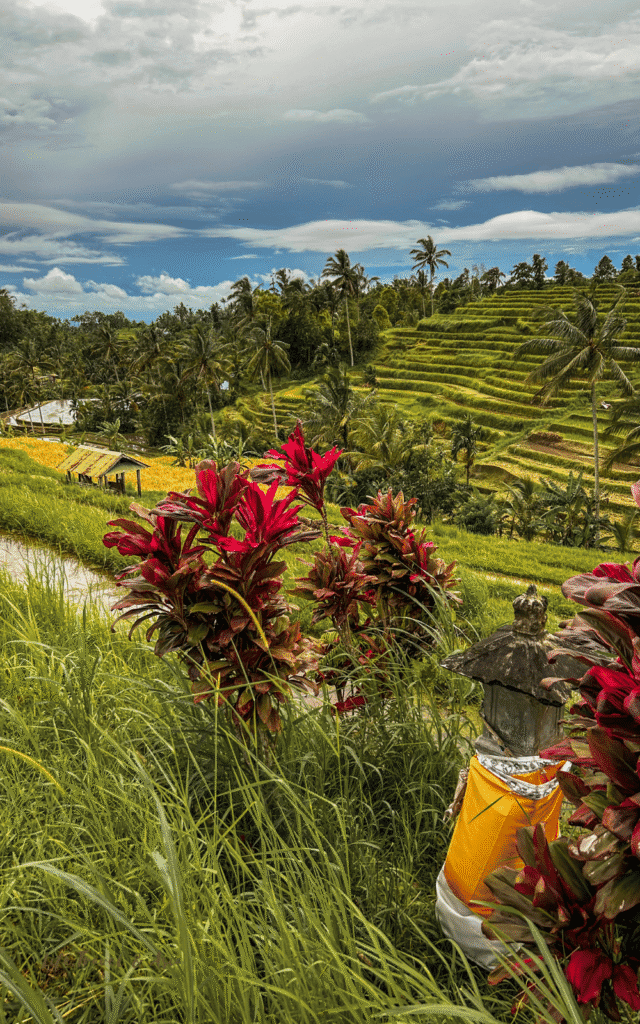
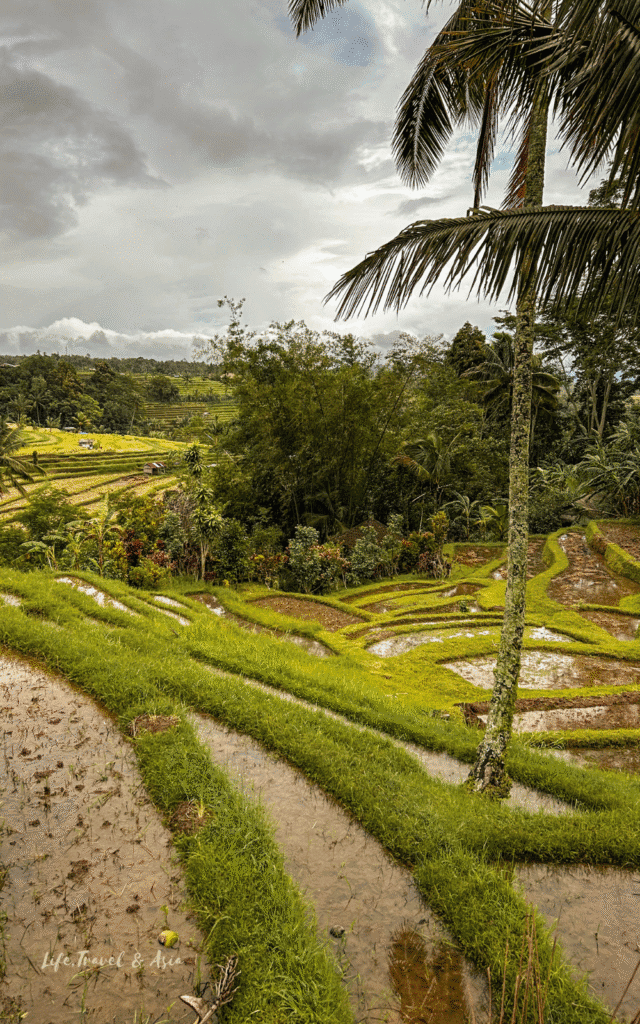
February to April is one of the best times to visit (as the harvest hasn’t happened yet). The rice stalks are tall and bright green, creating a stunning patchwork over the valley. During June and July, farmers usually harvest their crops, and you can watch the process firsthand.
I personally visited in December, right in the middle of the rainy season, and the views were still incredible.
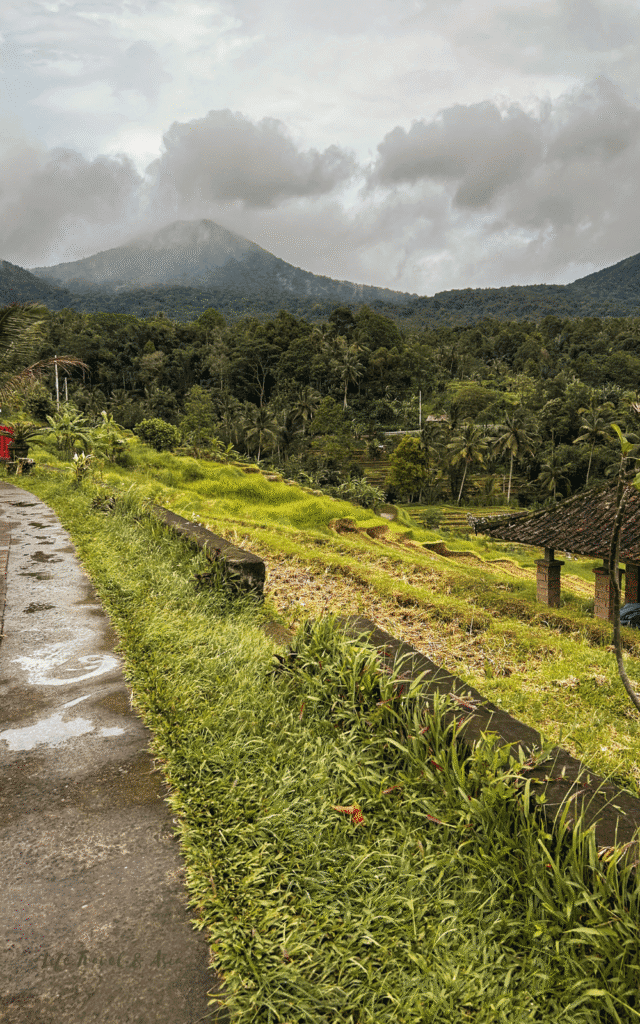
The water on the terraces reflected the sky like mirrors, and the rain made the landscape glow in rich shades of deep green. The trails were a bit muddy, so it wasn’t ideal for long hikes — but I still absolutely loved my visit.
4. Opening Hours & Entrance Fees
The entrance fee is IDR 50,000 (about $3.50). I bought my ticket at a small stall just across the road from the Gong Jatiluwih Restaurant parking area and began my trek from there.
Although the rice fields are technically open 24/7, the official opening hours are from 6:00 AM to 7:00 PM — this is when the ticket offices and the small stalls within the terraces operate.
Even outside those hours, you can still access the area, but it’s still important to pay the entrance fee to support the site and the local communities that help maintain its beauty. Plus, there are a few checkpoints throughout the fields where you may be asked to show your ticket.
History & Facts About Jatiluwih
The Jatiluwih rice terrace spans over 600 hectares (~1,500 acres) and sits at roughly 700 metres above sea level in Bali’s highlands. They are part of the traditional Subak system, which UNESCO has recognised as a World Heritage site since 2012.
Developed around the 9th century, this ancient irrigation system remains fundamental to Balinese life today. It is more than just watering fields; it is a complex ecosystem that connects community, nature, and spirituality.
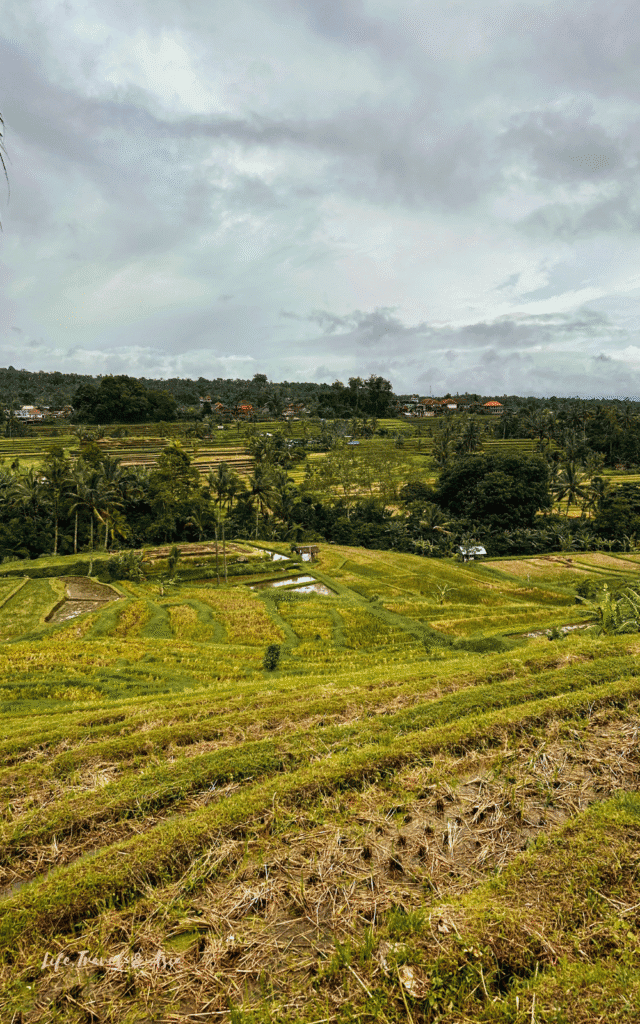
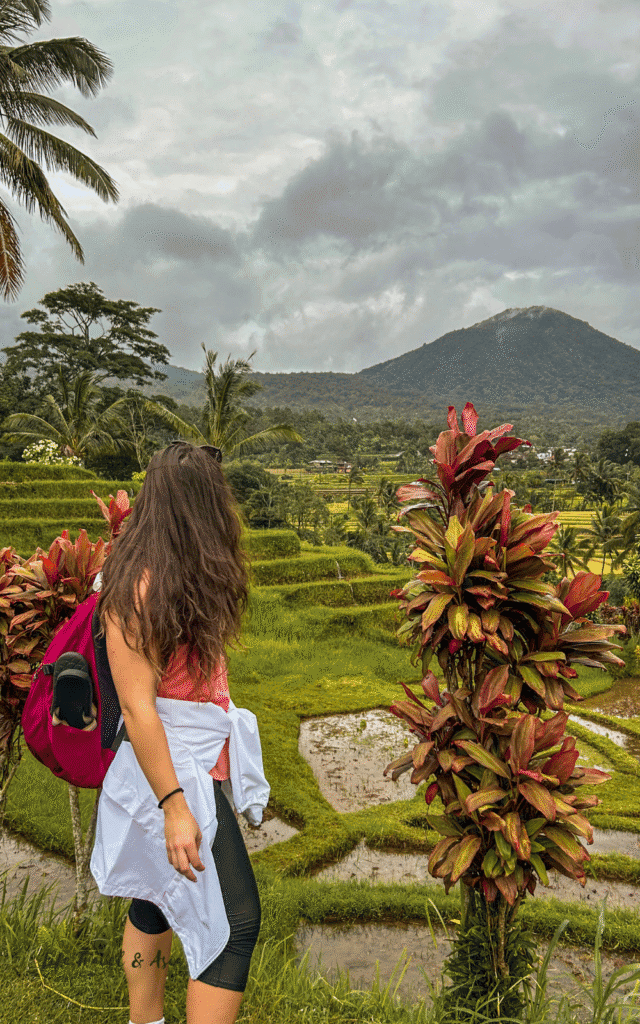
The Subak system extends from the rice fields of Jatiluwih to water temples like Pura Ulun Danu and Pura Tirta Empul, reflecting the Balinese deep-rooted respect for the interconnectedness of nature, religion, and humanity.
Forests protect the water supply, water temples host rituals to promote harmony between humans and nature, and from those temples the water flows downhill to nourish the land.
Farmers work in cooperative groups, all following the Balinese philosophy of Tri Hita Karana — practiced by priests in the water temples — that unites the human realm, the natural world, and the divine.
Hiking Around Jatiluwih
Hiking around the rice fields is the most popular activity in Jatiluwih. Depending on how much time you have, there are several marked trails to choose from:
- Red Loop: The easiest and shortest trail. It takes about 45 minutes to complete the 1.5 km loop.
- Purple Loop: Slightly longer than the red one, but still very easy and beginner-friendly.
- Yellow Loop: Around 2 km long and perfect if you have 1–2 hours available.
- Blue Loop: Just over 3 km, taking around 2 hours to finish.
- White Loop: The longest trail at approximately 5.5 km. It takes you deeper into the valley and is also the main route used for e-bike tours.
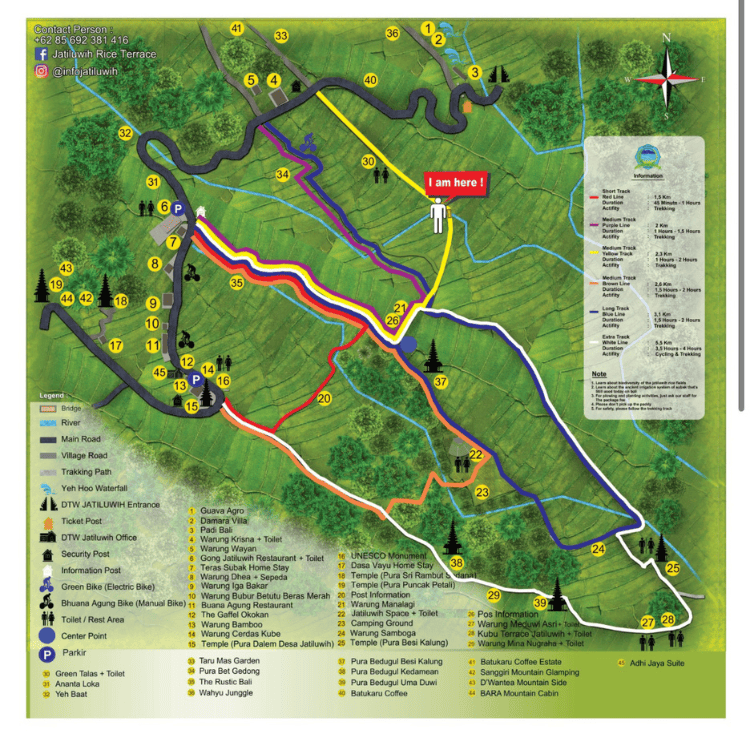
The Red, Purple, and Yellow trails are the most popular choices, especially for first-time visitors, and they are absolutely worth it.
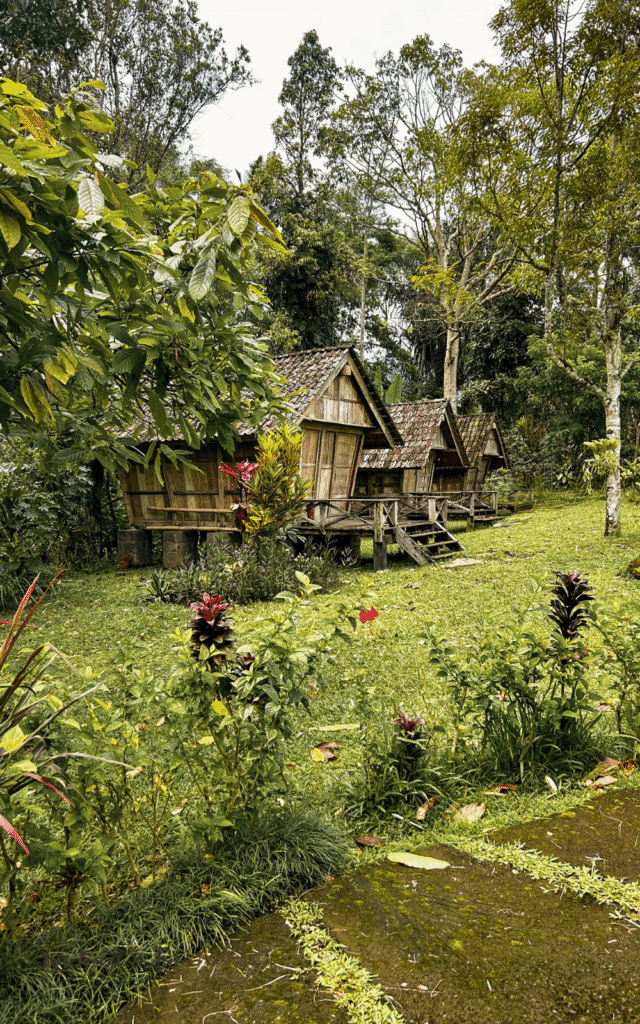
You’ll enjoy wide open views over the terraces, pass small homestays, and meet friendly locals at small stalls along the way. I personally hiked the Yellow Loop during my visit.
Tips to Prepare Your Visit
Bring Cash
While cards are generally accepted in restaurants, around Jatiluwih — and Central Bali in general — cash is much more common for small purchases at local warungs.
The entrance ticket to Jatiluwih must also be paid in cash, as card payments are not accepted. Be sure to carry small denominations, as it’s not unusual to have limited change.
Wear Comfortable Footwear
Whether it’s hiking sandals or sneakers, make sure your shoes are actually made for walking — there’s nothing worse than covering kilometers in footwear that hurts.
Protect From The Sun
If it’s a sunny day, finding shade around Jatiluwih can be challenging — especially if you’re doing one of the longer loops. Make sure to wear SPF and bring a hat to protect yourself from the intense sun.
As you can see from my pictures, I didn’t really need it during my visit in December, but if you’re coming in the dry season, it will likely be a must.
Bring Water
There are a couple of small stalls along the trails where you can buy water, but if you’re the kind of person who gets thirsty during a hike, you’ll definitely want to bring your own bottle.
Bali’s humidity is no joke — the kind that makes you sweat even when you’re standing still — so make sure to hydrate while exploring.
Be Respectful
As mentioned earlier, Jatiluwih isn’t just a tourist attraction — it’s home to the farmers and local community who maintain the landscape and traditions that make this place so special.
To ensure your visit has a positive impact, keep these respectful behaviors in mind:
- Ask before taking photos of farmers or locals working or bathing in the fields.
- Stick to the designated paths to avoid damaging crops and irrigation systems.
- Avoid flying drones unless you have permission — many areas are restricted.
- Never pick rice or touch crops.
- Support local businesses by purchasing from small warungs and vendors.
- Take all your waste with you — even small items like tissues or fruit peels.
Where to Eat Around Jatiluwih
If you’re visiting around lunchtime, you’ll find plenty of warungs with beautiful rice-field views scattered around the site.
I personally had lunch at Gong Jatiluwih, a lovely open-air warung with a fantastic view of the terraces. They offer a delicious Indonesian buffet, so you can try a bit of everything.
Other great options nearby include:
- Jatiluwih Resto: a well-known spot serving traditional Indonesian dishes with wide views over the fields.
- Bhuana Agung Restaurant: featuring tables right on the edge of the terraces to make you feel like you’re dining surrounded by the rice fields. They also have accommodations.
Where to Stay Around Jatiluwih
My visit to Jatiluwih was part of a larger trip through Central Bali, so I based myself at Village Above the Clouds, about 30 minutes from the rice terraces.
It was genuinely one of the loveliest stays I’ve had in Bali. The property features cozy bungalows set within a beautifully maintained, colorful garden.
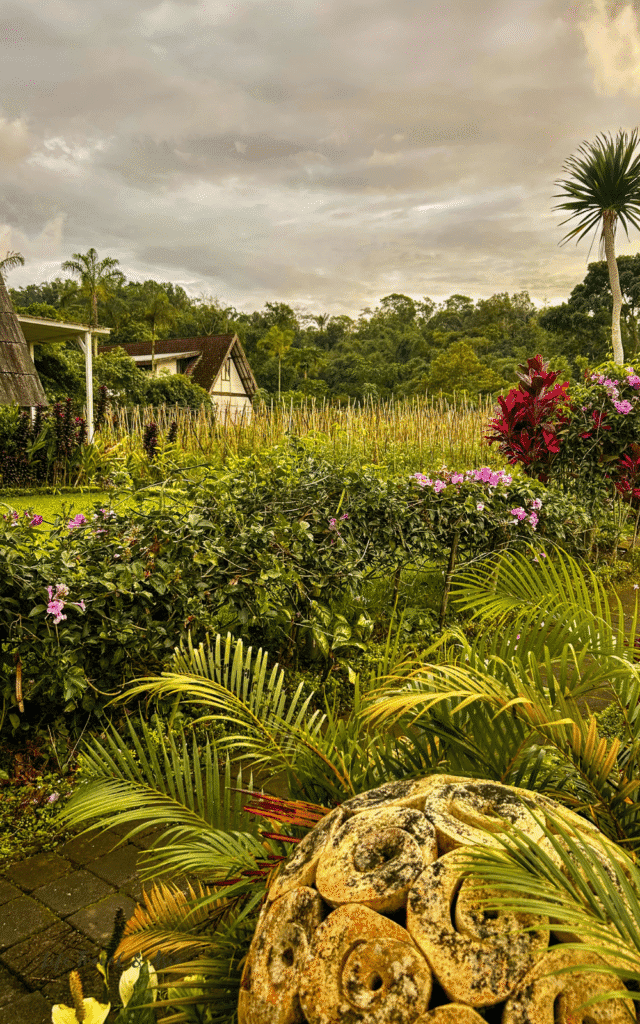
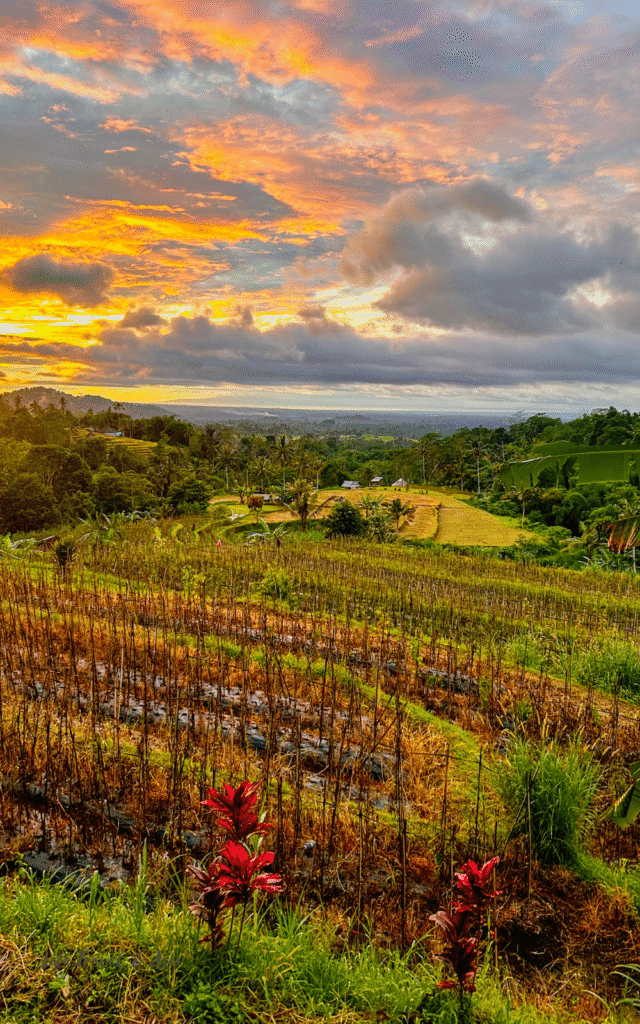
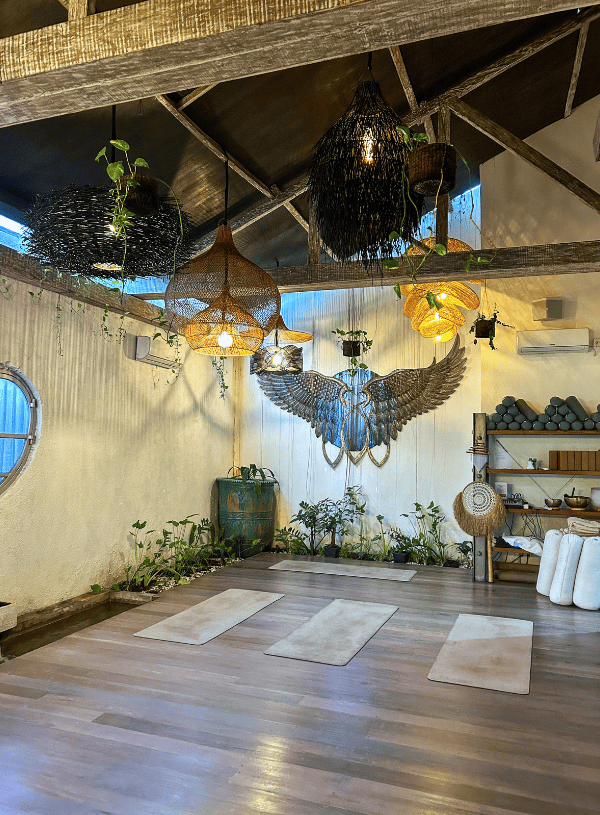
There’s also a yoga shala on-site where you can book classes, plus a restaurant serving lunch and dinner — so you really have everything you need.
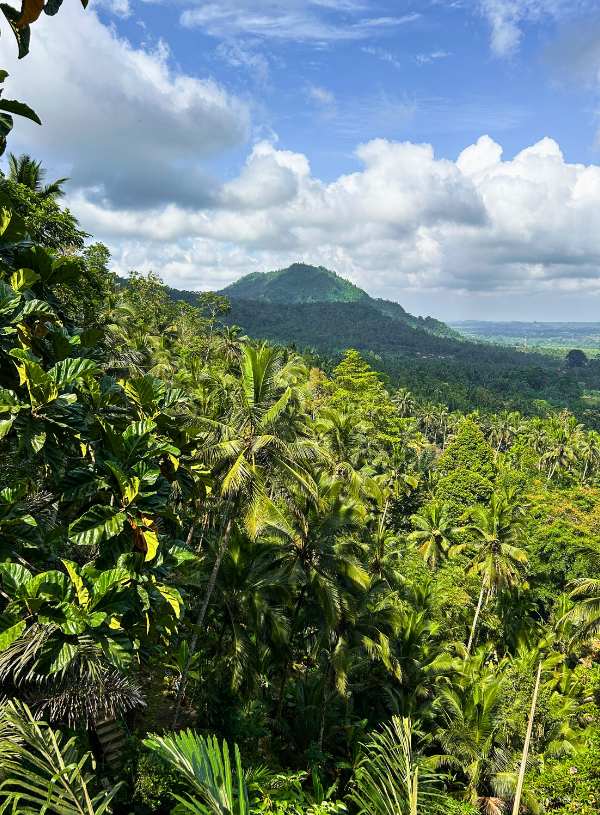
And the views? Absolutely breathtaking. From the resort, you overlook layers of rice fields and lush countryside stretching across the valley. Waking up for sunrise here doesn’t feel like an effort — it feels like a gift.
Jatiluwih Vs. Tegalalang Rice Terraces
When I say Jatiluwih is underrated, I mean that its spotlight is often “stolen” by the Tegallalang Rice Terraces, located about 15 minutes north of Ubud by car.
Because Tegallalang is so close to one of Bali’s main tourist hubs — and thanks to the endless Instagram photos — it has become the most popular rice terrace on the island. And to be fair, its lush green valley and unique layout are beautiful and very photogenic.
But in my opinion, it doesn’t compare to Jatiluwih‘s scale, cultural significance, and natural beauty.


Beyond the obvious differences — like size (Tegallalang is tiny compared to Jatiluwih) and price (IDR 75K vs IDR 50K) — the real distinction lies in the atmosphere. Tegallalang is designed almost entirely for tourism: swings, photo spots, cafes lining the entrance… everything revolves around visitors.
There are no farmers actively cultivating the fields, no sense of daily life, and little cultural or spiritual context. Meanwhile, Jatiluwih is a living agricultural landscape — authentic, expansive, and deeply connected to community traditions.
To put it simply, Jatiluwih is the real rice-terrace experience. Tegallalang is the tourist attraction where you go to snap a couple of photos.
⭐ If you’re staying in Ubud and planning the rice fields, here’s my honest take on Tegallalang: what I loved, what I didn’t, and how to make the most of your visit.
Things To Do Around the Jatiluwih Rice Terraces
Beyond the stunning rice terraces, Jatiluwih’s location makes it a great starting point for exploring other nearby sights and temples.
Here are a few highlights I personally loved:
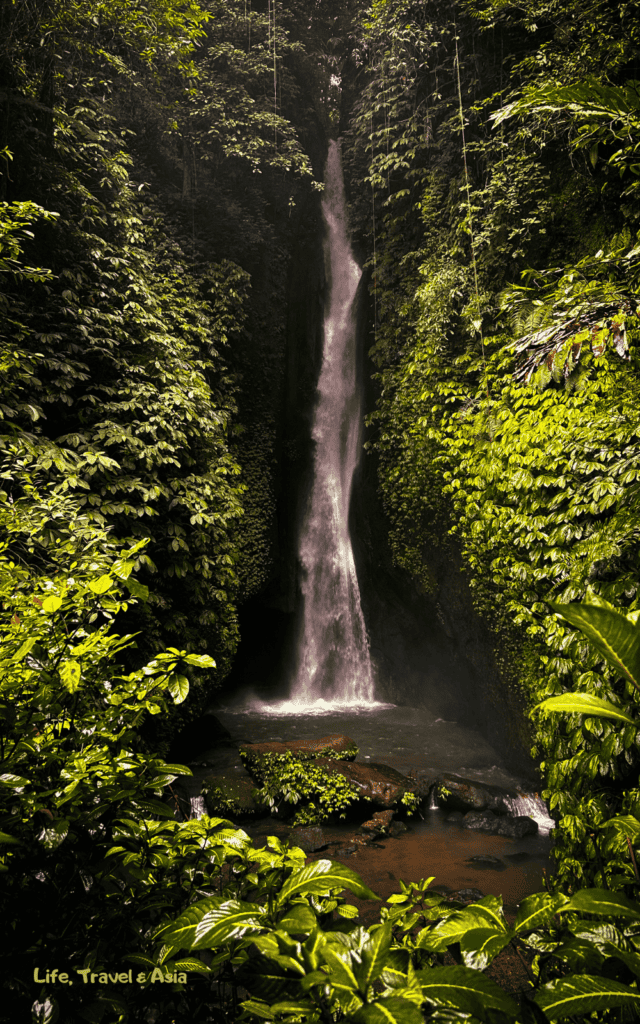
- Leke Leke Waterfall (35 minutes from Jatiluwih): One of my favorite waterfalls in Bali. It seems to emerge from a tunnel between two rocky walls, forming a natural pool perfect for swimming.
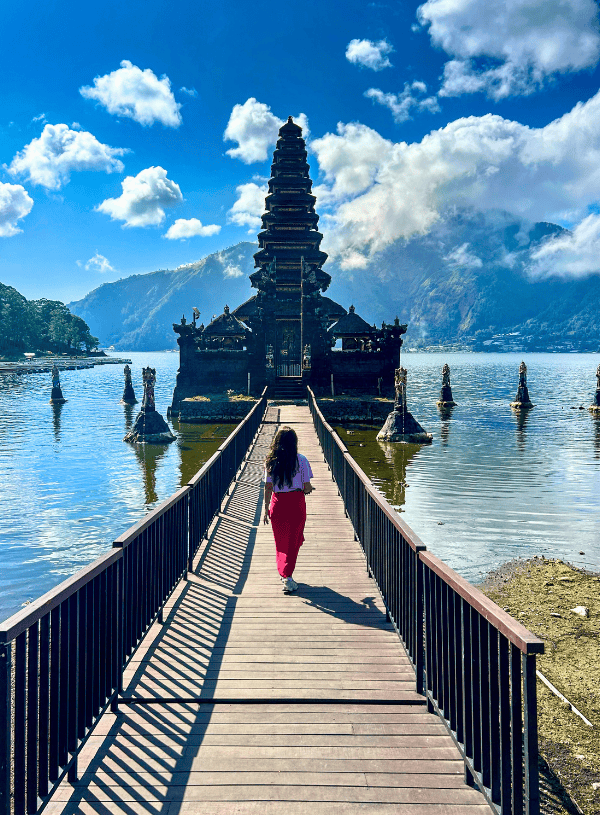
- Pura Ulun Danu Bratan (45-60 minutes from Jatiluwih): One of the most enchanting temples on the entire island, and also the most significant for locals. It’s the most important Water Temple on the island and the focal point of the Subak System.

- Bali Botanic Garden (40 minutes from Jatiluwih): Indonesia’s most extensive botanical garden, offering diverse plant species and an escape into nature.
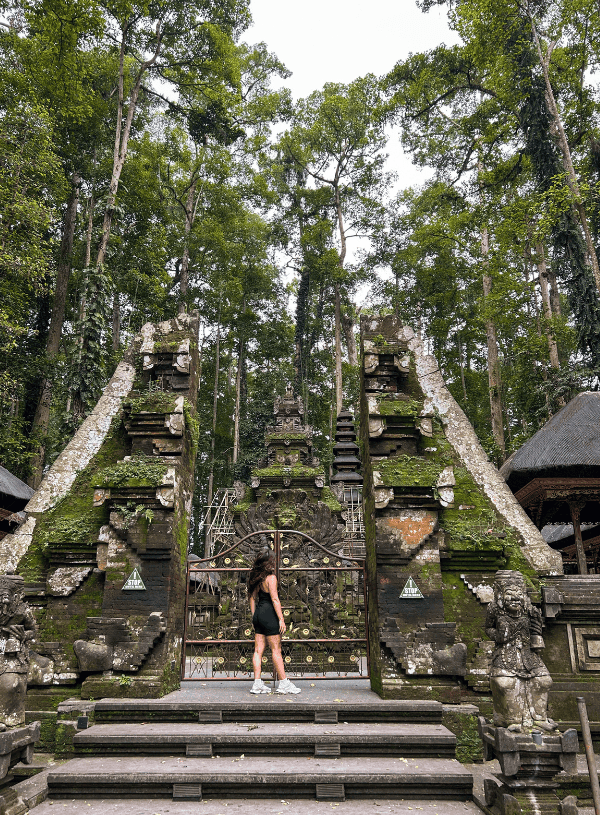
- Batukaru Temple (25 minutes from Jatiluwih): Located on the slopes of Mount Batukaru, this ancient temple is considered one of Bali’s holiest sites and is a starting point for hikes to the summit.
- Banyumala Twin Waterfalls (1 hour from Jatiluwih): These stunning waterfalls cascade into a crystal-clear pool, perfect for a swim in the heart of the jungle.
And there it is! Hopefully, this blog post helped you see just how special the Jatiluwih Rice Terraces are — and why they are, to me, the best rice terraces in Bali.
Central Bali was the highlight of my first trip: a perfect way to experience the authentic Balinese culture and lifestyle.
If you’re curious about exploring more than just a day trip, check out my Day Trip itinerary in Central Bali, super easy to plan from Ubud.
I hope you found this guide helpful! If you did, feel free to share it to spread the word about the beauty of Jatiluwih. And if you have any questions about Jatiluwih, Central Bali — or Bali in general — drop them in the comments. I’m always happy to help! 🌾✨
Did you find it helpful? 📌 Save it on Pinterest!