Day Trip to Leshan Giant Buddha: How to Plan the Perfect Visit from Chengdu in 2026
Last Updated on January 24, 2026
Are you traveling to China and planning a visit to Leshan to see the Giant Buddha?
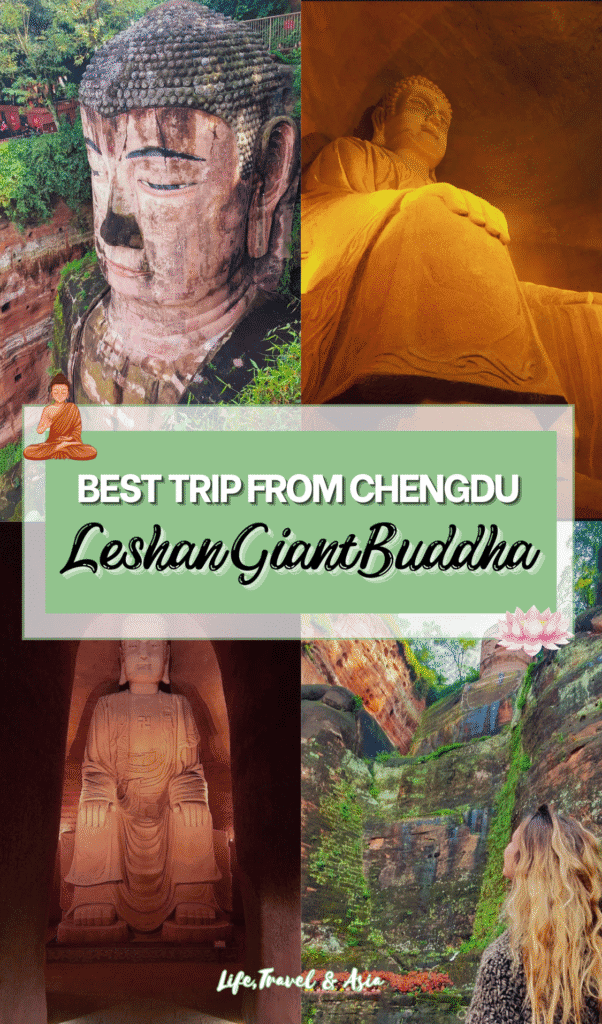
I still remember the first time I opened my first China travel guide and saw a picture of the Leshan Giant Buddha… I couldn’t help but whisper, “Wow… I have to go there and see it.” When I finally visited, it was absolutely worth the trip. It’s honestly one of the most stunning sights in China.
In this blog post, I’ll take you through how to plan the smoothest day trip to Leshan Giant Buddha from Chengdu, including some nearby sights that most travelers often overlook.
This article may contain affiliate links. This means that if you purchase through one of the links, I may be paid a small commission at no extra cost to you. Thank you for supporting the blog and allowing me to keep sharing meaningful travel experiences with you.
Don’t have time now?📌 Save it for later!
Recommended in This Article
Is the Leshan Giant Buddha Worth Visiting?
The answer is very easy… Yes! If you’re in Chengdu, you really should try to make time for a day trip to Leshan — it would be such a pity to be this close and not go.
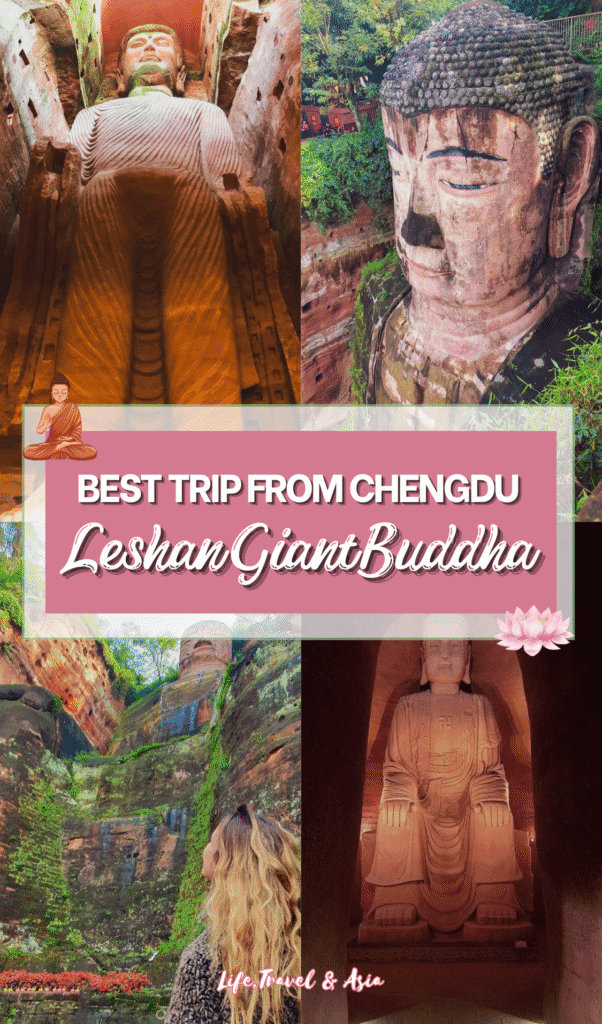
The Leshan Giant Buddha, together with the Mount Emei Scenic Area just across the river, is a UNESCO World Heritage Site. The statue is the largest and tallest stone Buddha in the world, as well as the tallest pre-modern one ever built.
It was conceived and initiated during the Tang dynasty by a monk who believed that the Maitreya Buddha (the future Buddha in Buddhist tradition) would calm the turbulent waters of the Min River, allowing ships to pass safely.
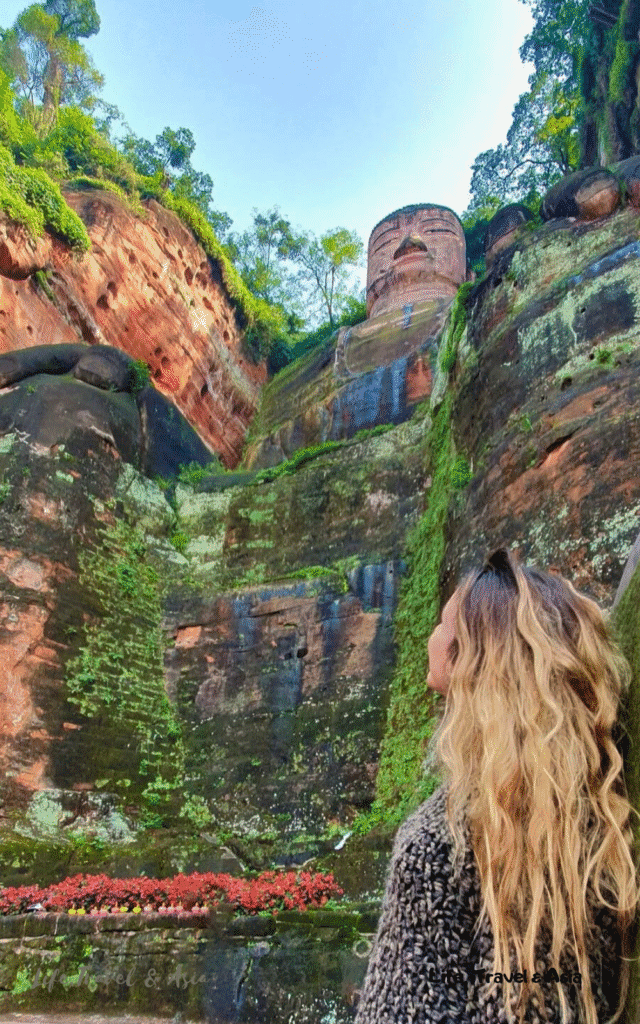
The site is truly impressive, and once you’re standing close to the enormous feet of the statue, it’s hard to believe that this was built by monks, not by some divine being rising from the river.
Depending on when you visit, it can get crowded, but I’ll share the best times to go later in this post. The good news is that, since the Leshan Buddha isn’t an active spiritual site (even if you’ll still see locals praying and making offerings), the crowds don’t take away from the experience.
The positive side is that locals stop at the Giant Buddha and don’t explore further, which means the Oriental Buddha Park (an interesting site nearby), surrounded by nature, stays much quieter. It makes the rest of your visit feel more adventurous — and even a little spiritual.
Planning Your Trip to Leshan Giant Buddha
1. Train From Chengdu to Leshan
The fastest and easiest way to reach the site is to take a high-speed train from Chengdu West or South Station, then take a taxi once you arrive in Leshan. The train ride takes about 1 hour, and the taxi from the station to the Leshan Giant Buddha takes about 15 minutes.
This is the most straightforward option. Once you arrive at Leshan Station, taxis are available outside. It helps to show the driver the name in Chinese: 乐山大佛 (Leshan Dafo)
You can book your train tickets in advance through Trip.com. The combined cost of the train and taxi will be less than $15.
2. Best Time To Visit Leshan
As always, the golden rule for traveling in China is to avoid peak season and weekends if possible. That means skipping the first week of October (Golden Week), Chinese New Year, and summer holidays, when everything gets super crowded.
The Leshan Giant Buddha site opens at 7:30 AM, and I do think it’s worth setting the alarm. Getting there early means beating the local tour groups and experiencing the statue in a much more peaceful atmosphere.
The best months to visit are September, late October, and March to May, when the weather is warmer. If you’re looking for more detailed info on festivals, climate, and which months to avoid altogether, check out my full China travel guide, where I break it all down by month and location.
3. Opening Hours & Ticket Price
From April 1st to October 7th (end of Golden Week), the site is open from 7:30 AM to 6:30 PM. From October 8th to March 31st, opening hours are 8:00 AM to 5:30 PM.
The basic ticket for the Leshan Giant Buddha costs about $11 and includes admission to the main site. You can buy it in advance here. On the same page, you’ll also find additional options like guided tours or a shuttle bus from the railway station, which might be helpful if you’re not taking a taxi. Tickets for other nearby sights, such as the Oriental Buddha Park, can be purchased directly on site.
4. Best Tours Of Leshan Giant Buddha
If you don’t want to handle all the logistics of organizing your trip to Leshan, here are a couple of tours you might want to consider.
Leshan Giant Buddha | All-Inclusive Land & Cruise Tour With Pick-Up: This is the perfect tour to see the Giant Buddha from all angles, including from the river itself on a boat cruise. Pick up and drop off from Chengdu, and Lunch are included.
Leshan Buddha Tour with Transfer or Guide: This tour offers plenty of flexibility for your day trip to Leshan. You can choose whether to include a guide and transfers, and even add a visit to the Panda Base to your itinerary.
My Experience & What to Expect
I visited the Leshan Giant Buddha in November, well outside the tourist peak. I went on the weekend, since I was a student at the time and didn’t have much flexibility.
There were definitely people around, but it wasn’t one of those nightmare experiences where you have to queue for hours to walk down the stairs lining the sides of the Buddha (that’s how you reach his feet and the central viewing platform).
You’ll enter from the North entrance of the site, and after a short walk, you’ll arrive near the head of the Buddha. From there, you start descending the Lingyun Cliff trail — a stairway carved into the rock that leads down to the Buddha’s feet.
Heads-Up!
The trail to reach the Buddha’s feet involves narrow, steep stone steps. It’s manageable for most people, but if you have limited mobility or a fear of heights, the boat tour might be a better option.
This is the closest and most impressive spot to view the statue in full and your best chance to take a good photo — unless you take the boat tour, which gives you a wider view from the river (I didn’t do it, but I bet it would’ve been worth it!).
After spending some time taking photos and soaking in the views, you go back up via a different staircase on the other side of the cliff.
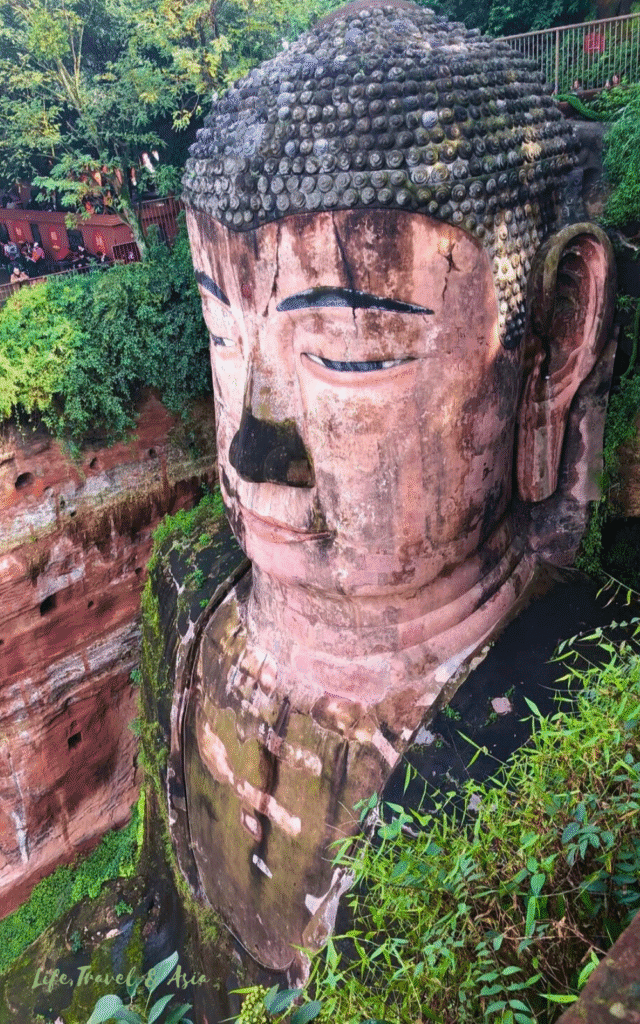
Once you’ve admired the Giant Buddha, you can explore a few other nearby sights that are accessible from the same area. We decided to visit the Oriental Buddha Park because I had seen some pictures from a friend and was curious to see it in person.
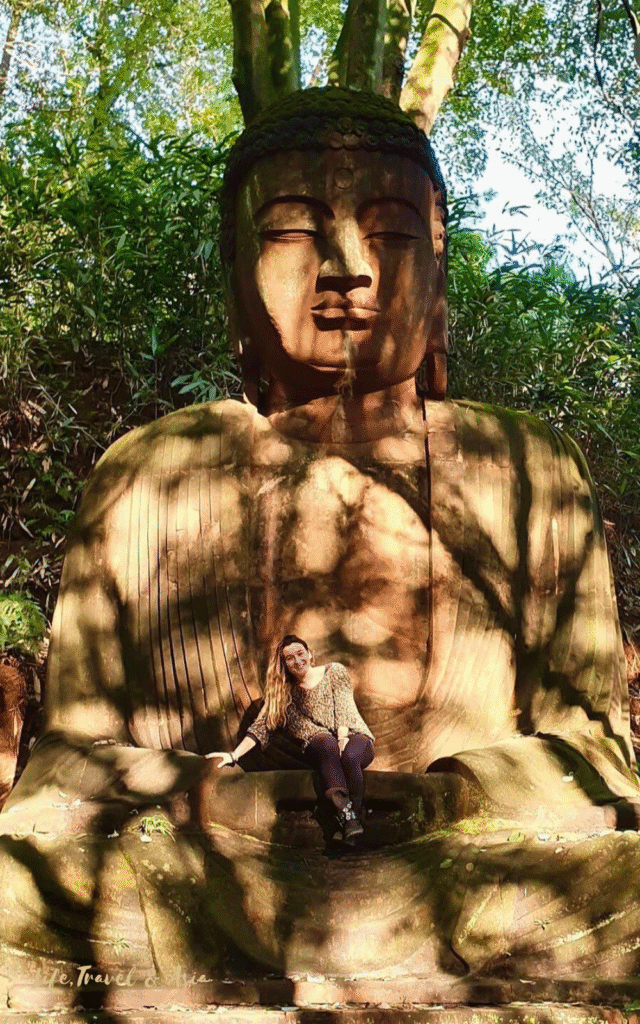
The park covers about 70 hectares and is filled with Buddha statues carved into cliffs or tucked away in caves. What surprised me most was how quiet and peaceful it was — there was no one else around when we visited. The spiritual energy here felt even stronger than at the main Buddha, probably because it’s surrounded by nature and far from the crowds.
Leshan Giant Buddha Boat Tour
After you visit the Leshan Giant Buddha (or before your visit), you can decide whether you have time for a boat tour on the Min River, which gives you a wider view of the Buddha from the water. It’s especially great for photos, since you won’t have crowds in front of you.
You can also skip the site entrance entirely and choose only the boat tour. But to be honest, I’d do both. If you’ve made it to Leshan, you might as well make the most of it.
The boat tour costs around $20 for a 30-40 minute ride, including about 10-15 minutes in front of the statue. Tickets can’t be bought at the main Buddha site — you’ll need to go to one of the two docks: Leshan Port Sightseeing Cruise Wharf or Baxiandong Sightseeing Cruise Wharf.
During the ride, you’ll also catch a glimpse of the “Sleeping Buddha”, a mountain formation that is similar to a reclining Buddha, along with the beautiful scenery where three rivers meet.
Other Things to Do in Leshan
Oriental Buddha Park
You can access the Oriental Buddha Park (or Oriental Buddha Capital) directly from the Leshan Giant Buddha site, though you’ll need to pay a separate ticket of around $11, which you can buy on site or online here.
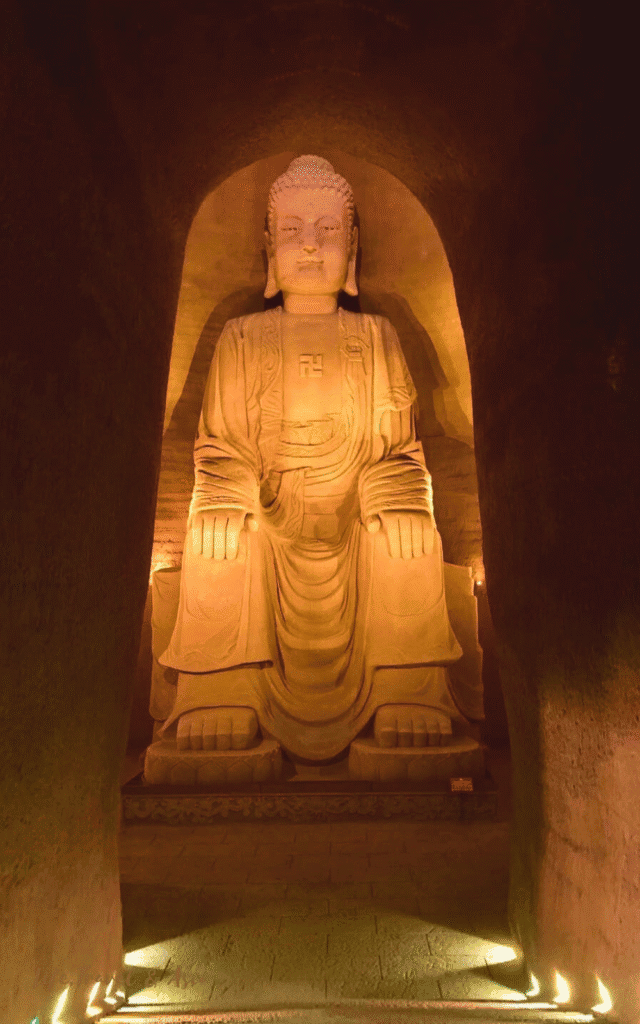
To me, this is the best addition to your trip to Leshan — it allows you to dive deeper into Buddhist art and symbolism. The park is home to over 100 caves filled with sculptures, carvings, and even the world’s largest Sleeping Buddha.
What makes the visit special is the natural environment surrounding the grottoes and statues. And because most visitors stop at the main Buddha and skip this park, it’s usually quiet and uncrowded.
Lingyun Temple
If you have a bit more time to spend around the Leshan Giant Buddha site, make sure to stop by Lingyun Temple. It’s located right near the Buddha and already included in your entry ticket, so you won’t need to pay anything extra.
The temple offers a local atmosphere, and it’s a nice spot to walk around, light some incense, and take in the views over the river from the upper terraces.
Mount Emei Scenic Area
The Leshan Giant Buddha is actually part of the Mount Emei Scenic Area, and Mount Emei itself is one of the Four Sacred Buddhist Mountains in China. It’s also one of the most stunning and significant places to hike in the country — a mix of ancient temples, misty forests, and incredible viewpoints.
Of course, hiking Mount Emei isn’t doable in a single day (the mountain is around 45 minutes to one hour from the Leshan Buddha), but if you decide to stay overnight in Leshan, you can turn your visit into a 2-day immersive experience into Buddhism, Sichuan nature, and temple life.
If you have two days, this combo tour of the Leshan Giant Buddha and a hike to the top of Mount Emei makes for the ideal mini-adventure!
Here’s a useful map to help you navigate the area: I’ve highlighted nearby restaurants in yellow, the boat tour ports in green, and the main sights in blue — including Baoguo Temple, which is the usual starting point for the Mount Emei hike.
There you go! This was my review and guide to planning your day trip to Leshan Giant Buddha. If you’re still doubtful, let me tell you that it is one of those sights and experiences that will stay with you for a long time.
If you’re still planning your trip to Chengdu and Sichuan in general, be sure to check out my Chengdu guide and don’t forget to share the post on Pinterest or wherever you feel call to if you found it helpful.
Articles You May Like If You’re Planning Your Trip to China
- China Travel Guide: Everything First-Time Travelers Really Need to Know in 2025
- China Travel Apps: 7 Essential Applications You’ll Need in 2025
- 10 China Travel Tips for Non-Chinese Speakers
- China Packing List: 13 Vital Items To Pack for the Perfect Trip
Did you find it helpful? 📌 Save it on Pinterest!