Goa Gajah Ubud (2026 Guide): Discover the Elephant Cave Temple in Bali
Last Updated on March 24, 2026
Are you planning a visit to Goa Gajah Temple in Ubud and wondering if it’s worth it or how to plan your visit?
Just a few days after moving to Bali, I couldn’t resist visiting one of the most spiritual sites in Ubud: Goa Gajah Temple, or, as most people call it, the Elephant Cave in Ubud.
This place honestly surprised me in the best way and is definitely worth a stop on any Ubud itinerary. It’s something unique and not the usual Balinese Hindu temple you would expect. Besides the cave itself, the unbelievable surrounding nature adds that extra adventurous touch that makes you feel like you’ve stepped into an Indiana Jones movie.
In this blog post, I’ll not only show you the beauty of the site and how to enjoy it best, but also provide practical tips to plan your visit and what to expect when heading there.
This article may contain affiliate links. This means that if you purchase through one of the links, I may be paid a small commission at no extra cost to you. Thank you for supporting the blog and allowing me to keep sharing meaningful travel experiences with you.
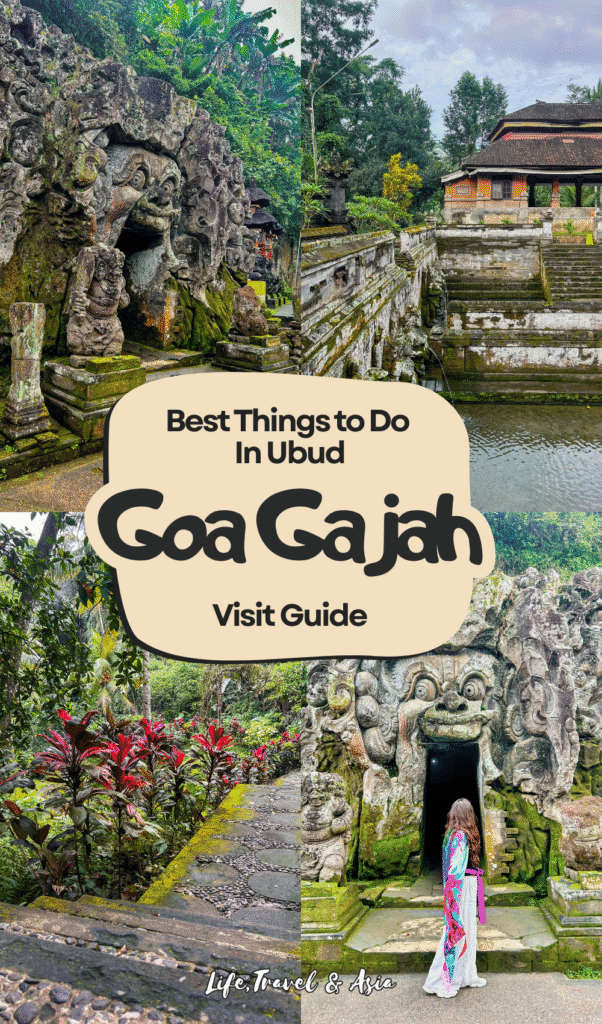
Don’t have time now?📌 Save it for later!
Recommended in This Article
Is Goa Gajah Temple Worth Visiting?
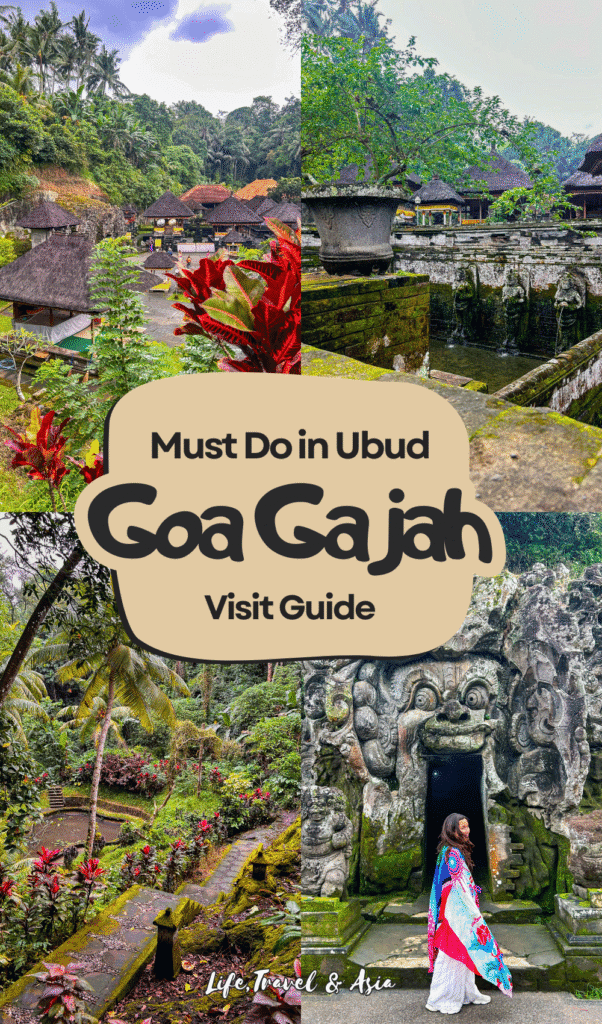
Absolutely yes! Maybe not for the reasons you’d expect (at least in my opinion). The cave itself features beautiful, detailed carvings that are definitely worth seeing. However, what makes this site truly special is the surrounding nature.
The moment you take your first steps down the main staircase, the jungle appears right in front of you, completely enveloping the temple like it’s protecting it. And then there’s the Buddhist temple area, which is honestly stunning; only seeing it in person can explain the beauty of the tropical nature there.
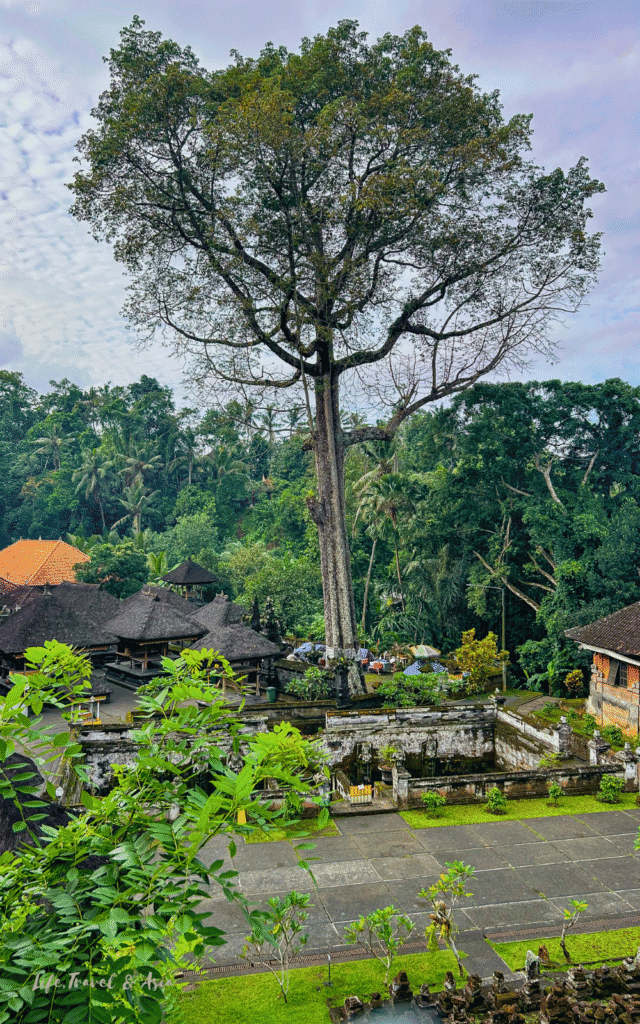
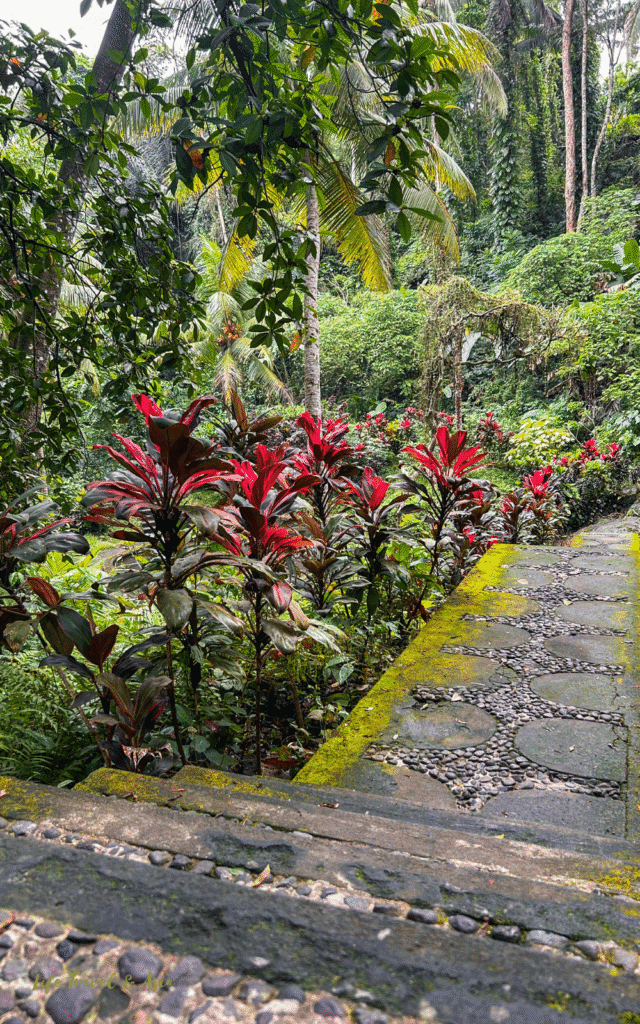
Additionally, the site’s history contributes to its mysterious atmosphere. The true origins of Goa Gajah are still unknown, and it was used as a sanctuary for both Hinduism and Buddhism. You can feel that spiritual energy, especially if you visit early, right when the site opens, before the crowds arrive.
Even if you’re short on time, make sure to include Goa Gajah in your Ubud itinerary. It’s a quick visit, easy to reach, and truly deserves a spot on your list.
Planning Your Visit To Goa Gajah Temple
1. Best Time to Visit Goa Gajah
The best time to visit Goa Gajah is definitely early in the morning, not only because of the crowds, but also because during the day, the humidity is higher.
I arrived at the site around 8:15 am, and although it was still quite ideal, there were already a couple of people present, which didn’t ruin the experience, though.
If you really want the site all to yourself and that feeling of having just discovered a hidden jungle temple, go right after the doors open, around 7:30 am. By 9, more visitors start to arrive, enough to make the place feel significantly less quiet than before.
That being said, if you can’t make it super early, the crowds are still very manageable even around 10 am, so don’t stress too much if you can’t go earlier.
2. How To Get to Goa Gajah
From Ubud center, the best way to head to Goa Gajah is by scooter. Whether you’re driving a rented one or booking a Grab ride, you’ll be at the temple in 10 to 15 minutes, depending on where you’re staying (and traffic as well).
There’s no need to book transportation in advance, and cars might get you stuck in traffic. For scooters, there’s a large parking area right before the entrance. Parking may require a small fee of IDR 5,000
3. Goa Gajah Entrance Fee in 2026
The entrance fee to the temple is 50k IDR (around $3), which you can purchase directly at the site. Once you arrive at the parking lot, the entrance is on the right. You’ll be given a ticket, which you’ll need to show just after.
Once you show the ticket, they’ll provide you with a sarong if you’re not wearing something that covers your legs or a sash, like in my case, if you’re wearing long trousers.
4. Goa Gajah Dress Code
As for every sacred site in Bali, a sarong or a sash is required. If you’re wearing shorter pants, you’ll likely be given a sarong to wear at the entrance.
No need to cover your shoulders; however, I suggest dressing appropriately with a T-shirt or a top if you’re a girl.
Make sure not to fall for the sarong scam at the entrance. When I visited, a lady tried to convince me I needed to buy the sarong before purchasing the ticket. That’s not the case; it is always included in the ticket price.
5. Best Goa Gajah Tours
Here are some tours I recommend if you want to benefit from the knowledge of a local guide while visiting the temple and make the most of your time in the area, especially if you’re short on time and don’t want to deal with transportation and pack a couple of sights into a one-day itinerary.
These tours include Goa Gajah as well as other Ubud and Bali highlights.
- Hidden Canyon, Waterfall & Temples: This tour is perfect if you don’t feel like spending the whole day temple hopping, but still want to mix in some of Bali’s beautiful natural sights, like the hidden Beji Guwang Canyon or bathing under Tegenungan Waterfall. After that, you’ll visit two of the island’s most mystical spots: Goa Gajah and Gunung Kawi Temple.
- Best of Central Bali: Waterfall, Elephant Cave & Rice Fields: With this packed tour, you’ll get to visit some of the most popular sights on the north side of Ubud, starting with a refreshing morning dip at the scenic Tegenungan Waterfall and finishing with a sunset hike at the Tegallalang rice terraces. You’ll also get to witness woodcarving in Bali, one of the island’s most traditional crafts, and of course, stop by Goa Gajah and Tirta Empul.
What to Expect at Goa Gajah Temple
Arrival
After taking a Grab from my homestay in central Ubud, I arrived at the temple in around 10 minutes. In front of me, a huge, and luckily empty, parking lot, and an Indonesian lady trying to convince me I needed to buy a sarong to get in.
After purchasing the ticket, I was given a sash, a purple scarf tied around my waist, as a sign of respect for the site. Since I was wearing long trousers, I didn’t need a sarong.
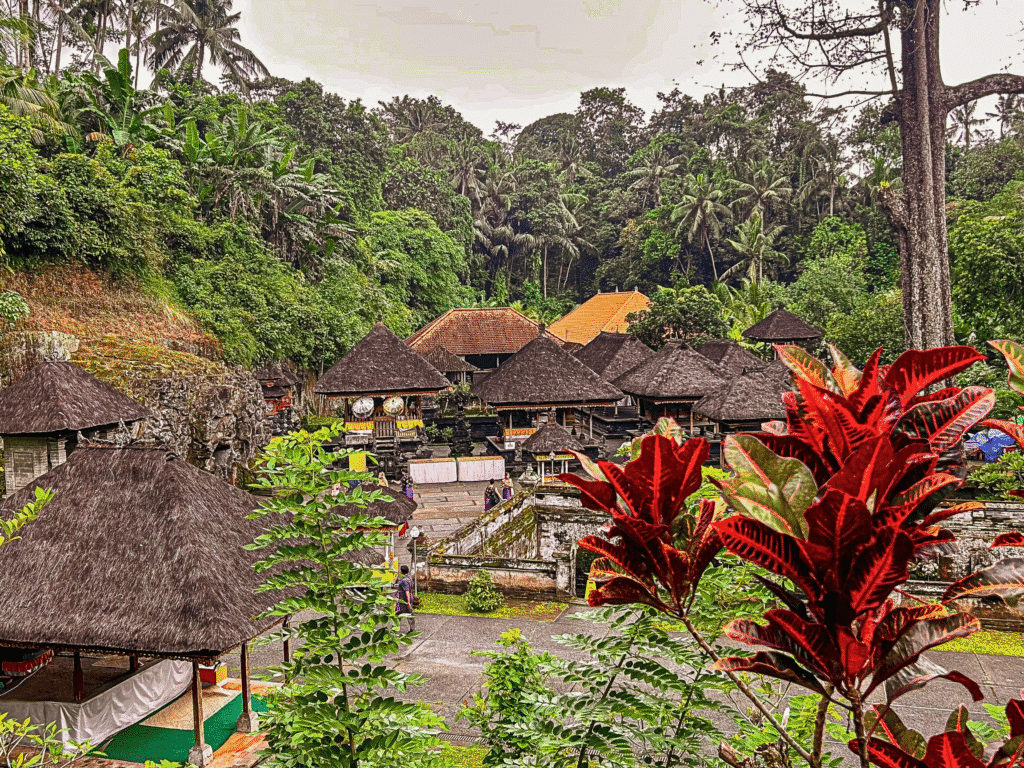
From there, you head to the main temple grounds via a short staircase surrounded by plants, and you can already enjoy the view of the whole area with the wild jungle as a backdrop. That was what struck me the most when I arrived, especially if it’s early in the morning and there are no crowds.
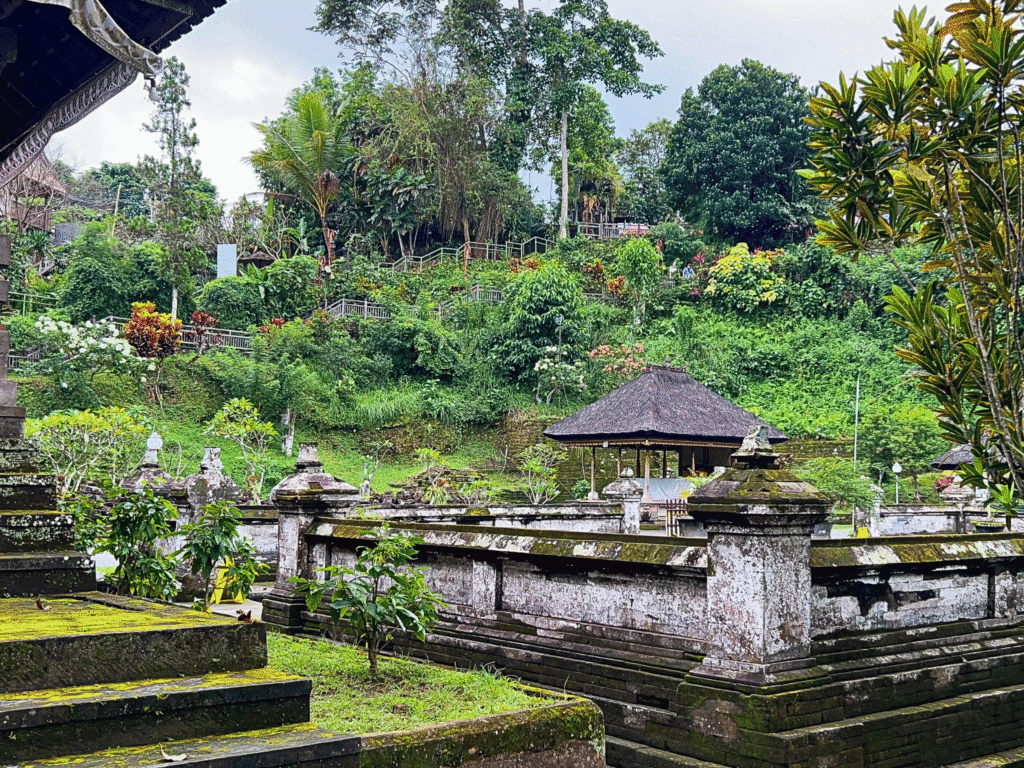
You can already spot the many Meru-style roofs corresponding to the various shrines, and the cave in the distance. As you make your way towards the cave, you’re completely enveloped by the jungle.
History & First Elements of the Site
Goa Gajah, which means “Elephant Cave,” dates back to the 11th century and was originally built as a sanctuary for meditation. Despite the name, you won’t find any elephants here. The name is believed to come from the nearby river, once known as Lwa Gajah (Elephant River), or from the elephant-shaped statue of Ganesh located inside the cave.
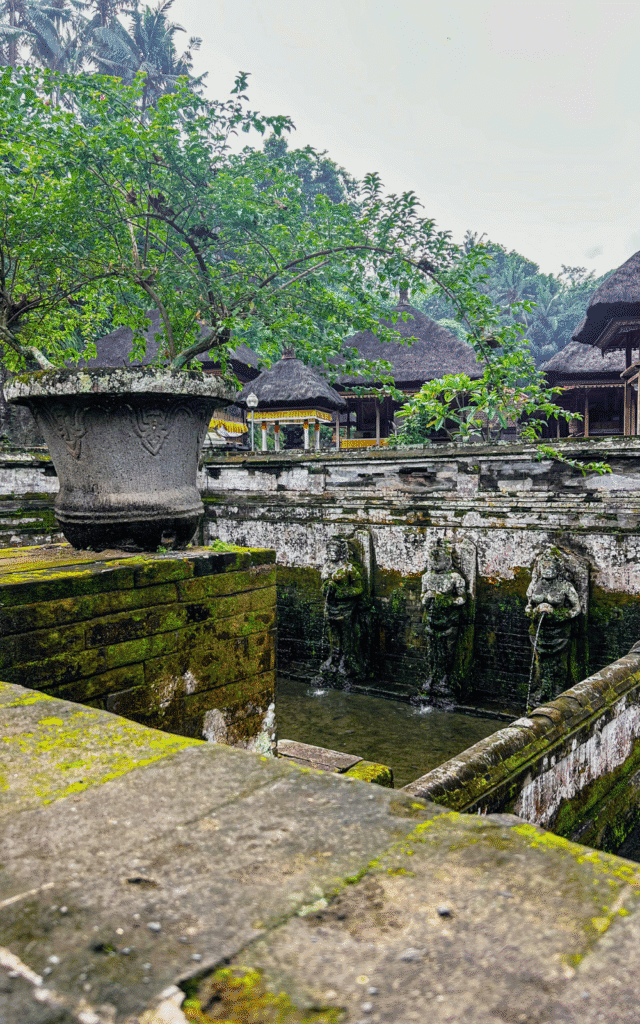
The first elements you’ll notice are the two bathing pools, typical features of Balinese Hindu temples. The pools are complemented by three angel statues each, whose water is believed to have purifying abilities, similar to the Melukat ritual at Pura Tirta Empul. However, unlike Tirta Empul, there’s no purifying ritual performed here.
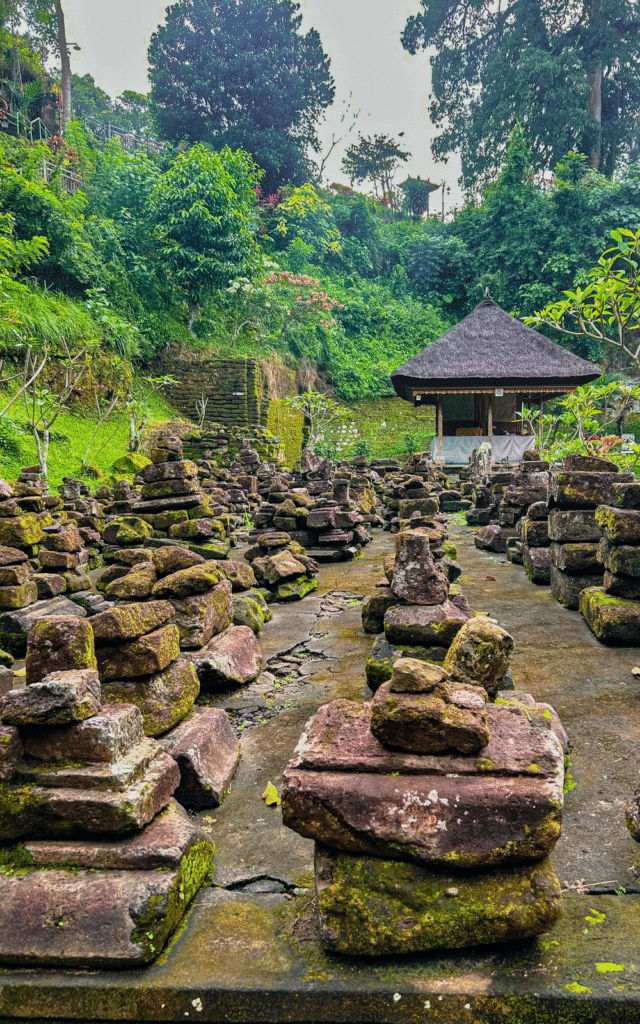
Just in front of the pools, you’ll see rows of neatly stacked stone blocks. These are fragments of the ancient temple, arranged to preserve what’s left of Goa Gajah’s history.
The “Elephant Cave” Itself
The carvings at the entrance of the cave are impressive and incredibly detailed when you see them in person. From the outside, the entrance isn’t huge, but it’s beautiful, definitely one of those highlights that deserves your attention (and a few photos).
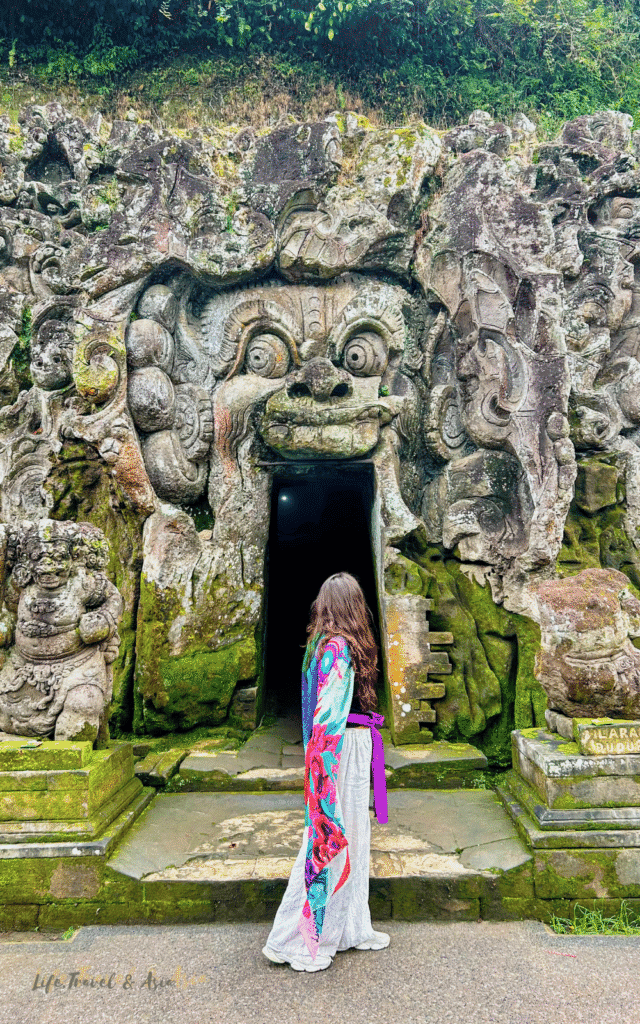
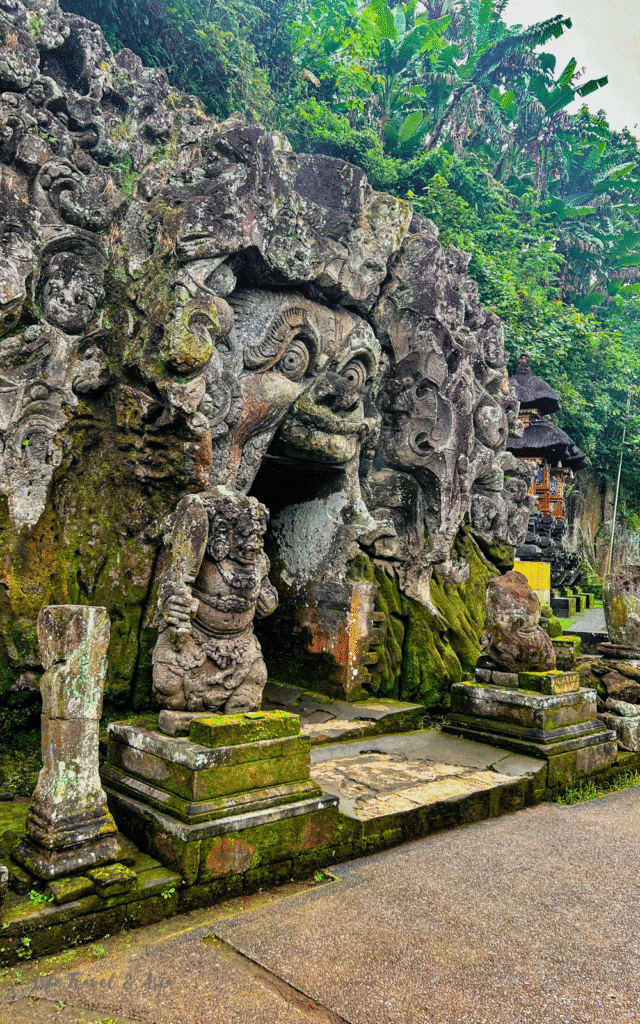
You can enter the cave, and inside, it’s bigger than I expected. There’s a narrow corridor with two small meditation corners, and at the end of the corridor, the space opens up into two areas: on the left, a statue of Ganesh, and on the right, three sacred phallic symbols from the Hindu tradition.
The air is filled with incense, not just the scent, but you can actually see the misty smoke lingering inside, adding to the sacred and almost mysterious atmosphere.
The Temple Grounds
As a true religious site, it’s not only about the cave. You can explore the temple grounds and the typical Hindu shrines around, but one of the most beautiful areas for me is actually the Buddhist temple, which, to be clear, is not the kind of Buddhist temple you would find in China. It’s an entire area you can explore by following the stairs downstream.
You’ll see a “Buddhist Temple” sign just behind the pools, and from there, a staircase leads you into this hidden corner of the site. Here, the nature is unbelievable, and to be completely honest, this is the real reason I think you shouldn’t miss Goa Gajah.
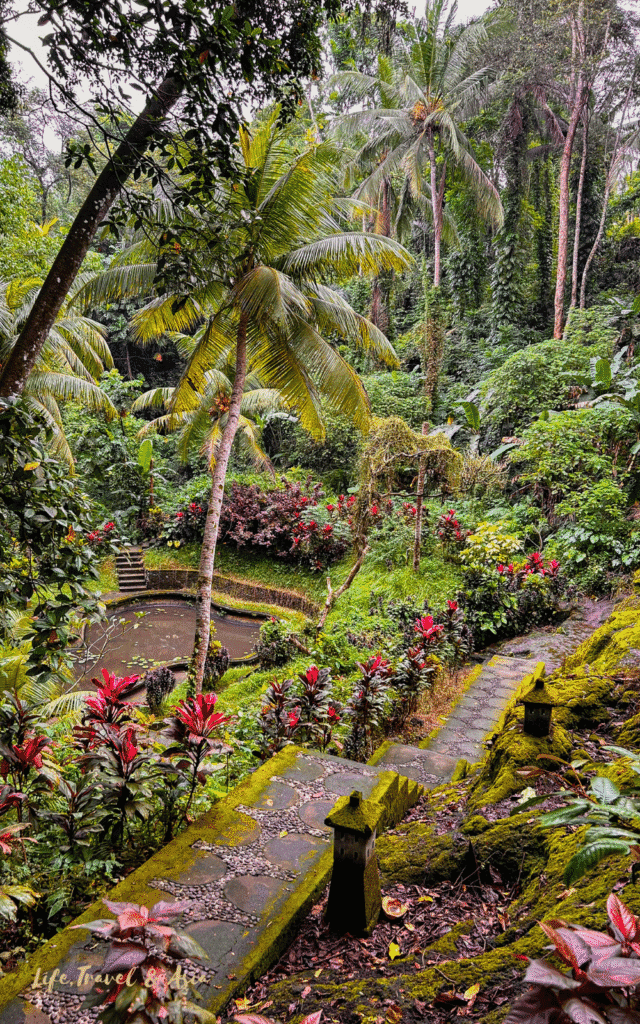
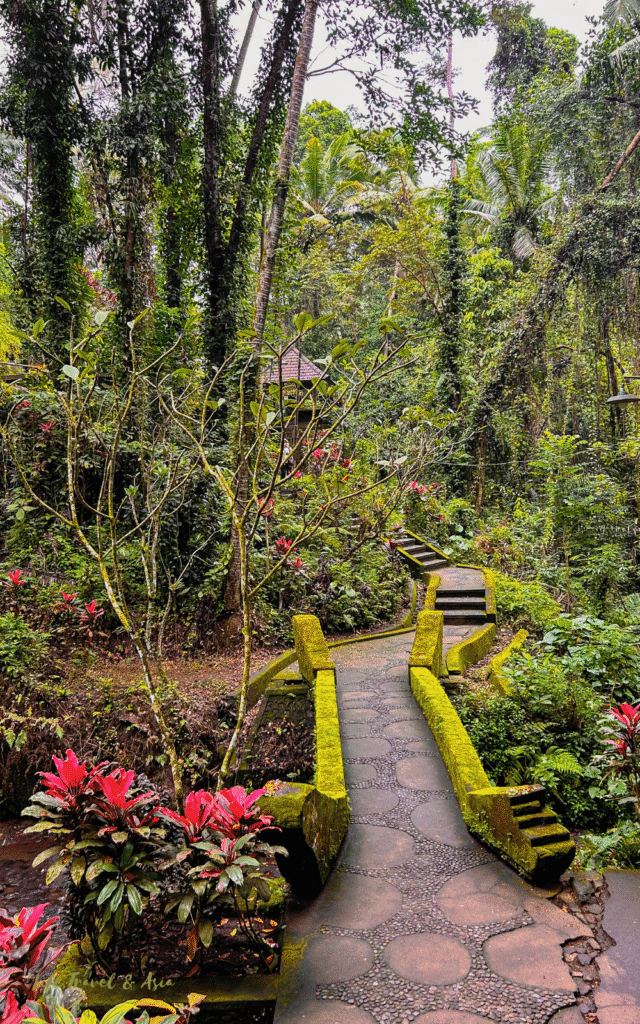
Humidity at its peak aside (which made me want to throw myself under the small waterfall), the combination of a deep, dark green jungle (so thick you can barely see the sky) with the pops of pink from tropical flowers is simply stunning. Your soundtrack will be the sound of a small waterfall flowing just below (the one I wanted to throw myself under).
Here, you probably won’t be able to stop taking photos; every corner feels like a shot straight out of a National Geographic documentary.
Hopefully, this blog post helped you see how special this site really is and why it absolutely deserves a spot on your list of things to do in Ubud during your next trip.
If you’re still planning your trip to Bali, make sure to check out my Bali travel guide. You’ll find all my wisdom and tips after living here for six months
If you’ve already visited Goa Gajah, let me know about your experience in the comments, or if you’re planning to go, feel free to ask me anything!
Other Helpful Bali Reads
- Best Time to Travel to Bali in 2026: Weather, Crowds & Experiences
- How to Get Around in Bali: A Complete Transportation Guide from an Almost Local
- 18 Best Places to Eat in Ubud: 2026 Foodie’s Guide for All Budgets
Did you find it helpful? 📌 Save it on Pinterest!