Gunung Kawi Tampaksiring: Discover Bali’s Most Mystical Temple
Last Updated on April 2, 2026
Are you traveling to Bali soon and looking for a religious site that feels truly mystical? If you want to see something unique compared to typical Balinese architecture, you should plan a visit to Gunung Kawi Tampaksiring.
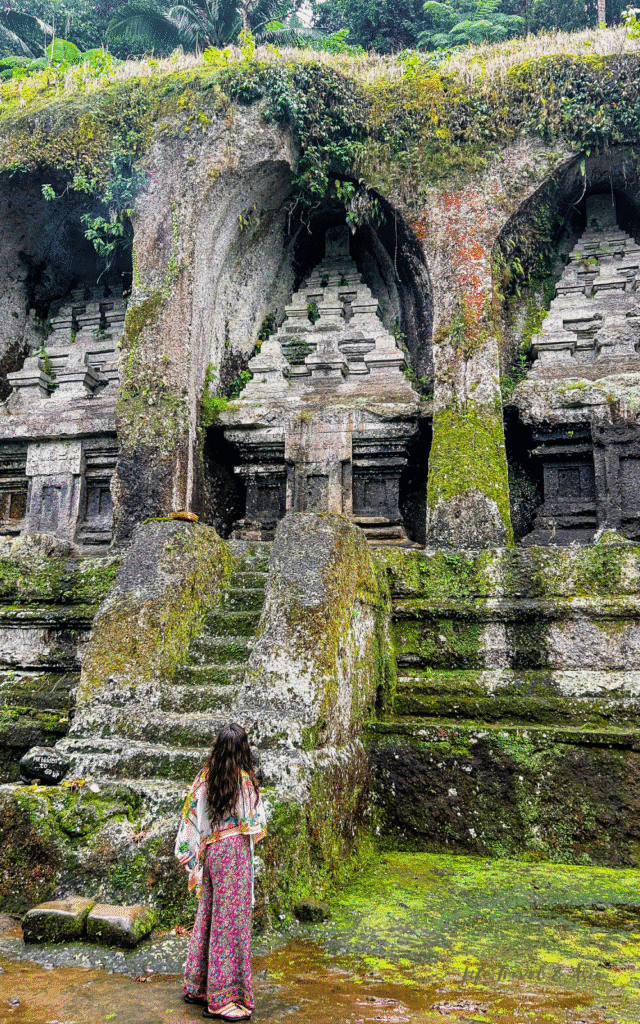
The first time I looked up Gunung Kawi online, I was immediately struck by photos of the towering shrines carved directly into the hillside. Those ancient structures were exactly what convinced me to visit the site.
As soon as I arrived, two things won me over: the lush Mancigan rice fields and the dense jungle covering the Pakerisan River valley that runs through the site. Of course, the highlights are the majestic shrines standing tall in two separate areas of the temple, almost as if they are watching over the entire valley.
In this blog post, I’ll share everything you can (and can’t) expect from your visit to Gunung Kawi Temple, plus all the tips you need to plan your trip.
This article may contain affiliate links. This means that if you purchase through one of the links, I may be paid a small commission at no extra cost to you. Thank you for supporting the blog and allowing me to keep sharing meaningful travel experiences with you.
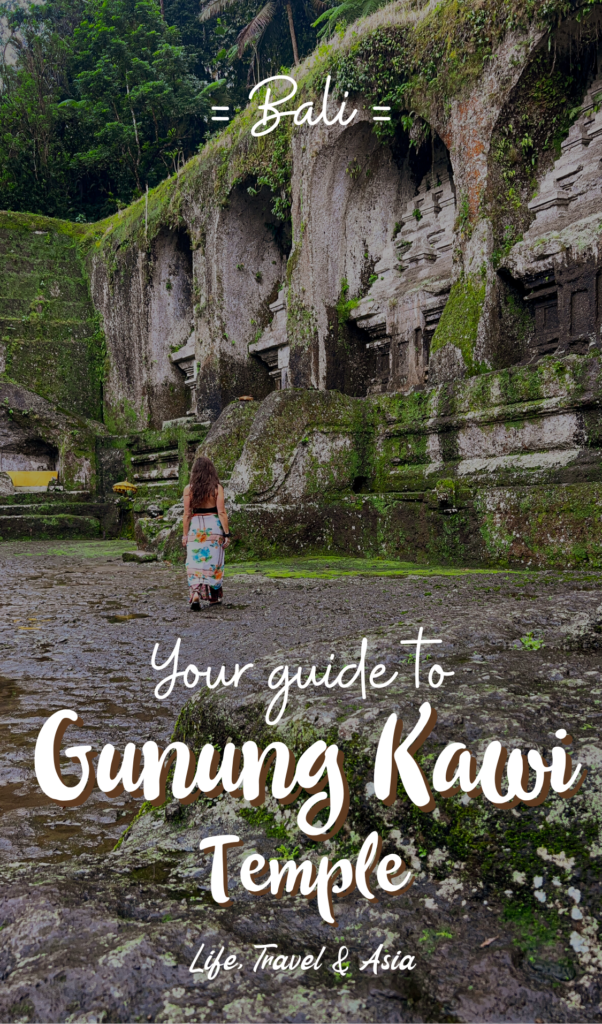
Don’t have time now?📌 Save it for later!
Recommended in This Article
Is Gunung Kawi Tampaksiring Worth Visiting?
Is Gunung Kawi Temple worth visiting? Absolutely. If you’re looking for a temple that looks vastly different from typical Balinese architecture, and one that remains relatively quiet despite its fame, this is it.
Gunung Kawi Tampaksiring is one of the most ancient and fascinating sites on the entire island. Built around the 11th century, it is often called the Valley of the Balinese Kings.
While the site doesn’t actually house the physical tombs of ancient royalty, the massive shrines carved into the cliffside are dedicated to past rulers and their concubines.
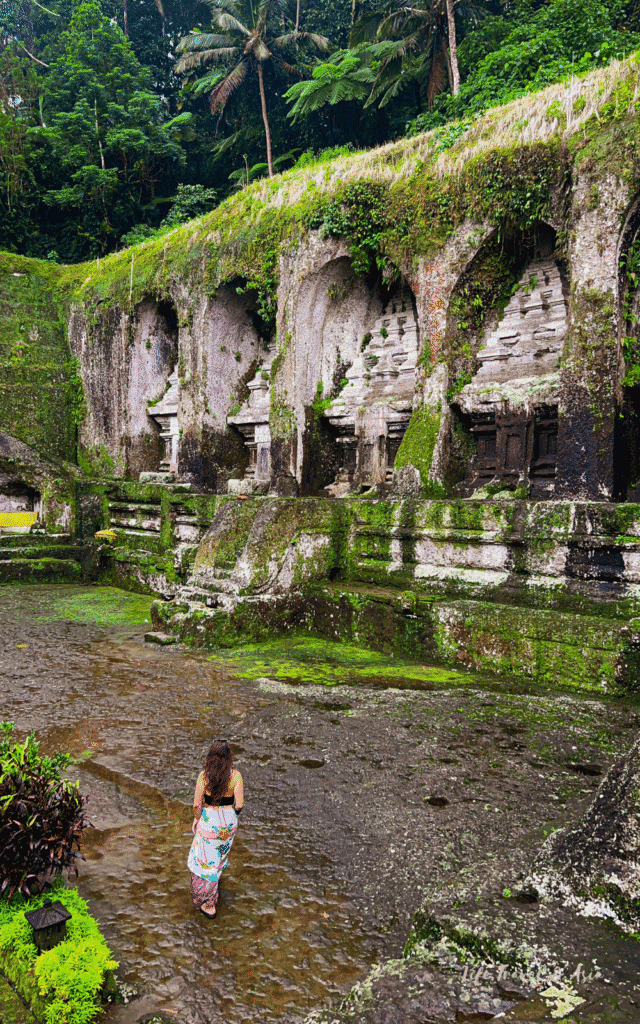
While the exact purpose of these carvings remains a mystery, one of the most significant aspects of the site is its history as a sanctuary for Buddhist monks. Much like Goa Gajah, it serves as a reminder of how Hinduism and Buddhism coexisted in Bali’s spiritual past.
Walking beneath these towering rock-cut structures, completely alone with only the rush of the Pakerisan River behind me, honestly made me feel like I was exploring forgotten tombs from a lost era.
Beyond the shrines, it’s the nature that makes Gunung Kawi Temple unforgettable.
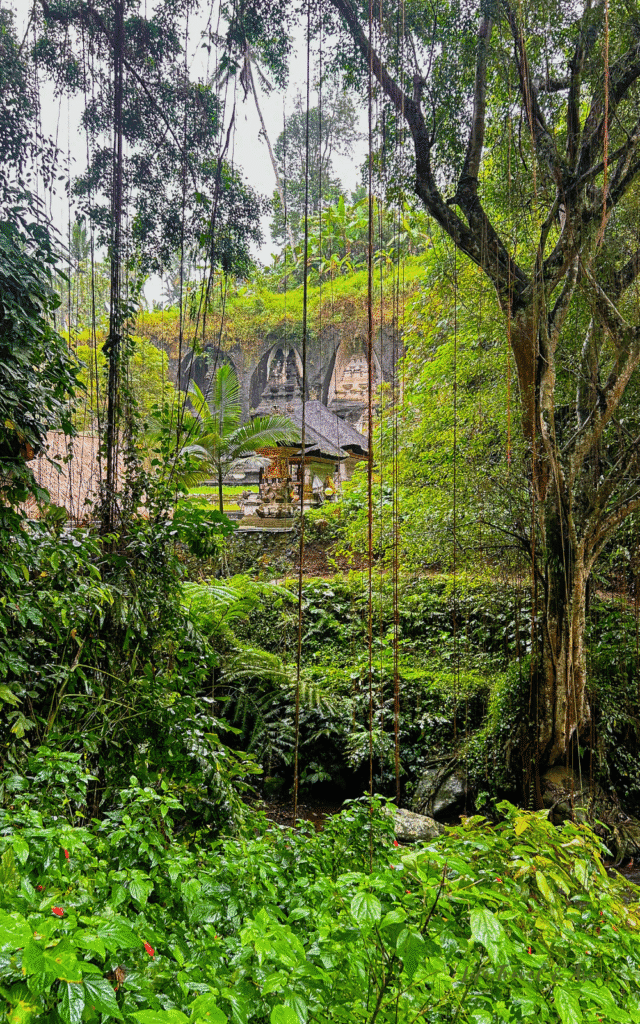
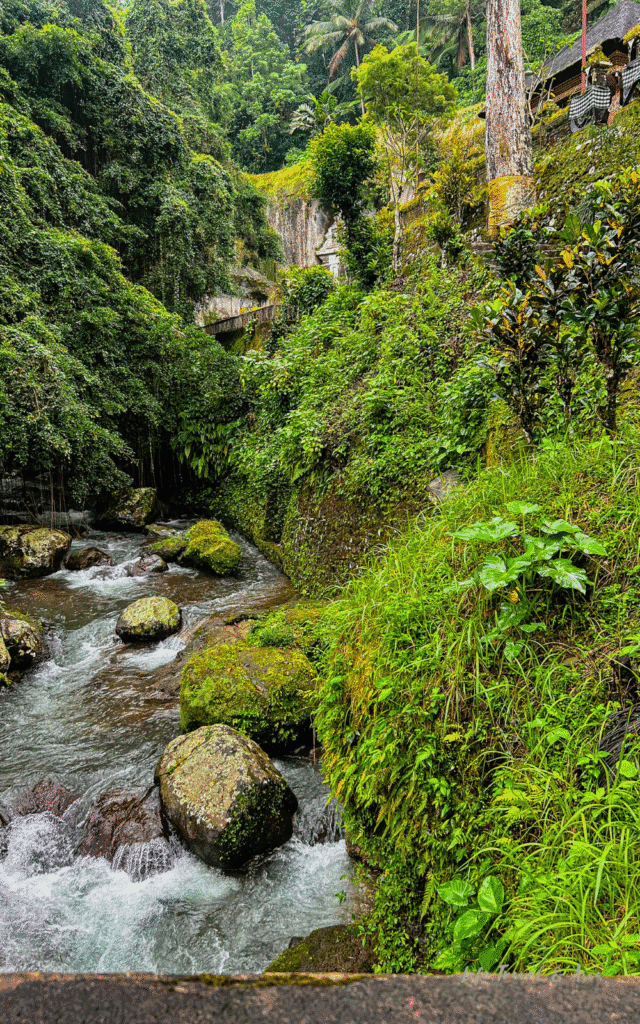
A dense jungle encloses the valley, giving the complex a slightly eerie yet enchanting feel, fitting for a funerary site. The river cuts through the center, with the two sides of the temple connected by a small wooden bridge.
Hidden at the bottom of the valley, the temple feels embraced and protected by towering trees. In the distance, you can hear a small waterfall feeding the river, adding to the site’s ethereal atmosphere.
How to Plan Your Visit to Gunung Kawi Temple
1. How to Get There
Gunung Kawi Temple is located in Tampaksiring, about 16 km from central Ubud, and you’ve got a few options to get there.
- Grab Bike: The easiest way is to take a Grab bike. It costs around IDR 50K (about $3) and will get you there in roughly 35 minutes, depending on traffic.
- Rent a Scooter: Finally, if you feel confident driving around Ubud, renting a scooter is a great way to explore with total flexibility. You can even plan a full day visiting temples, waterfalls, and hidden spots north of Ubud.
- Hire a driver: It is very popular to hire a driver for the day in Bali. This allows you to build your ideal itinerary, including other nearby sights. That is usually how I plan my own day trips on the island. If you’re looking for a reliable service, this is the best option I’ve found when it comes to transparency and ease of organization.
2. Best Time to Visit Gunung Kawi Tampaksiring
The best time to visit Gunung Kawi Temple is usually during the dry season, even though this year the weather seems totally confused and we’ve been getting plenty of rain.
Either way, if you want to avoid the crowds, I highly recommend getting there right when they open at 8:00 am. That way, you’ll beat the endless sellers at the entrance, trying to get you to buy everything under the sun, and actually get to enjoy the place before the big tour groups show up.
3. Entrance Tickets in 2026
The entrance fee to Gunung Kawi Temple is IDR 75k (around $5). They’ll provide a sarong if you don’t have your own, along with a sash to tie around your waist.
I finally solved the mystery: traditional Balinese temple attire is actually “open” on top, so covering your shoulders isn’t strictly mandatory here.
One quick tip: if it has rained recently, wearing shorts is honestly a better move. I wore long trousers, and they got completely soaked while I was walking around the grounds.
4. Best Tours of Gunung Kawi Temple
Here are some tours I’d recommend if you love having a local guide explaining the history while visiting the temple and want to make the most of your time in the area.
These tours include Gunung Kawi as well as other Ubud and Bali highlights:
- Balinese history | Goa Gajah & Gunung Kawi: If you want to really dive into Balinese history and the legends behind these sites, this tour is a great way to do it. You’ll get to experience Tirta Empul, one of the island’s most sacred water temples, before heading to Gunung Kawi Temple and Goa Gajah. Along the way, you’ll also get to explore the Yeh Pulu archaeological site and the Gedong Arca museum.
- Sacred Temples and Sunset Private Tour: If you’re up for a full day of temples, culture, and stunning views, this private tour is a great choice. You’ll get to explore some of Bali’s most famous spots like Goa Gajah, Gunung Kawi Temple, and Tirta Empul, all in one trip. The itinerary also includes Taman Ayun (the Royal Family Temple) and wraps up with a sunset at the iconic Tanah Lot.
5. Things to Do Around Gunung Kawi Tampasiring
If you’re planning a full-day trip in the area, you’re in luck. There must be something special in the air around here, because this specific region is absolutely packed with sacred sites:
- Pura Tirta Empul: Make sure to explore the temple grounds beyond the famous bathing pools where the purification rituals happen. That area is actually the most underrated part and, in my opinion, the most beautiful and worthy side of the temple.
- Pura Mengening: This is where I practiced the purification ceremony, and it couldn’t be more adapted. Even without practicing the ritual, the temple is so beautiful. It’s tiny, but its natural surroundings and sacred atmosphere are what make it truly special.
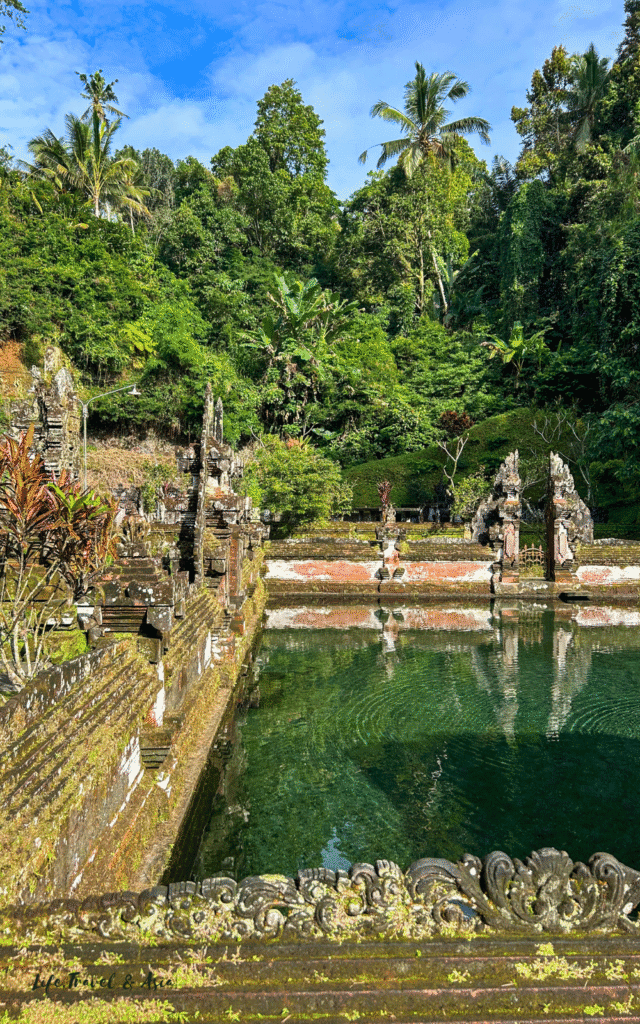
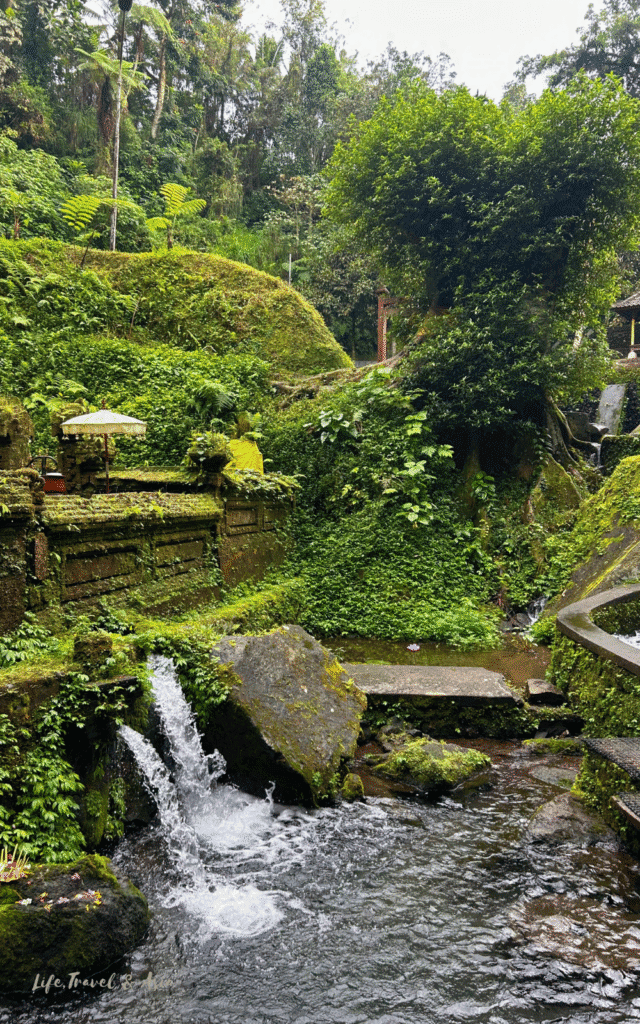
- Pura Gunung Kawi Sebatu: Almost the same name, but a completely different temple. This small water temple tucked away in the middle of the jungle had already won my heart, even before I got in, while I was still in the backseat of my Grab bike. It’s so enchanting that it almost made me emotional.
- Tegallalang Rice Terraces: If you’re coming from Ubud, the Tegallalang rice terraces make for a perfect stop to break up all the temple hopping with a little dose of nature.
- Mancigan Rice Terraces: Alternatively, if you want to explore some rice terraces but avoid the touristy site of Tegallalang, the Mancigan rice terraces are equally stunning but far less visited. They are located right beside Gunung Kawi.
How to Explore Gunung Kawi Tampasiring
My first tip for exploring Gunung Kawi Temple? Go early. It’s the best way to have the place to yourself so you can take your time wandering around.
Once you’ve made your way down the entrance stairs, you’ll reach the first part of the temple on your left. This is where the first four candis (shrines) are located.
From here, you already get a beautiful view of the other side of the temple, the river flowing through, the waterfall, and the jungle all around. Right in front of these candis, you’ll also spot the classic multi-tiered Meru shrines.
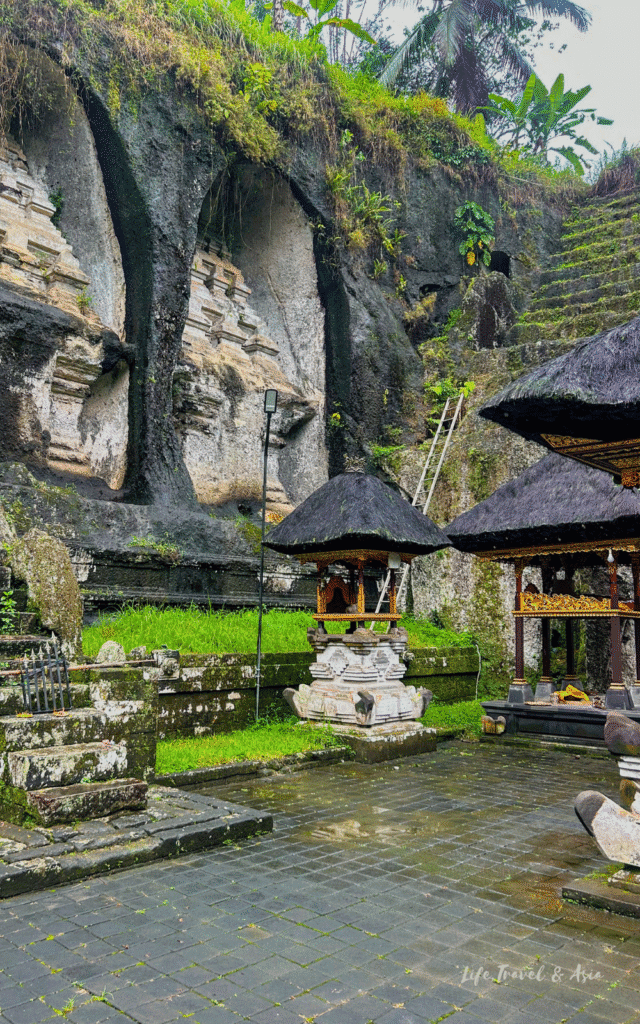
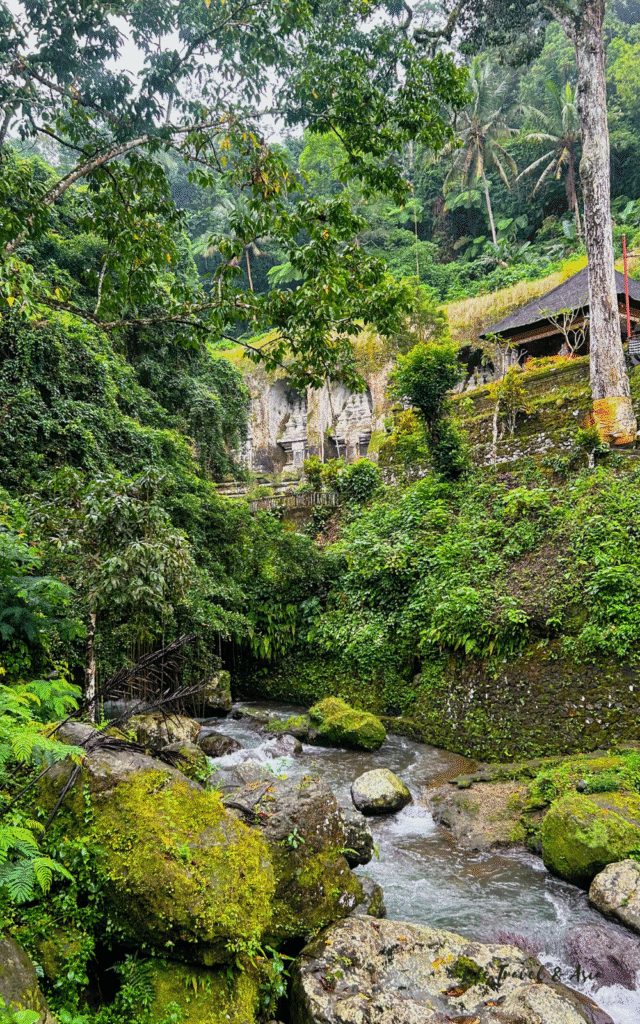
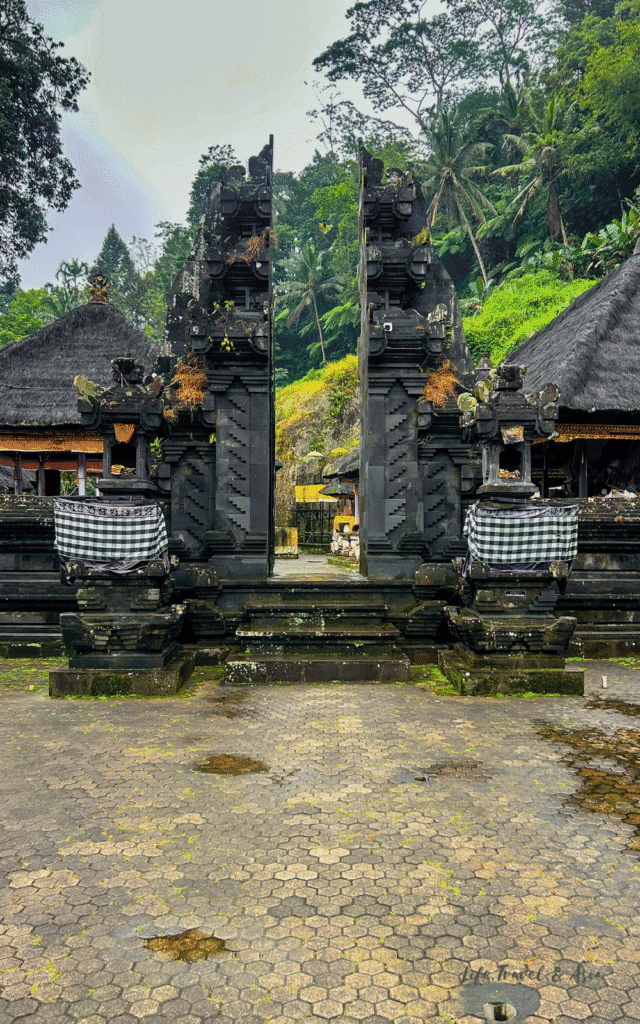
Once you’ve crossed the little bridge and taken in the view of the river rushing beneath you, take the staircase on the right. It leads you to the first candi bentar, the classic Balinese split gate that marks the entrance to the temple’s outer courtyards.
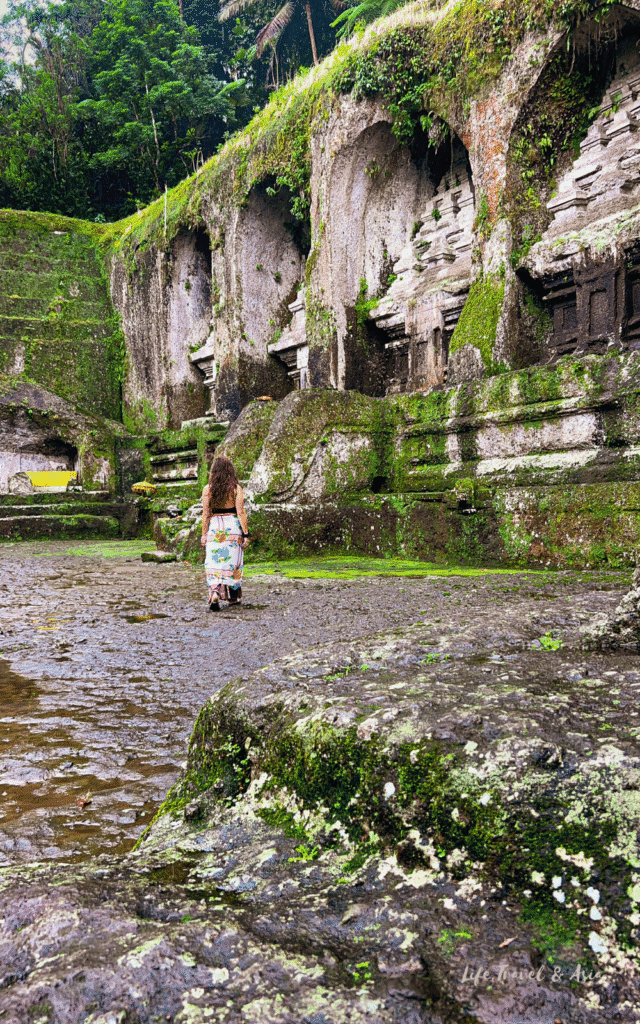
What’s truly stunning is walking through them to reach the second area, where five majestic candis rise, carved straight into the cliffside.
Because you’ll be so drawn in by the candis, it’s easy to miss the three little fountains trickling just behind the wall or the small path that leads down to the riverbed via another set of stairs. Make sure to take your time exploring every corner here; it is easily the highlight of the entire visit.
What I Didn’t Like About My Visit
In general, I’m not a fan when endless souvenir stalls pop up along the path to a temple. Honestly, it can really detract from the sacred atmosphere of a site.
Unfortunately, that’s the case at Gunung Kawi Temple, and the entrance area definitely lowered my expectations at first, which was a shame.
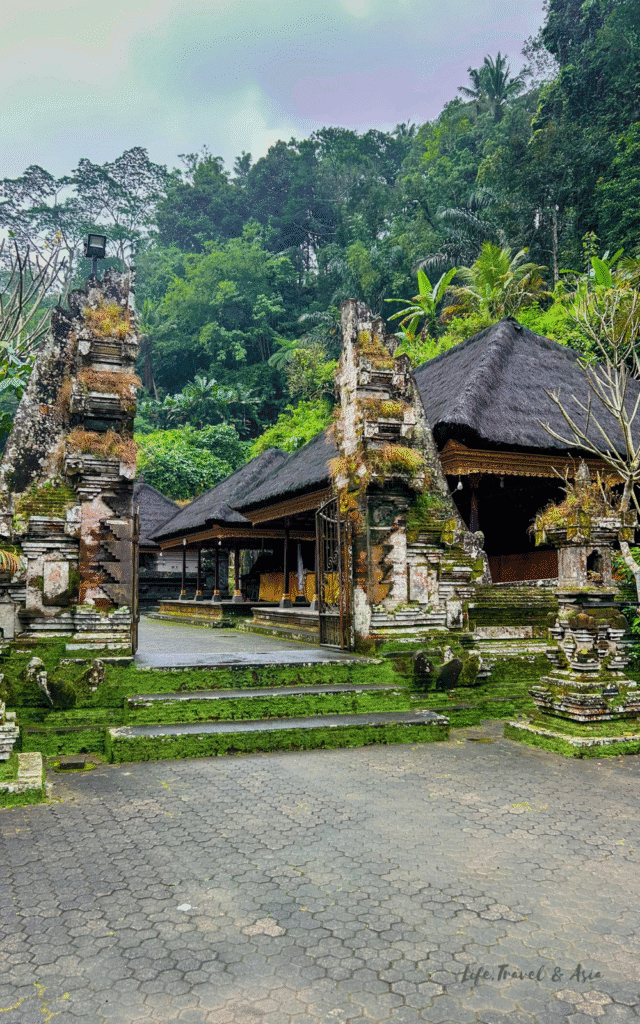
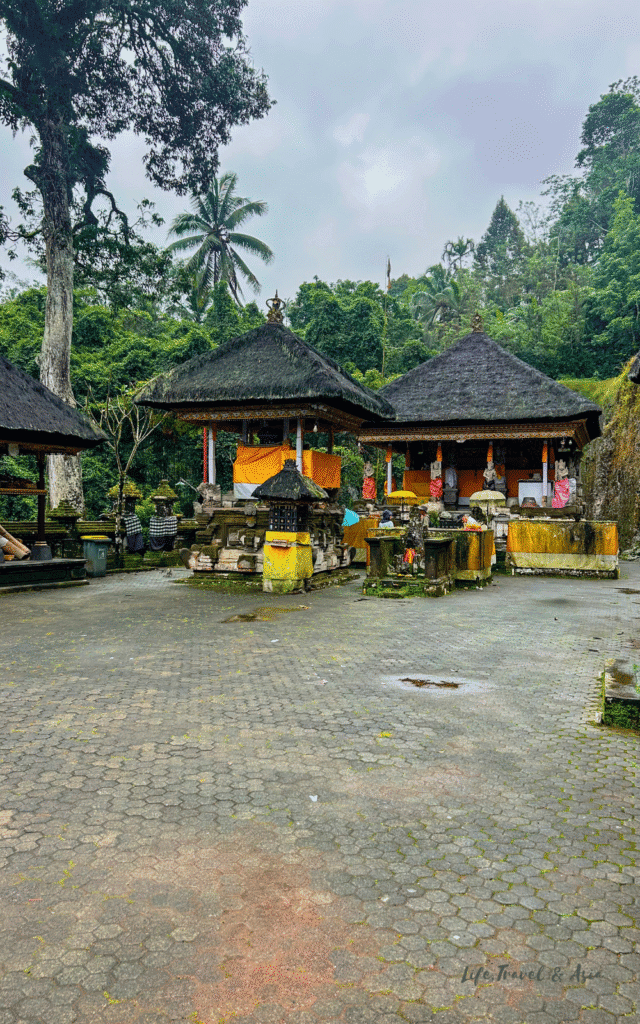
Luckily, since I arrived around 8:00 am, all the stalls were still closed, and there was no one else around. I truly enjoyed the silence and the sounds of nature.
However, keep in mind that this is a popular site. I’ve seen it advertised by plenty of tour agencies here in Ubud. In fact, just as I was leaving, a large group of tourists showed up, and that peaceful atmosphere was gone instantly.
Should You Visit Gunung Kawi Tampaksiring?
Based on your expectations, other sacred sites, such as Tirta Empul, Goa Gajah, Gunung Kawi Sebatu, or Pura Mengening, might be more aligned with what you’re looking for.
I’d say you should visit Gunung Kawi Tampaksiring if:
- You’ve already explored a good number of Hindu temples and want to see something structurally different. In that case, the funerary complex, with its towering shrines carved into the cliff, is a great option to mix things up (yes, there’s still the temple courtyard, but honestly, its beauty doesn’t compare to that of other temples).
- You’re looking for a mystical, quiet spot where nature is not just the backdrop, but part of the whole experience.
It might not be for you if:
- You’re after that classic Balinese temple architecture, full of detailed carvings and vibrant shrines. In that case, Tirta Empul or Gunung Kawi Sebatu are probably more your thing.
There you go, that’s my honest (and a bit opinionated) take on Gunung Kawi Temple. Hopefully, this helped you decide if this ancient site deserves a spot on your Bali itinerary, or if maybe other temples around Ubud are a better fit for you.
If you’re still planning your Bali itinerary, make sure to check out my complete Bali travel guide, which I wrote after living here for six months. You’ll find everything you need to plan your trip, from hidden gems to practical logistics.