Pura Gunung Kawi Sebatu: Explore Bali’s Most Enchanting Water Temple
Last Updated on March 30, 2026
Looking for beautiful yet hidden temples in Bali? Then you should definitely add Gunung Kawi Sebatu Temple to your itinerary.
Located in the small village of Sebatu, it’s one of the most enchanting temples I’ve visited in Bali so far. It may be small, but its intricate architectural details and the peaceful, sacred atmosphere truly took me by surprise. It’s one of those occasions where you don’t expect much, and then Bali completely exceeds your expectations.
In this post, I’ll share everything you need to know before planning your visit to Gunung Kawi Sebatu, including its unique features and where to book an intimate Balinese purification ceremony.
This article may contain affiliate links. This means that if you purchase through one of the links, I may be paid a small commission at no extra cost to you. Thank you for supporting the blog and allowing me to keep sharing meaningful travel experiences with you.
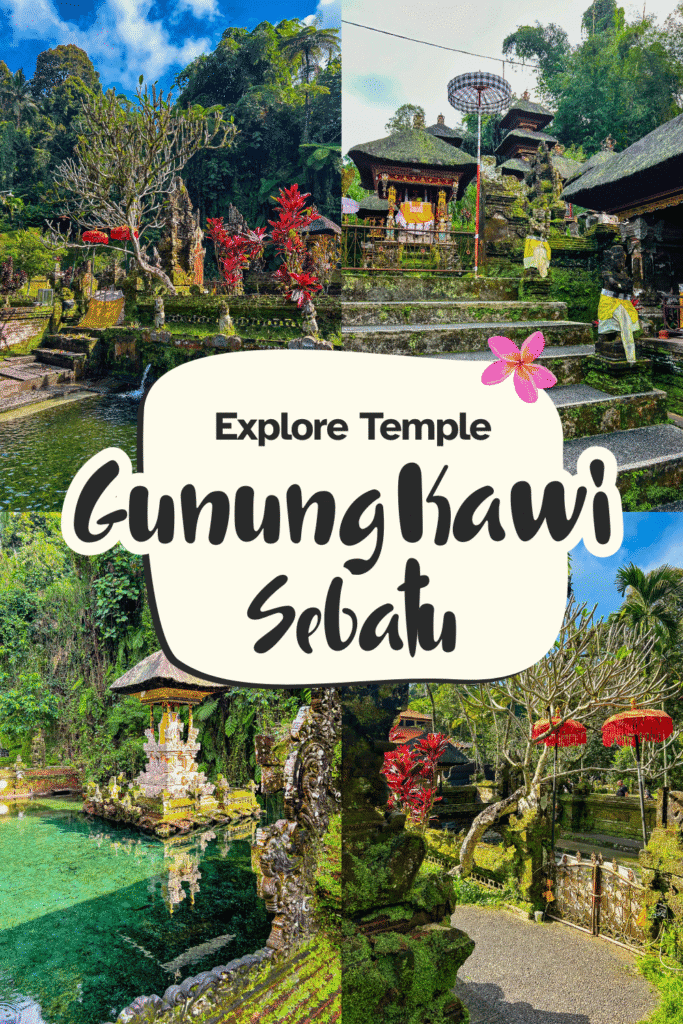
Don’t have time now?📌 Save it for later!
Recommended in this Article
Is Pura Gunung Kawi Sebatu Worth Visiting?
Absolutely yes, Gunung Kawi Sebatu is definitely worth visiting if you’re in Bali.
Not for its size, of course, but for its architectural beauty. It’s one of those rare places where you can have a sacred site almost entirely to yourself, taking your time to notice every detail without the crowds. It’s not very well known and is often overlooked in favor of more popular temples.
And somehow, it’s exactly that lack of expectations (mine included) that makes the experience even more special once you arrive.
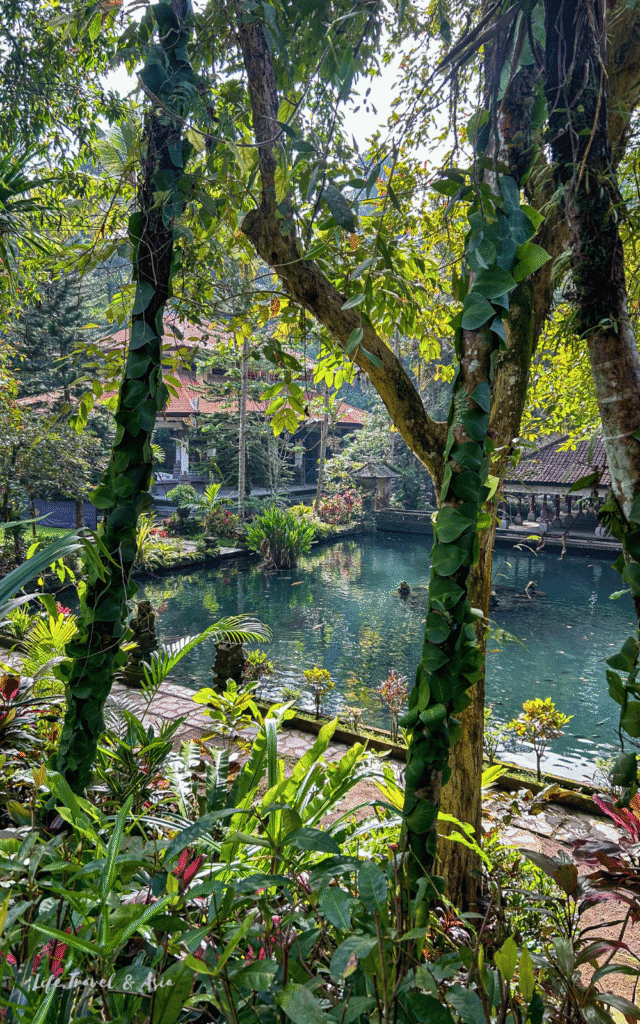
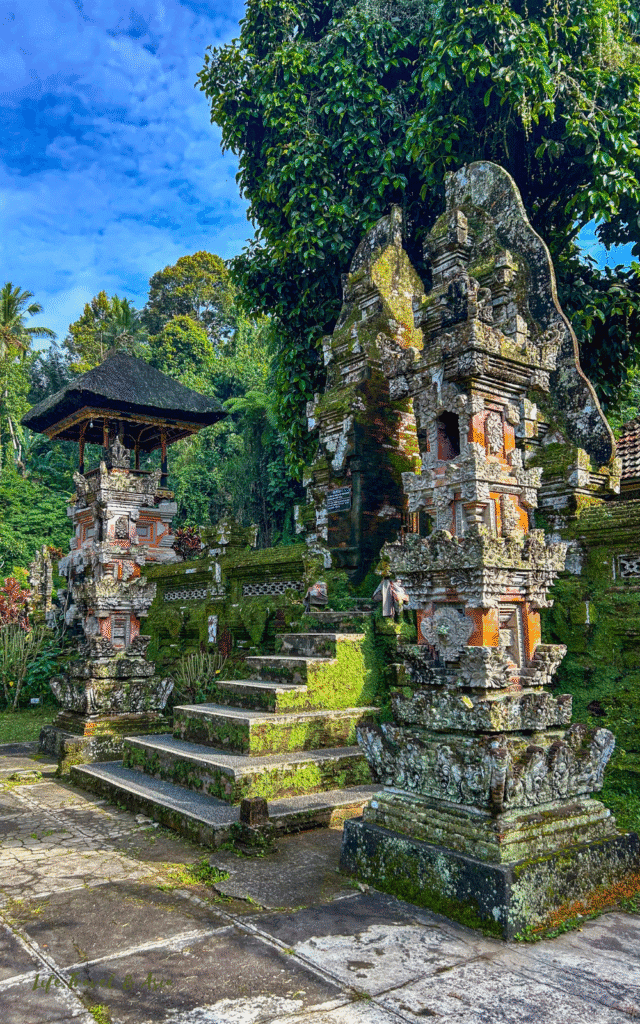
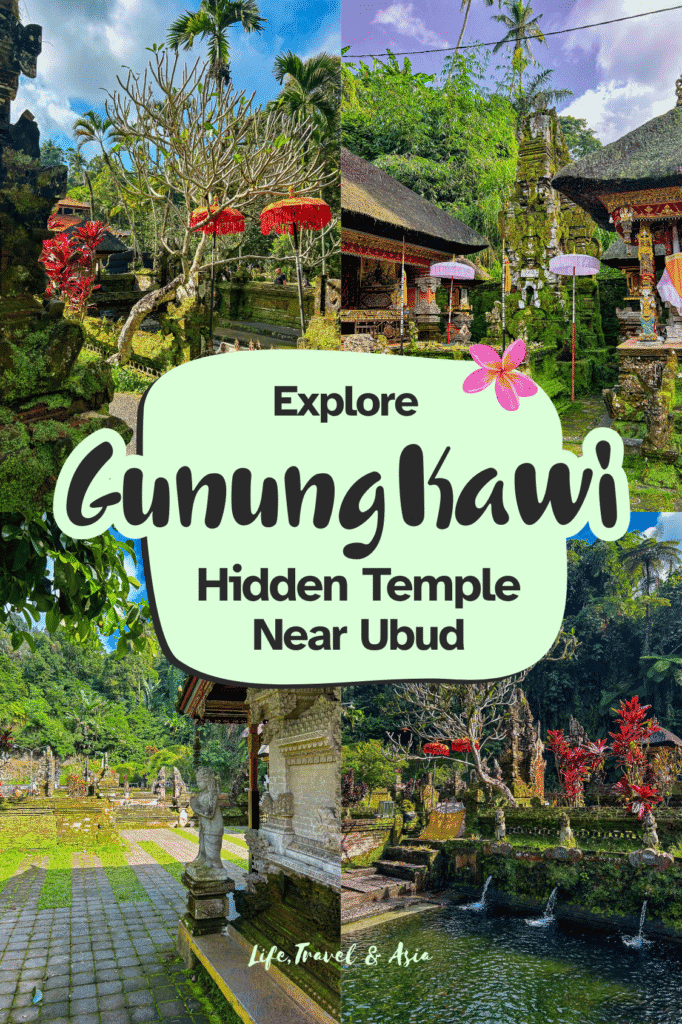
The crystal-clear water pools and the tropical gardens (which I’m completely obsessed with) were already enough to make me whisper “wow” from the back of my Grab bike as I arrived at the temple. I had chosen a warm Sunday morning, when the contrast between the bluest sky and the deep green jungle created the perfect backdrop for the ancient site.
Before even stepping inside, on your left, you’ll notice a charming koi pond, partially hidden among the trees, followed by an airy open space leading to the main candi bentar gate.
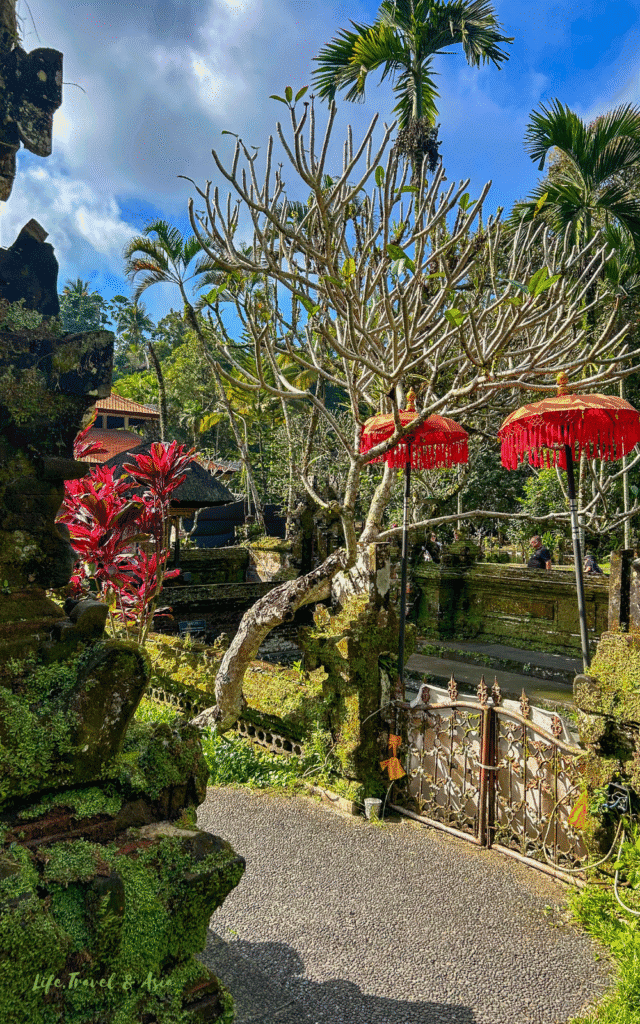
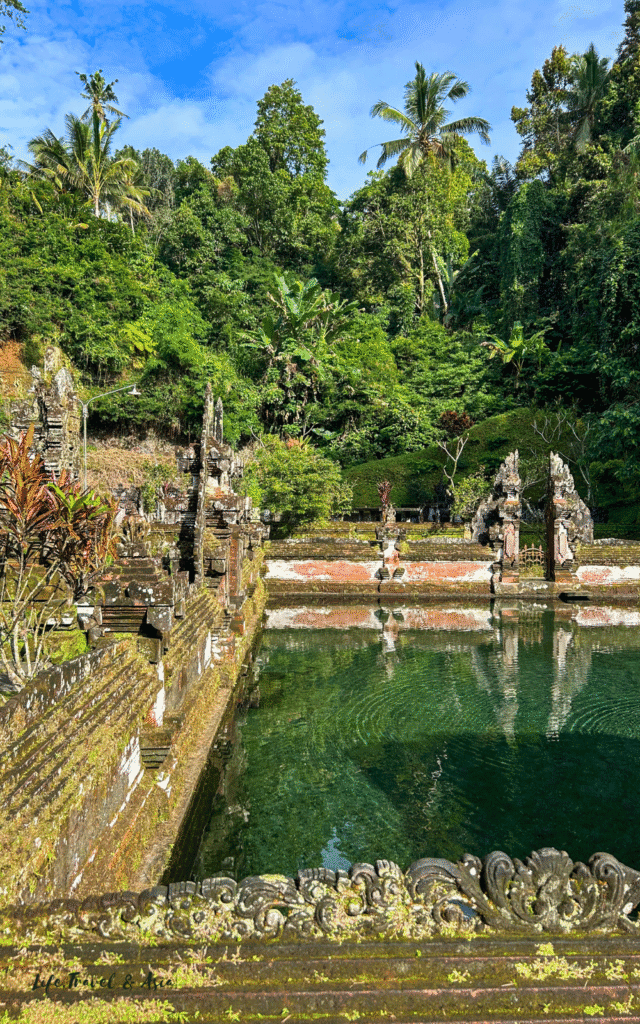
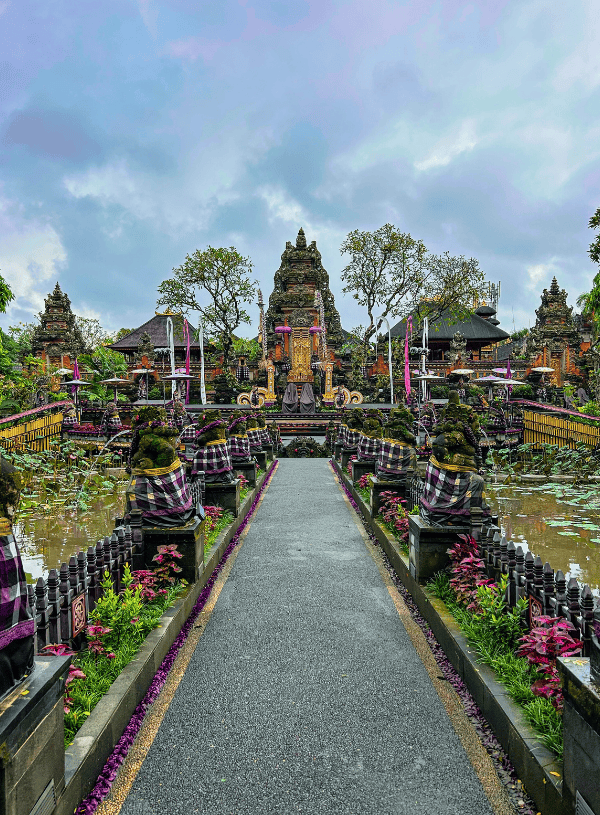
The architecture is what truly blew me away, the intricate details of the main pavilion, along with the stone structures surrounding the emerald pools.
Everything drew me in, and despite the small size of the site, I ended up spending nearly an hour there… until the guardian started giving me a slightly puzzled look, probably wondering what exactly I was searching for.
This peaceful atmosphere also makes it ideal for practicing the Melukat ritual. During my visit, a family arrived just as I was leaving to perform the ritual with their guide, and they had the temple entirely to themselves.
How to Plan Your Visit to Gunung Kawi Sebatu Temple
1. How to Get There
Pura Gunung Kawi Sebatu is located about 45-50 minutes from Ubud, in the small village of Sebatu.
The best way to get there is to go by scooter or Grab bike from downtown Ubud. The scenery to get there is so pretty: the road takes you past rice terraces, bumpy stretches of pavement, and quieter villages.
Ideally, you would plan other stops along the way or nearby Gunung Kawi Sebatu. Considering the temple is tiny, it pairs perfectly with a visit to the Tegallalang rice terraces, or other temples nearby like Pura Mengening, Pura Tirta Empul, or Gunung Kawi Tampaksiring.
2. Gunung Kawi Sebatu: Tickets & Dress Code
The entrance fee for Gunung Kawi Sebatu temple is IDR 50K (around $3), and they will provide you with a sarong, along with your ticket.
It’s usually better to dress modestly, covering legs and shoulders, even if they didn’t seem particularly strict at the entrance.
3. Best Time to Visit The Temple
The best time to visit is in the morning, around 9 or 10 am, when the light is at its best. I would usually also say “during the dry season, from April to September,” but Bali’s weather has been a bit unpredictable lately, so I’m not even sure there’s still a clear distinction between dry and rainy seasons anymore.
You don’t need to worry too much about crowds here, as the temple isn’t part of most Ubud itineraries. That’s why I suggest visiting the Tegallalang rice terraces first (which, on the contrary, are very touristy) and then heading here afterward.
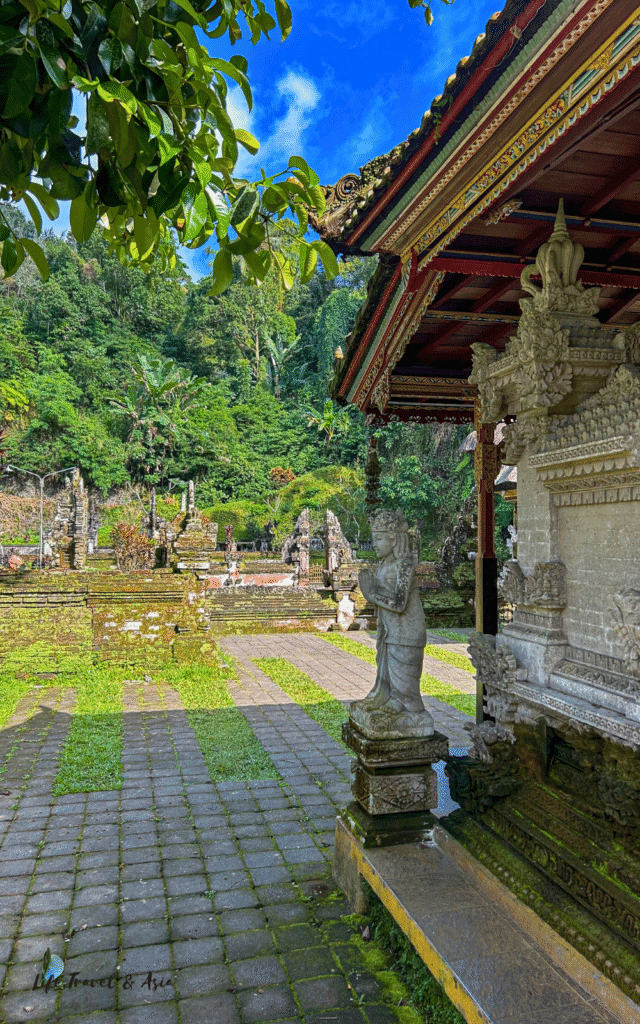
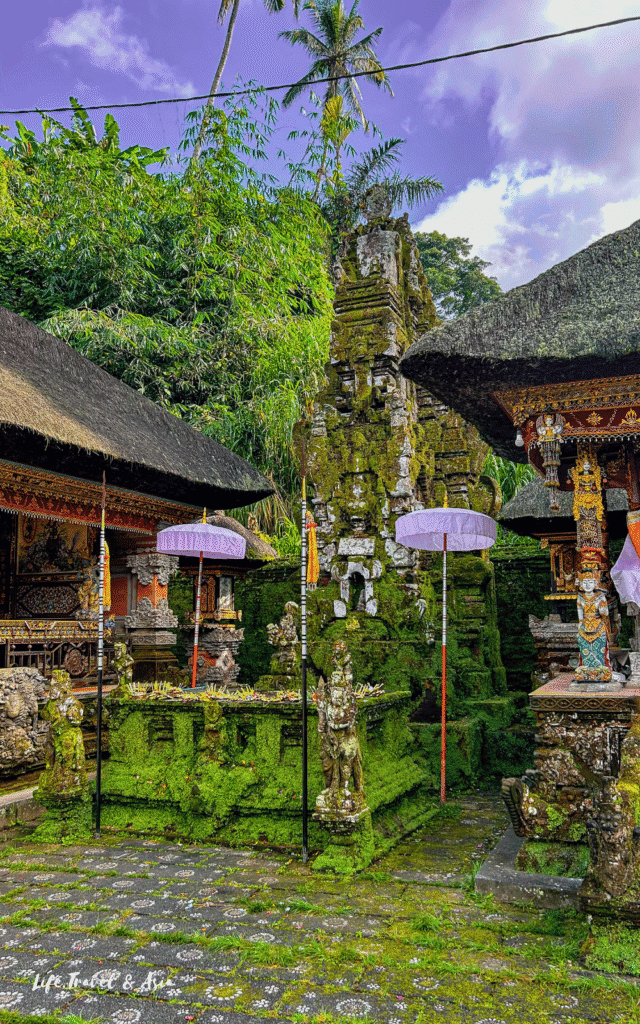
I highly recommend taking your time to explore the temple and truly discover every corner. The grounds are small, and you could easily be done in 20 minutes, but that way you’d miss so many of the little details.
You’ll likely find locals practicing a purification ritual, or young ladies lighting an incense stick right in front of you. Slowing down and really taking in the spirituality in the air is the best way to experience this sacred site.
4. Popular Gunung Kawi Sebatu Tours
Here are some tours I’d recommend if you’d like to benefit from the knowledge of a local guide while visiting the temple and make the most of your time in the area, especially if you’re in a rush or prefer not to deal with transportation.
- Melukat Purification at Gunung Kawi Sebatu: For those who, after seeing the beauty of this temple, wish to experience a meaningful Melukat ceremony in a more private setting, this is a top-rated option. You’ll be dressed in traditional attire and bathe in the crystal-clear pools of the temple, surrounded by magical tropical gardens
- Sacred Water Temple Ritual and Balinese Healing: If you’re up for a full day of healing and relaxation, this tour is honestly tempting, combining a visit to Gunung Kawi Sebatu with a purification ceremony. Once you’re done with the ritual, you’ll head to a 5-star spa for three hours of pure relaxation and unwinding.
Exploring The Temple Grounds
As I mentioned, the temple isn’t huge, but there was something about it that made me want to explore every corner.
The temple follows the classic Hindu Balinese structure, divided into three courtyards that symbolise the three realms of existence: the outer world, the middle world, and the innermost, most sacred area.
On the left side, you’ll find a lush tropical garden covered in vivid tropical plants and bright flowers, with views over the crystal-clear pools where the Melukat purification ritual is often performed.
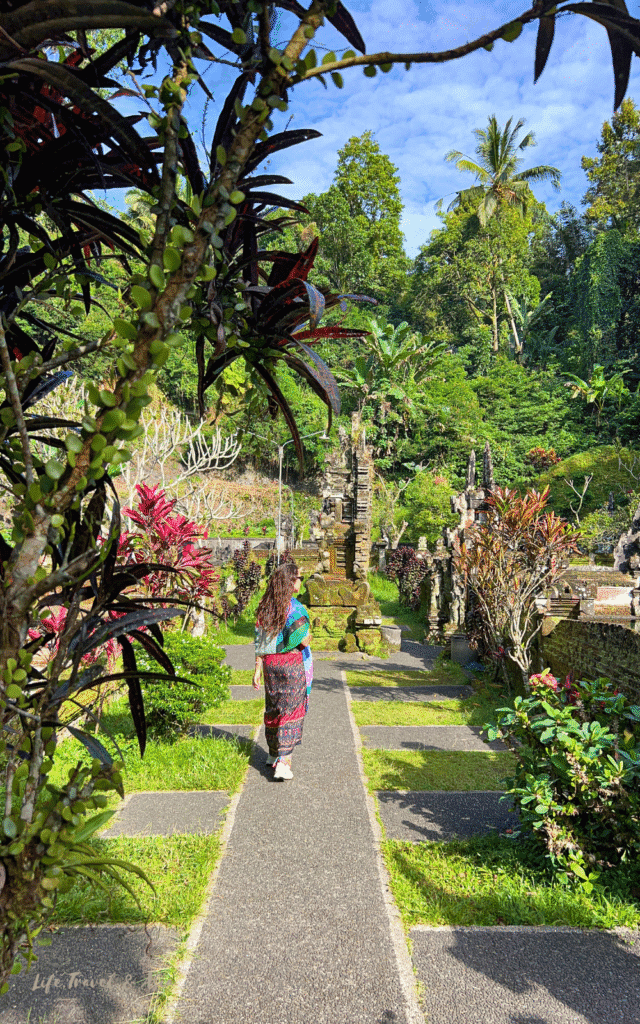
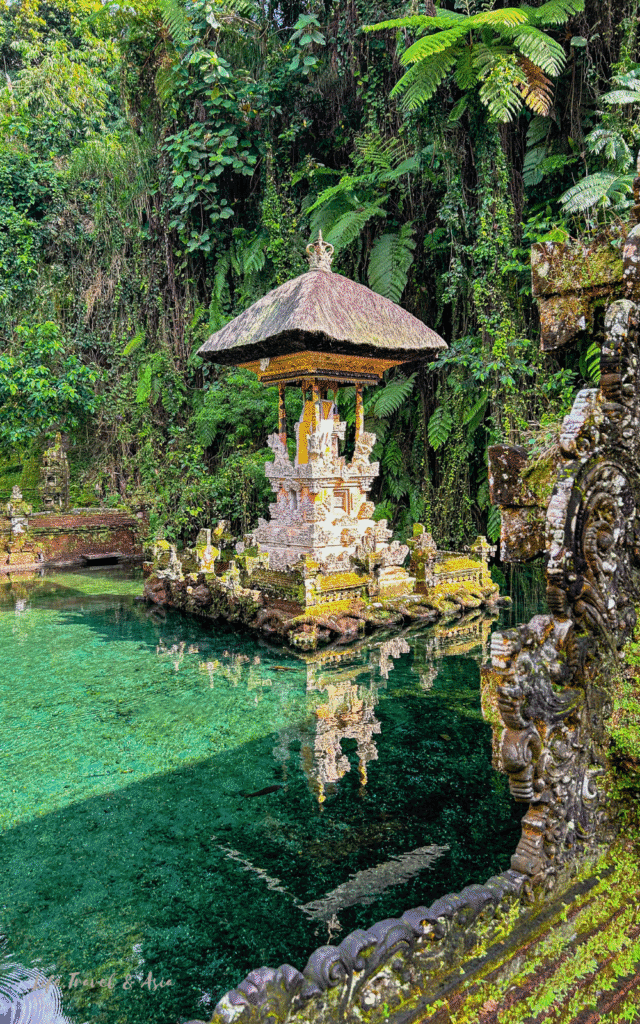
A bit further down, there’s a beautiful pond with a small meru-style shrine floating at its centre (here I also spotted the biggest lizard I’ve ever seen in my life).
To the right, multiple meru shrines rise, surrounded by colourful canang sari offerings laid neatly in front of them.
And right at the heart of the temple lies the most sacred area, the jeroan — home to the main altar and several open pavilions. While this part is closed off by a simple gate, you can still easily admire its details from the outside.
History of Gunung Kawi Sebatu Temple
Like many sacred sites in Bali, Gunung Kawi Sebatu comes with its share of fascinating legends. One of the most popular stories speaks of Kebo Iwa, a mythical giant said to have carved the nearby cliffs with his bare hands.
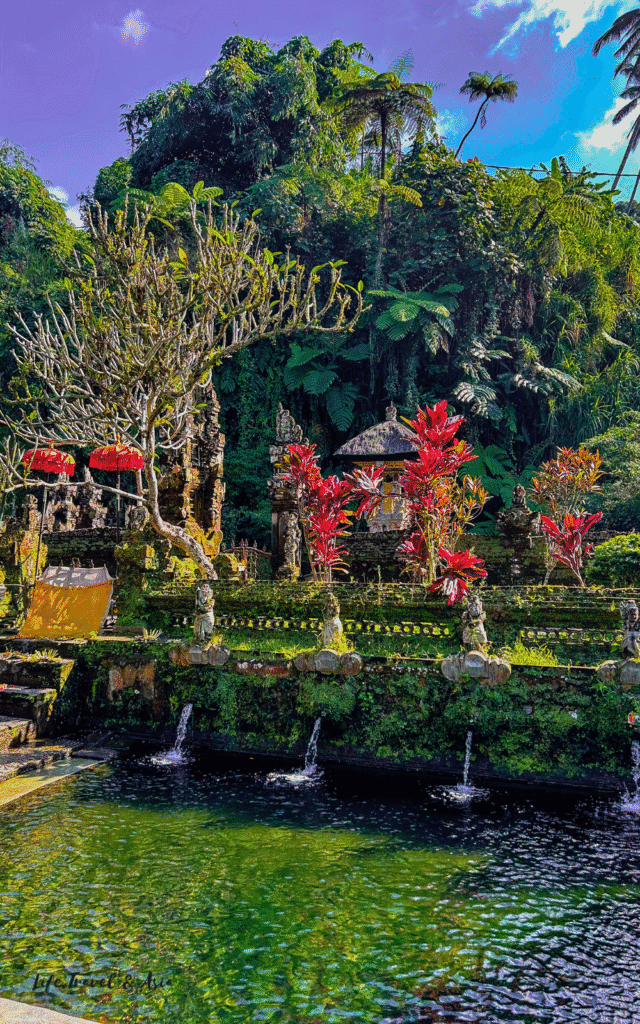
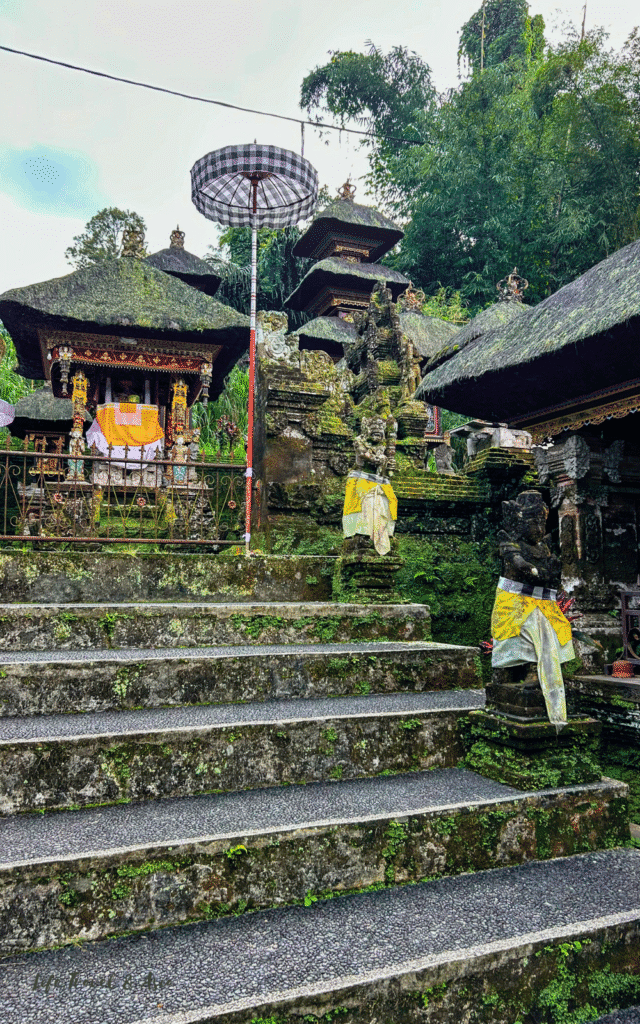
The temple itself dates back to the 11th century, built as a sanctuary surrounded by jungle and natural springs. Another story is that of Maharsi Markandeya, a priest who stopped here during his long journey centuries ago.
Tired and in search of relief for his followers, he prayed to the gods, and right there, fresh, sacred water is said to have sprung from the earth. That water still flows through the temple today, making this place deeply tied to purification and healing.
Other Things to Do Around Gunung Kawi Sebatu
Gunung Kawi Sebatu Temple is so easy to combine with other sights just nearby.
- Pura Tirta Empul: Not to practice the Melukat ritual, Tirta Empul is way too chaotic for that, but to explore the temple grounds. The temple itself is stunning and worth a visit. After visiting its noisy grounds, you’ll appreciate Gunung Kawi Sebatu even more.
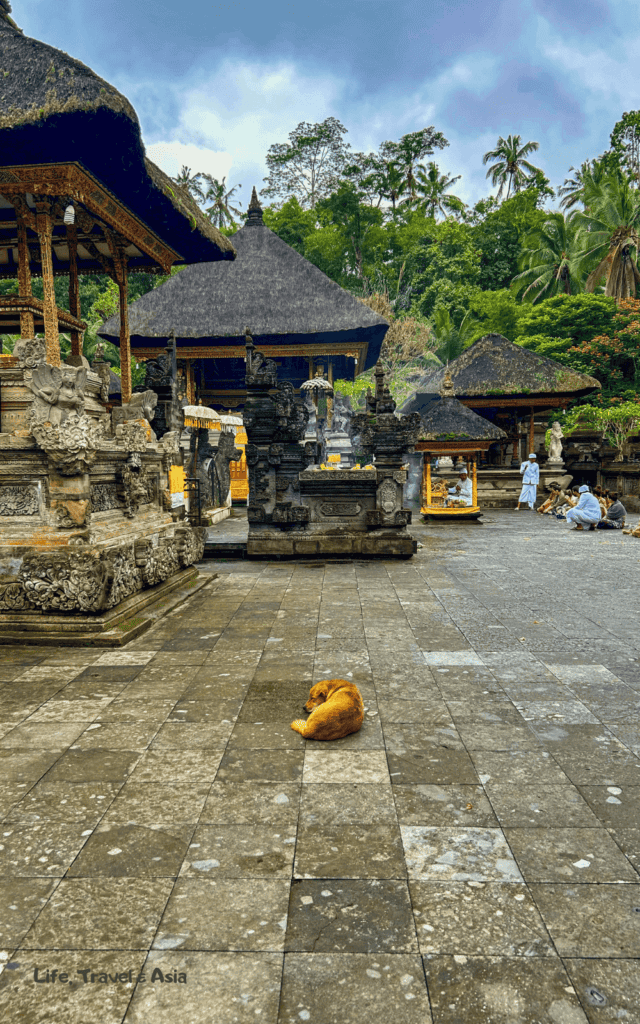
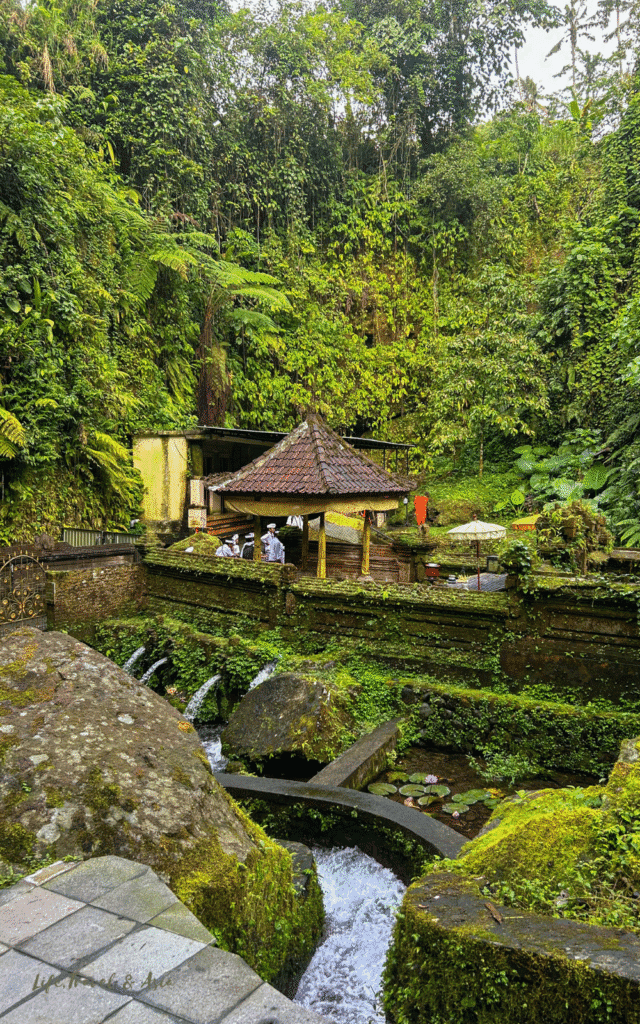
- Pura Mengening: This is the temple where I practiced my purification ceremony, and I absolutely loved the experience. The temple is tiny, but its natural beauty is what makes it truly special. Here, you won’t find crowds of visitors, another reason why you should explore it.
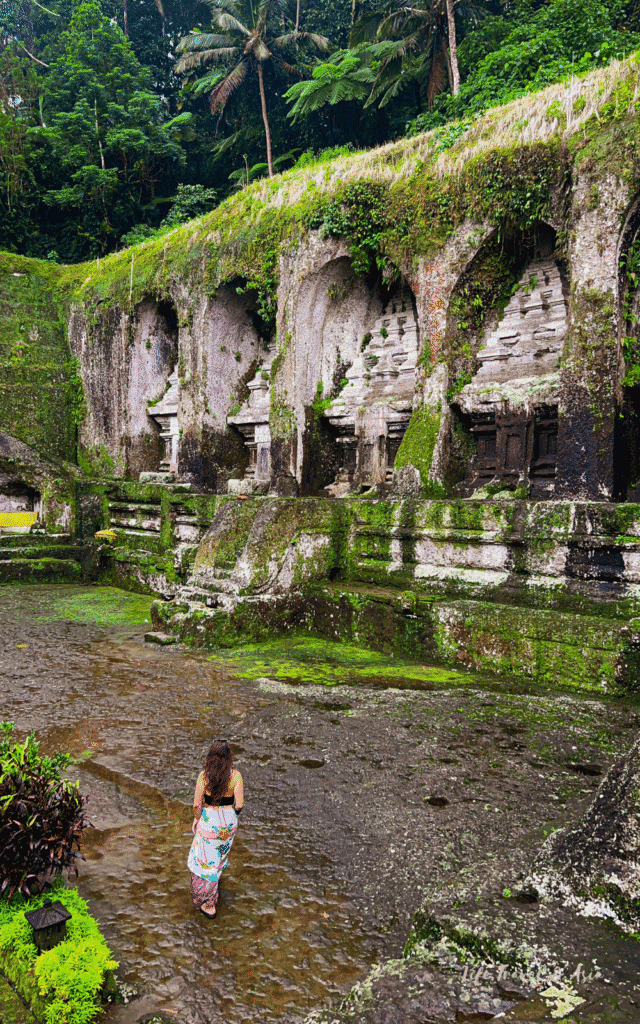
- Gunung Kawi Tampaksiring: This is likely one of Bali’s most mystical sacred sites, and it deserves a spot on your itinerary, mainly for its majestic candis carved into the cliffside (shown in the picture just above), rather than the temple courtyards themselves.
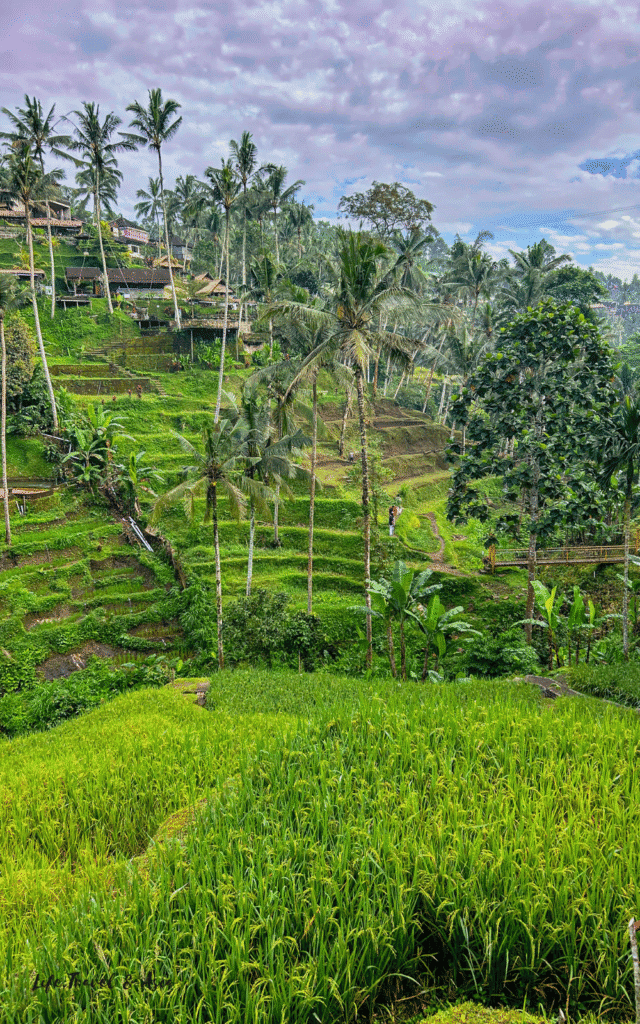
- Tegallalang Rice Terraces: If you’re coming from Ubud, the Tegallalang rice terraces make for a perfect intermediate stop to break up the temple-hopping day-trip with a good dose of nature.
And there you go! Hopefully, the photos in this article have given you at least a glimpse of how beautiful this place truly is.
And you know what’s funny? I wasn’t even planning to visit this temple. When I looked it up online, I actually ended up seeing photos of the other Gunung Kawi Temple in Tampaksiring instead.
If you’re looking for other sacred sites to add to your itinerary, be sure to check out my favorite temples in and around Ubud. And if you’re still planning your trip to Bali and feel like you might be missing some key information, you can also read my complete travel guide based on six months of living here.
Other Articles You May Like
- Chasing Waterfalls in Bali: 13 Locations You Need on Your Summer Bucket List
- Best Time to Travel to Bali in 2026: Weather, Crowds & Experiences
- Self-Guided Ubud Walking Tour: Markets, Temples, Rice Fields & the Best Walks in Ubud
Did you find it helpful? 📌 Save it on Pinterest!