How to Visit the Great Wall of China from Beijing in 2026: Your Essential Travel Guide
Last Updated on January 24, 2026
Are you planning a trip to the Great Wall from Beijing and looking for tips to make your visit a success?
I’ve been to the Great Wall from Beijing twice (and once at the westernmost section in Gansu). I’ll be honest with you…as much as I don’t like visiting touristy places by definition, you can’t miss the Great Wall, especially if you’re staying in Beijing for a couple of days.
However, there are a couple of things you should know when planning your visit: the best time to avoid crowds, which sections to visit, and, above all, how to get there (depending on the section, the Great Wall is not exactly easy to reach).
In this blog post, I’ll share how to visit the Great Wall of China from Beijing, including insights into the best sections to see (including the ones I’ve personally visited) and general planning tips.
This article may contain affiliate links. This means that if you purchase through one of the links, I may be paid a small commission at no extra cost to you. Thank you for supporting the blog and allowing me to keep sharing meaningful travel experiences with you.
Don’t have time now?📌 Save it for later!

Great Wall Tours to Hard-to-Reach Sections
What’s The Best Section Of The Great Wall to Visit?
Well… it depends on your expectations and how adventurous you want your journey to be.
Unfortunately, the Great Wall isn’t towering in Beijing’s city center; it’s located further away. Some easily reachable sections are also more crowded, which can detract from your experience.
On the other hand, the most adventurous sites may require private transportation to access, but the views and wild atmosphere will make your visit much more authentic and unforgettable. I personally visited the Mutianyu and Juyongguan sections.
1. Mutianyu Great Wall
I visited Mutianyu back in 2019. It is said to be the most popular section among international travelers and also the best restored.
It perfectly met my expectations: an adventurous hike surrounded by a sea of lush forests, not too crowded, and definitely a fun visit thanks to the slide that lets you glide down to the base. Regarding transport, we took a bus and then a taxi to reach the base of the Great Wall.
In this article, I’ll share insights on planning your trip to the Mutianyu section.
2. Juyongguan Great Wall
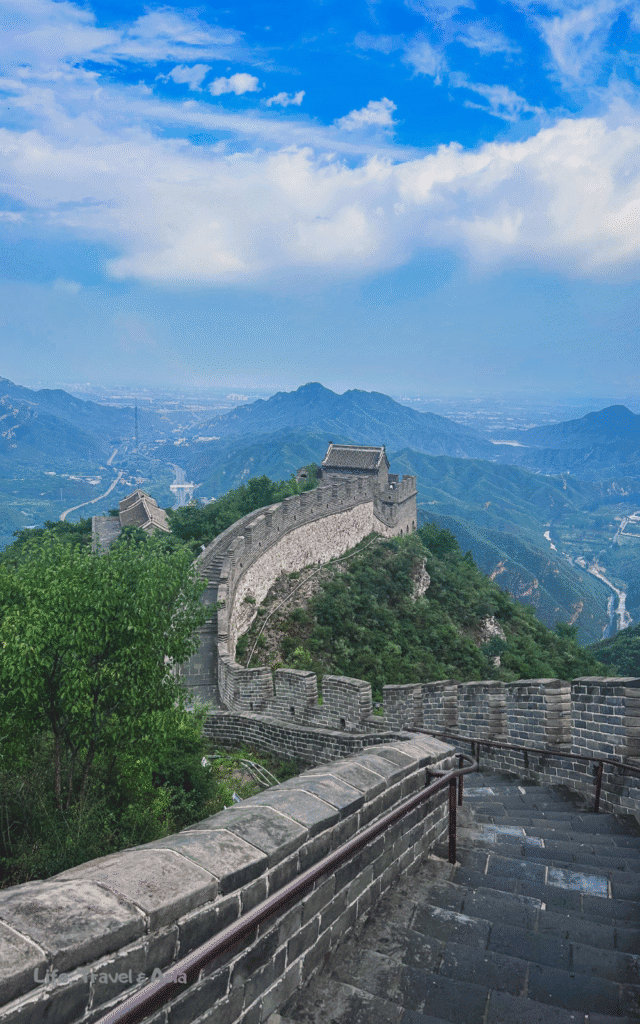
Juyongguan is the section I visited in the summer of 2024, and while I liked it and you can witness one of the most beautiful gates of the Great Wall there, it left me a bit disappointed.
You can see the motorway when hiking the wall, which makes the experience feel less adventurous and authentic, and this section is not as extensive.
You can hike it all in around one hour, and it’s pretty steep. For transportation, we had our own car, but there was also a bus leaving from Beijing. As a pro, there was basically no one.
3. Badaling Great Wall
Badaling is the most popular section among Chinese tourists and the one I’ve always been told to steer clear of because the crowds are crazy.
As a pro, it’s likely the easier section to reach; a high-speed train from Beijing takes you there in around 30 minutes. The views are unforgettable, but you may end up playfully elbowing an old Chinese lady to take a decent picture.
4. Jinshanling Great Wall
Jinshanling may be the right compromise for those looking for a challenging hike and great photography spots.
This section is half restored and half wild, offering some of the most beautiful views and a sense of adventurous exploration.
Unfortunately, there’s no direct way to get to Jinshanling from Beijing. You’ll have to take two buses (which may be canceled during off-peak season) and a taxi. A simpler way to explore this section is to book a private tour and avoid the hassle of transportation.
5. Simatai Great Wall
Simatai and Jinshanling are connected, and this route is among the most popular for hikers.
Simatai is the only section of the Great Wall where you can take a night tour and get to experience the Great Wall of China in a truly unique way. In this case, getting to the Simatai section by public transport is an adventure in itself, involving two buses that may be canceled last minute and taxis.
Booking a tour is again the easier option if you want to enjoy your visit without surprises.
6. Jiankou Great Wall
If you’re looking for pure exploration and untouched nature, the Jiankou section is the best for you. This section is considered “not open to the public,” so the only way to visit it or even camp in some sections is to book through a travel agency or tour.
Nothing is restored here, and the fact that crowds are nonexistent makes it an experience to try once in a lifetime. One of the most popular hiking routes is the one from Mutianyu to Jiankou.
What’s The Best Time of Day to Visit the Great Wall?
When it comes to the best time of day to visit the Great Wall, ideally, you want to go in the morning, right after opening time. This is especially true if you’re planning to visit Mutianyu or Badaling, which are more likely to be crowded with tour groups.
If you’re planning to visit any other section, I’d say you’re safe to visit at any time. If you’ll be staying in the Summer, avoid the midday hours, as temperatures in Beijing can be very high, making the hike challenging.
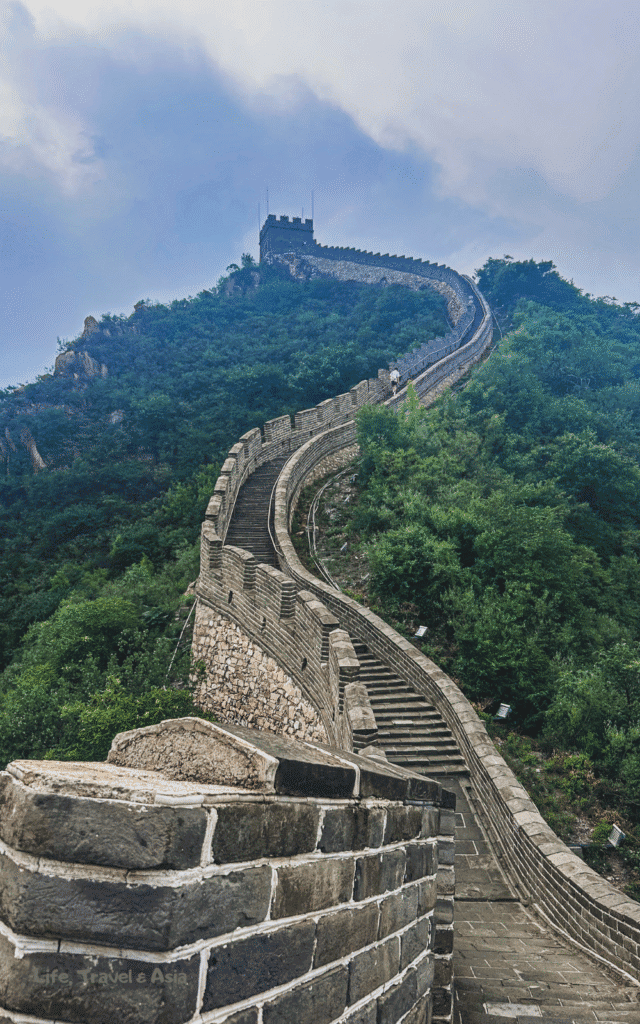
When it comes to the time of the year, spring (from March to May) and early autumn (September and October) are definitely the best periods to hike the Great Wall.
The weather will be cool enough to avoid dying under the summer heat and warm enough to prevent encountering snow, even if the Great Wall surrounded by snow would be quite a sight. For the periods I highlighted—spring and autumn—avoid these National Holidays:
- First week of October (it’s the Golden Week, when everyone is on holiday and traveling).
- Qing Ming Festival (around the 15th of April): A time for honoring ancestors. It’s a short holiday period, but locals may be moving to visit family graves.
- Labor Day on May 1st is usually a one-day holiday, but it may be combined with the weekend for a more extended travel period.
How to Visit The Great Wall of China from Beijing: Mutianyu Section
While there are more adventurous sections of the Great Wall, I believe Mutianyu is still the best section to visit if you want to plan a day trip on your own. It offers maximum flexibility, incredible scenery, and plenty of time to hike one of the longest and best-restored sections.
1. Getting to Mutianyu Great Wall from Beijing
How far is the Great Wall of china from Beijing? Well, the Mutianyu section is located at around 70 Km from Beijing and the journey may last from 1.5 to 2 hours depending on how you get there.
Unfortunately (or fortunately, because this keeps the tourist crowds away), there’s no train from Beijing to Mutianyu. The only way to get to Mutianyu from Beijing is by bus or private car.
Bus
Head to Dongzhimen Bus Station in Beijing and take bus number 916. Get off at the Huairou Beidajie stop. Once there, you have two options.
You can take bus H23 (which runs every 30 minutes) to the Mutianyu Great Wall ticket office, or you can take a taxi (which is what I did). You’ll likely find taxi drivers at the bus stop. Be prepared: the language barrier can be tricky, and drivers might try to charge more for this short trip.
When I went, I ended up bargaining the taxi fare with a driver, and we split it with two other travelers who didn’t speak Chinese.
Private Car
If you want to avoid the bus hassle, you can consider booking a private English-speaking driver who can pick you up from your Beijing hotel and drop you off.
This option is great because it offers maximum flexibility in exploring the Great Wall at your own pace, with the comfort of a private car for you or your group.
Wondering how to deal with the language barrier when traveling in China? Check out these guides with some helpful language tips and the essential apps to download that may help you during your stay.
2. Mutianyu Entrance Fee & Details
When I visited the Great Wall in Mutianyu, I didn’t need to purchase tickets in advance. Today, however, booking in advance is definitely recommended (and likely mandatory). If you check the Mutianyu official website, you’ll find several ticket options.
The basic entry ticket costs ¥45 (around $6) and covers just the entrance.
To reach the Wall, which sits higher up on the hill compared to the ticket office, you have three options:
- Cable Car: A round-trip ticket costs around ¥140
- Shuttle Bus: A round-trip ticket is ¥15
- Hiking: The free option (which I chose!)
For the cable car and the shuttle bus, you can decide to purchase the one-way ticket only and descend with the toboggan (which is a separate ticket that you can pay for directly on the Wall).
The hike involves climbing high stone steps and takes about 30 minutes. It’s challenging if you’re not in good physical shape or used to steep terrain. But trust me, the views and the sense of accomplishment when you finally arrive on top (a bit sweaty) are totally worth the effort!
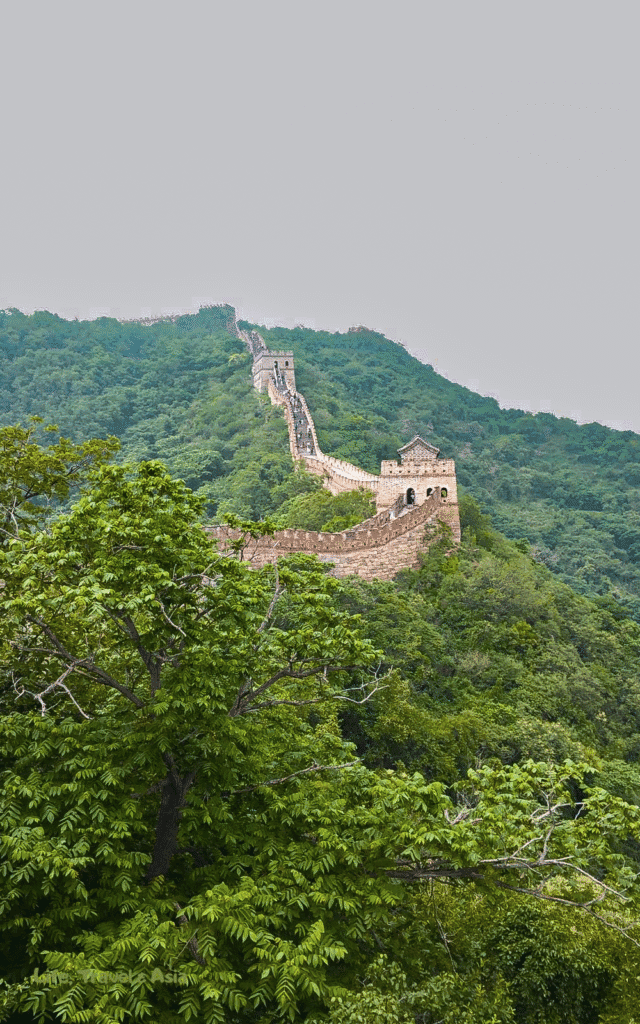
3. Opening Hours & Best Time To Visit
The Great Wall has different opening hours depending on the season.
During peak season (March 16 to November 15), the site is open from 7:30 am to 6 pm on weekdays, and until 6:30 pm on weekends. In the off-peak season (November 16 to March 15), hours are slightly shorter: 8 am to 5:30 pm.
If I were you and planning a second visit to Mutianyu, I’d definitely book a private driver and head out super early in the morning to catch the Wall under that beautiful morning light (on a clear day, of course) without anyone around me.
Hiking The Great Wall of China: What to Expect
Once I finished my hike and finally stood on the Great Wall, all I could think was, “Wow, I’m finally here.” This is precisely why I preferred Mutianyu to Juyongguan.
The challenging hike builds anticipation, and your expectations are completely met when you arrive. You can almost imagine the wall as it was centuries ago – hardly anything seems to have changed (except for the restoration).
There are no roads, no cities – just endless forests and towering mountains in the background. That’s what I loved most about this section. Plus, Mutianyu is the longest section of the Wall, so you could potentially walk for hours if you wanted to (remember, you’ll need to turn back at some point – lol!).

When I visited in June, the section was weirdly empty. The Wall is so long that finding a quiet spot for photos or contemplation is very easy. Once there, you can walk, take pictures, admire the landscape, and soak in the evocative atmosphere.
If you’re looking for the least steep section of Mutianyu, head over to Watchtower N. 14 to N. 20. This is called the “Golden Stretch“, and you can enjoy the scenery without the challenging hike. On the contrary, the East route passing by Watchtowers N. 6, 4, and 1 is the most difficult.

When you’re ready to descend, consider taking the toboggan instead of climbing down the steep steps. Head to Watchtower N. 6, where you’ll find the toboggan slide. A one-way ticket costs ¥100.
Don’t expect a high-speed adventure! You might find yourself behind a cautious Chinese lady or a young kid, with no way to pass them.
What to Pack For A Day Trip to The Great Wall
When hiking the Mutianyu section, I dressed as if I were going to a workout class: comfortable clothes but above all, comfortable hiking shoes.
What to Pack:
- Hiking shoes
- Rain/wind-proof jacket
- Refillable water bottle (drinks can be expensive, if compared to what you would pay in the city)
- Photography gear
- Snacks (vendor prices on the wall are crazy expensive, too!). I think I ended up paying ¥80 for an ice cream, almost double the entrance ticket price!
- Paper towels (toilet paper is rare in public toilets in China)
- Hand sanitizer
- High SPF sunscreen (the sun is aggressive in the Summer)
- Wide-brimmed hat
- Light layers (temperatures can change quickly)
- Portable charger
- Cash (some vendors might not accept mobile payments)
- Small backpack or daypack
There you go! Here’s how to visit the Great Wall of China from Beijing and the sections you can consider visiting. Depending on how much time you have available, Mutianyu could be the right compromise between great views and fewer crowds.
If you’re still planning your trip and wondering the perfect stops before and after beijing, you can get some inspiration in this 15-days China itinerary for first timers. I do believe it includes what you shouldn’t miss on your first trip to China. Finally, if you’re still missing that piece of information before departure, make sure to check out my China travel guide.
So, when are you traveling to China? Tell me about your plans in the comments! And if you’re looking for other popular and less popular sights and places to visit, don’t miss the blog posts below!
- Top Tourist Attractions of China You Can’t Miss If You’re Traveling There in 2025
- 36 Best Places to Visit in China That You Probably Don’t Know Yet
- Spring in China: 17 Enchanting Places You Simply Have to See in 2025
Did you find it helpful? 📌 Save it on Pinterest!