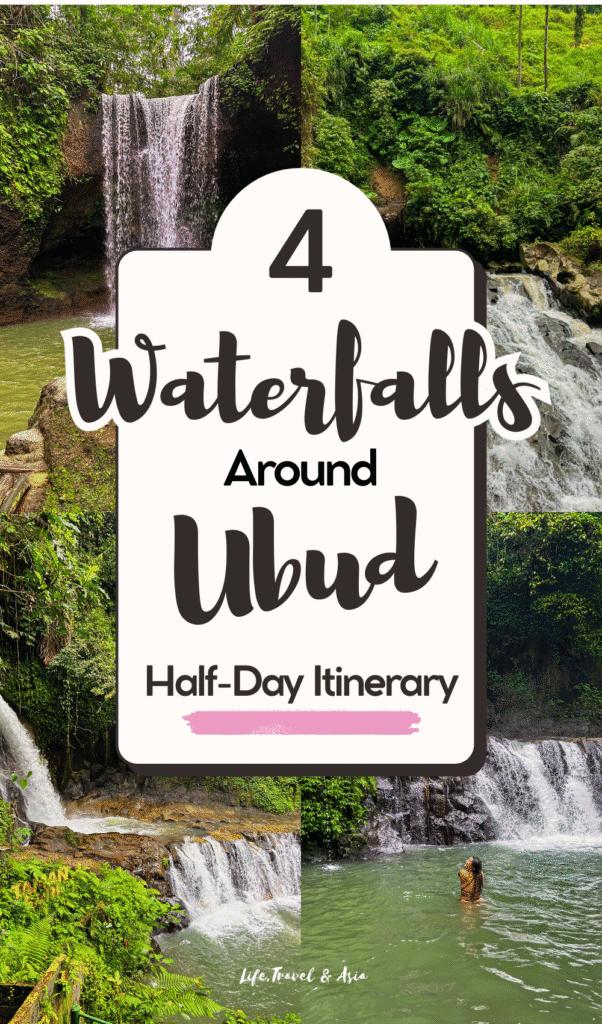
4 Hidden Waterfalls Around Ubud: The Perfect Day Trip Itinerary
Last Updated on April 7, 2026
Are you staying around Ubud and looking for stunning waterfalls that are actually a bit less crowded?
In this post, I’m sharing everything from my recent day trip exploring some enchanting spots east of town. I really wanted to escape the worst of the crowds, which is why I picked these four: Suwat, Taman Sari, Tibumana, and Goa Rang Reng.
I’ll also give you my best tips on planning your day for flexibility, and exactly when to hit the road so you can have these places (mostly) to yourself. Let’s get into it!
This article may contain affiliate links. This means that if you purchase through one of the links, I may be paid a small commission at no extra cost to you. Thank you for supporting the blog and allowing me to keep sharing meaningful travel experiences with you.
Don’t have time now?📌 Save it for later!

Recommended In This Article
East of Ubud: The Perfect Area to Escape the Crowds
There are so many waterfalls around Ubud that you could easily plan four different itineraries and still not see them all.
I chose to head east for one main reason: the distance. The waterfalls in this area are so close to each other that it makes for the perfect half-day trip. You can avoid the worst of the crowds, get your nature fix in the morning, and still be back in town in time for lunch.
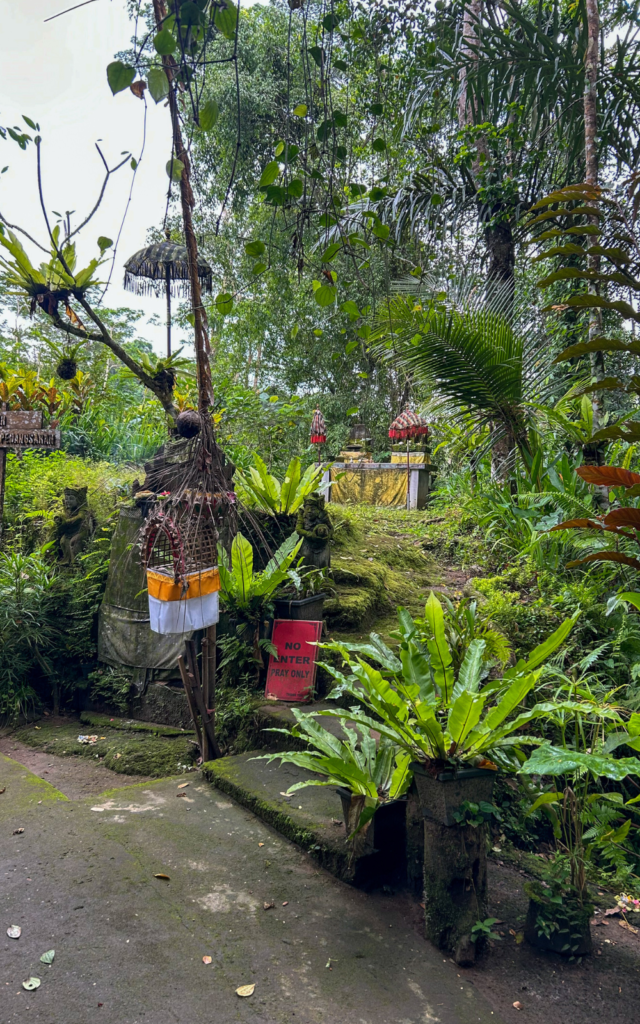
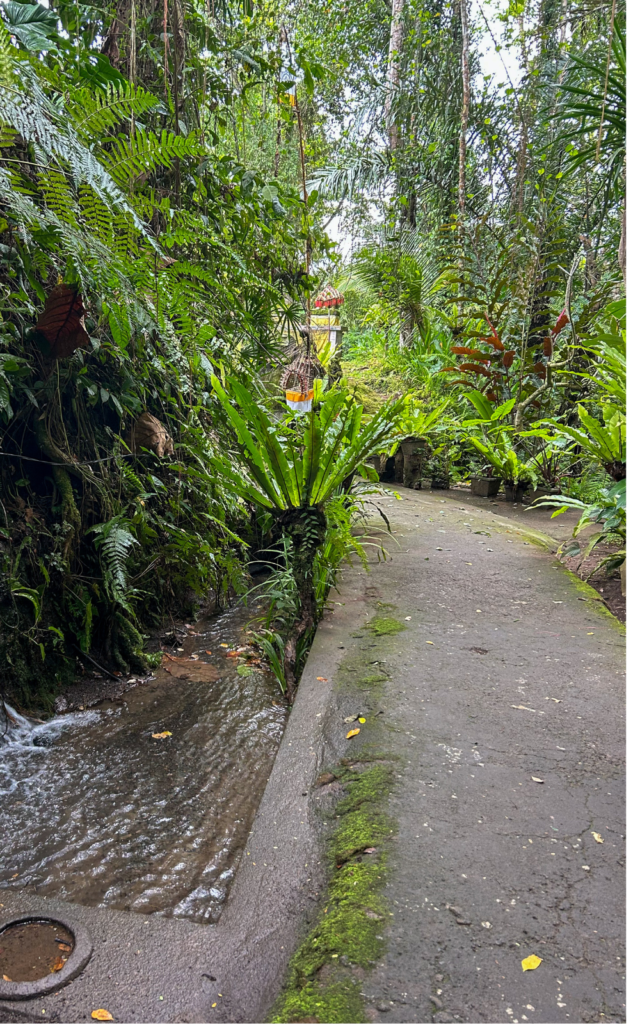
Whether you hire a driver or drive your scooter, the roads out here are mostly well-paved. The only slightly bumpy section is on the way to Suwat, the northernmost stop, where you’ll find a few potholes (and plenty of local dogs) in the middle of the road.
I also purposely skipped Kanto Lampo and Tegenungan. They’re the most famous waterfalls near Ubud, but they’re also the most crowded, and I was looking for something a bit quieter and more off the usual tourist path. Of course, you can always add them back in if you’re feeling ambitious and want to pack even more into your day!
Day Trip Around Ubud: 4 Falls in One Go
This itinerary includes four waterfalls that are all completely different from one another. At the end of the day, my driver, Putu, asked me which one was my favorite… and I honestly couldn’t choose.
One is perfect for a swim, another is incredibly scenic, one feels deeply sacred, and the last is tucked into the most beautiful natural surroundings. Here is exactly what you can expect from each and why I’d 100% recommend this exact combination for a day trip.
Similar Posts in Bali
-
12 Best Day Trips From Ubud: Hidden Waterfalls, Sacred Temples & Sandy Beaches
Last Updated on December 12, 2025 “How much of Bali can you explore in a day?” That’s…
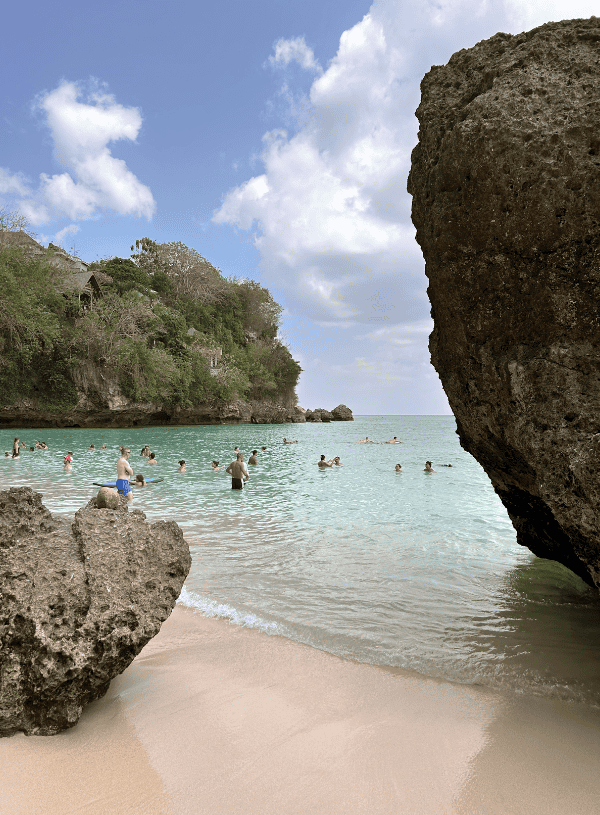
1. Suwat Waterfall: The Hidden One
I started the day with Suwat Waterfall, the farthest and northernmost stop on the list. When we arrived, it was about 15 minutes before the official opening time, and the large parking lot was empty (definitely the best way to start)
The walk down is easy and accessible, with a well-paved path that gets you to the falls in less than 10 minutes (though the walk back up still involves a pretty steep staircase!). As you descend, you’ll start to hear the water crashing into the pool below, echoing through the jungle.
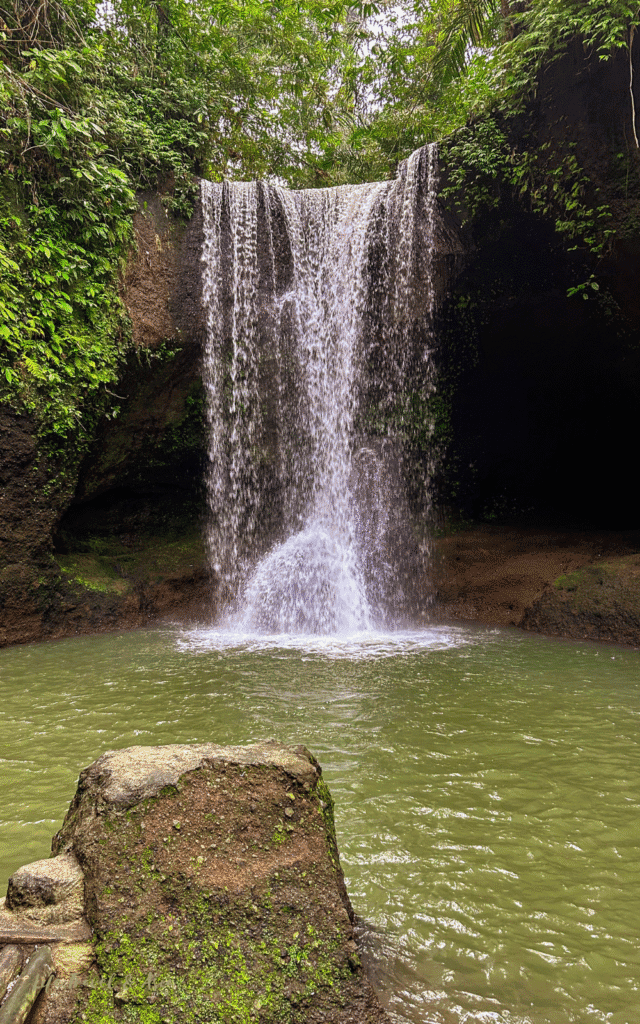
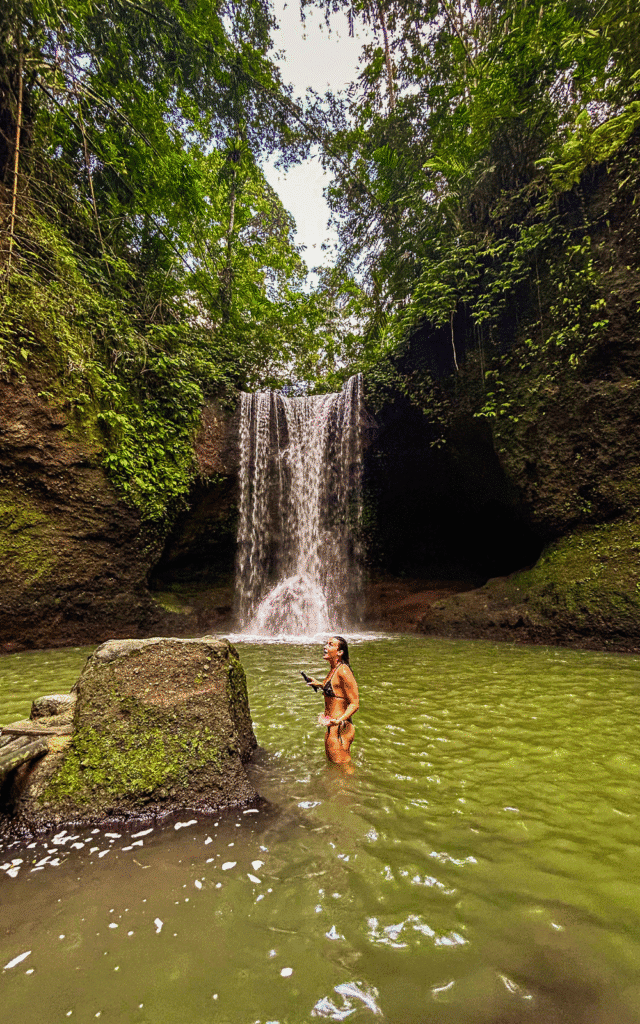
Suwat Waterfall is a single-drop cascade that flows into a natural pool where you can swim, just be careful as you get in. The bottom is rocky and uneven, and the water gets deep almost immediately, so you won’t always know where the stones are until you’re stepping on them. But once you’re in, the setting is stunning.
What I loved most is how secluded it feels. Tall trees surround the entire area, forming a natural canopy overhead. The waterfall drops from the innermost curve of a semi-circular rock wall, and when you’re floating in the water looking up, the jungle completely closes off the sky.
Suwat Waterfall is perfect if you’re looking for a spot that’s truly off the beaten path. Since it’s farther out than the others, you’re much less likely to run into many people, especially if you arrive early like I did.
That said, if you’re dreaming of a long, easy swim, this might not be your top pick. The rocky floor and the way the water gets deep so quickly makes it more of a “dip and float” kind of place. If a proper swim is your priority, the next stop on the itinerary, Tibumana, might be more your vibe.
2. Tibumana Waterfall: Perfect for A Swim
Tibumana and Suwat are actually quite similar in structure; both feature a single, dramatic waterfall dropping into a natural pool. If you’re short on time and can only fit three stops into your day, I’d suggest picking just one of the two.
That said, Tibumana Waterfall is definitely the more popular choice, mostly because it’s closer to Ubud. I arrived around 8:30 am, and a couple was already leaving; while I was swimming, another small group showed up. So yes, you’ll likely have company here even early in the morning.
If you’re really determined to have Tibumana all to yourself, you could swap the order and head there first, then hit Suwat, even if it makes a little less sense logistically.
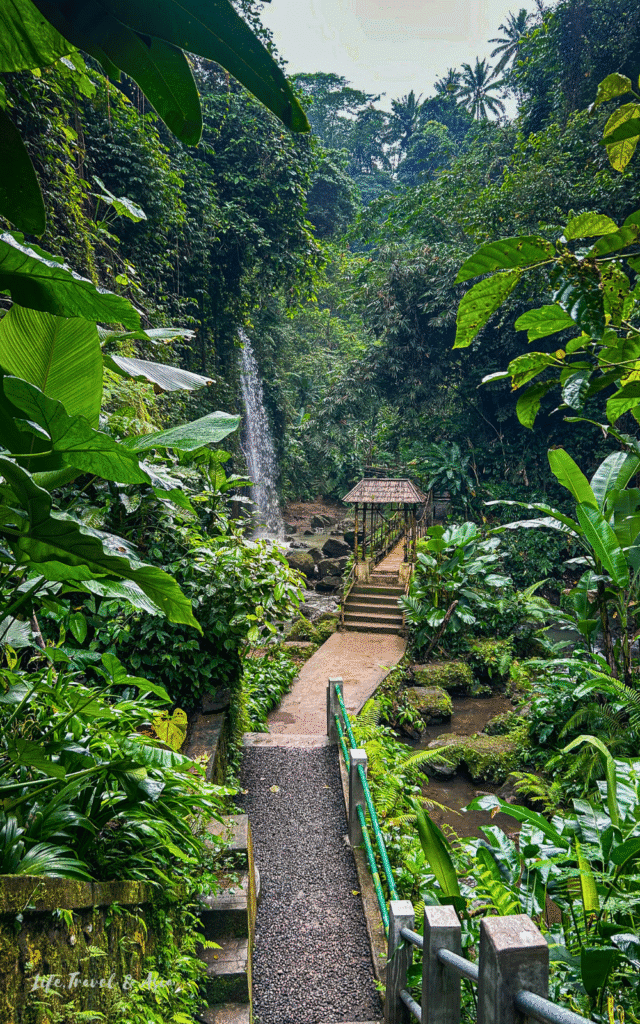
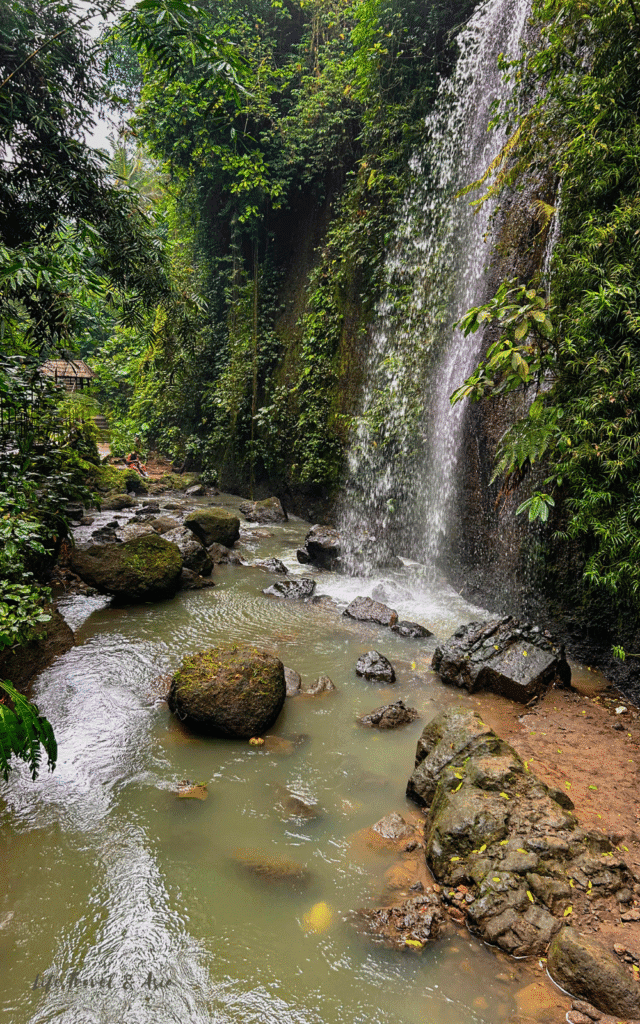
And you can definitely tell it’s a popular spot. You’ll find the classic souvenir stalls, drink stands, and small warungs lining the path before you even reach the waterfall. Still, the walk down is short, a well-paved (though slightly steep) staircase that takes less than 10 minutes.
As with the other falls, the jungle surrounds you. One thing I loved here was the small, second waterfall you’ll spot just before reaching the main site. To get a closer look, you have to cross a cute, and slightly unstable, bamboo bridge, which adds to the fun.
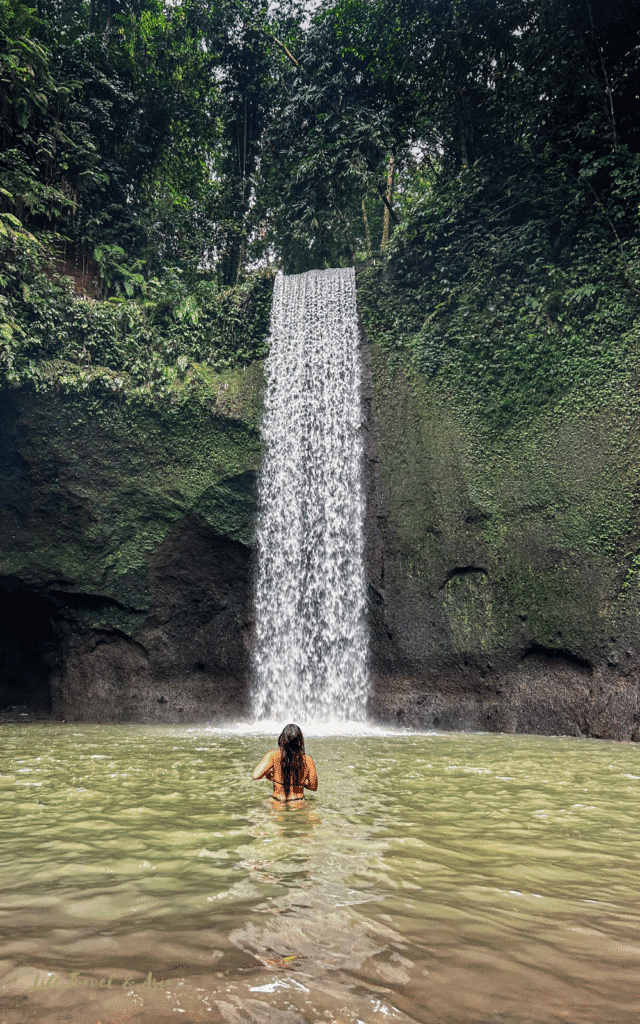
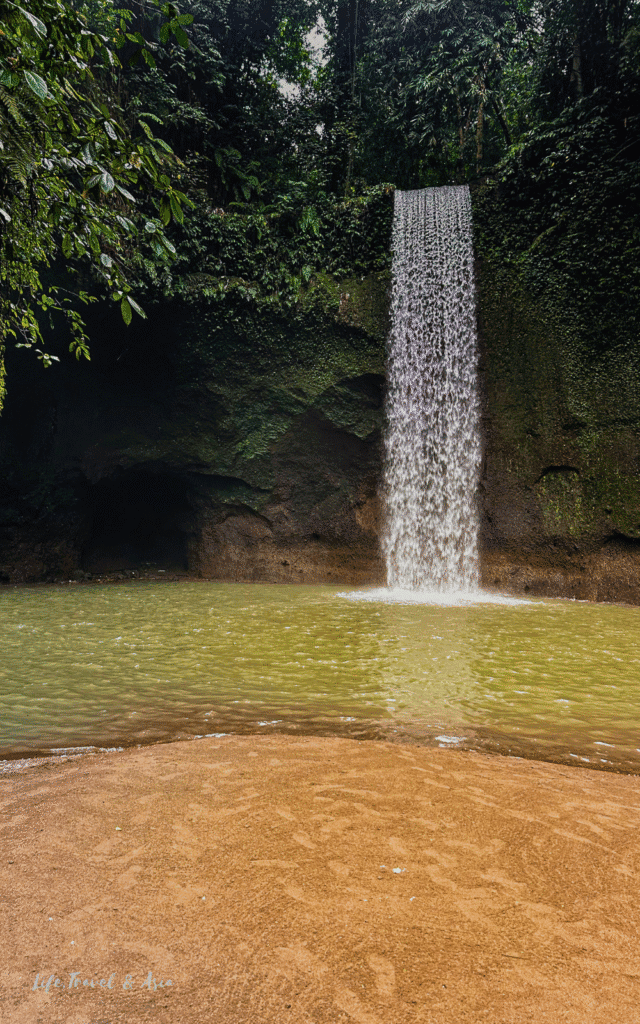
The entrance to the water here is probably the easiest of all: no rocks, no awkward drops, just a soft, sandy bottom. It’s perfect for swimming and taking photos without having to worry about sharp stones under your feet, which is likely why it’s such a popular spot.
Unfortunately, there was some construction work going on right near the edge of the pool when I visited, which made the scene a little less peaceful than I’d hoped. But even with that, the experience was still totally worth it.
Tibumana Waterfall is ideal if your main goal is swimming, the pool has a soft, sandy bottom, and getting into the water is super easy and safe.
Compared to the other stops on this itinerary, it is definitely a bit more touristy. If you want to enjoy it in peace, I’d actually recommend visiting Tibumana first thing in the morning and then heading to Suwat afterward.
3. Taman Sari Waterfall: The Sacred Spot
Taman Sari Waterfall was the most unexpected stop of the day, and honestly, if I had to pick a favorite, this would be it.
There’s a noticeable sacred energy here. Before even reaching the falls, I passed a small temple where a local man was praying and placing offerings.
At one point, Putu even warned me not to leave my clothes in a certain spot because of a hidden shrine nearby. The path is a bit longer and steeper than the previous ones, but if you follow the paved staircase and the signs, you’ll reach the changing area and the entrance in no time.
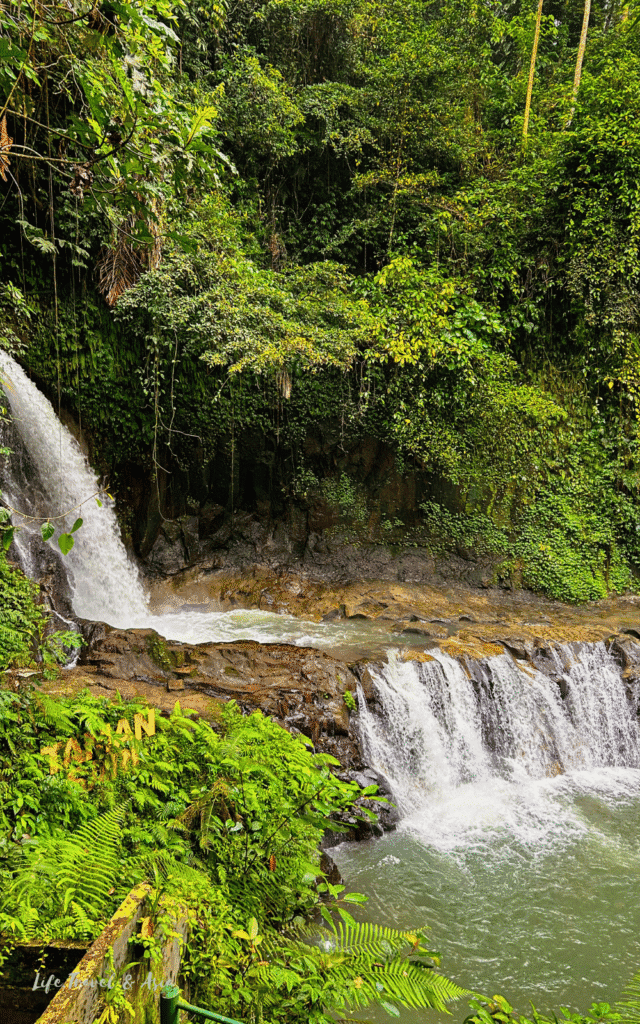
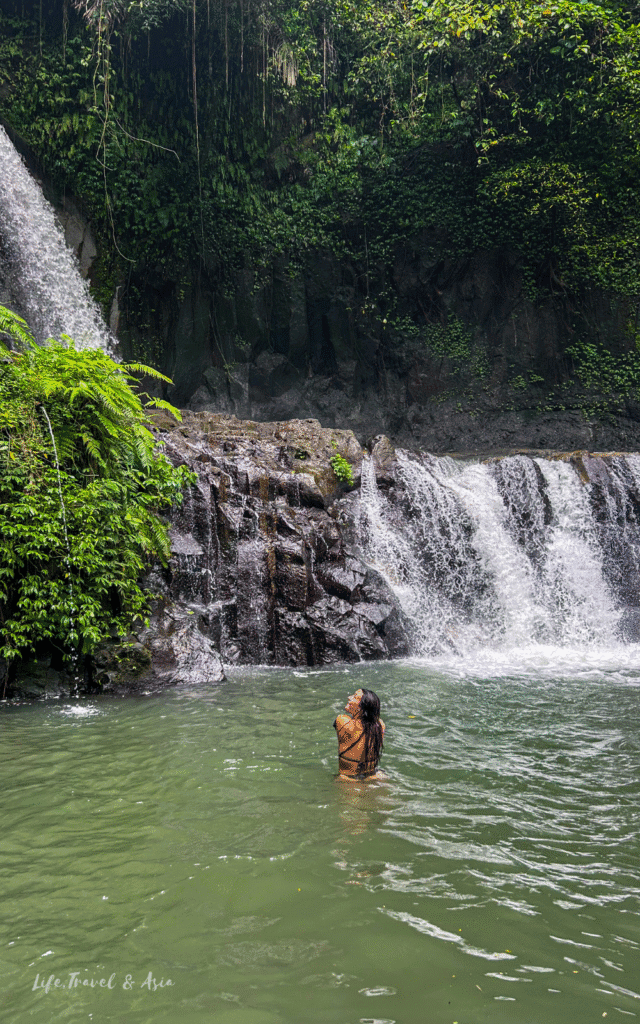
What makes Taman Sari stand out is the structure: it’s actually a double waterfall. A small upper cascade feeds into a larger main fall that drops into a stunning natural pool.
The water is deep but calm, and the sandy bottom makes it feel safe and easy to swim. I arrived around 9:00 am, and there was only one other couple there; for such a gorgeous spot, that level of quiet felt like a gift.
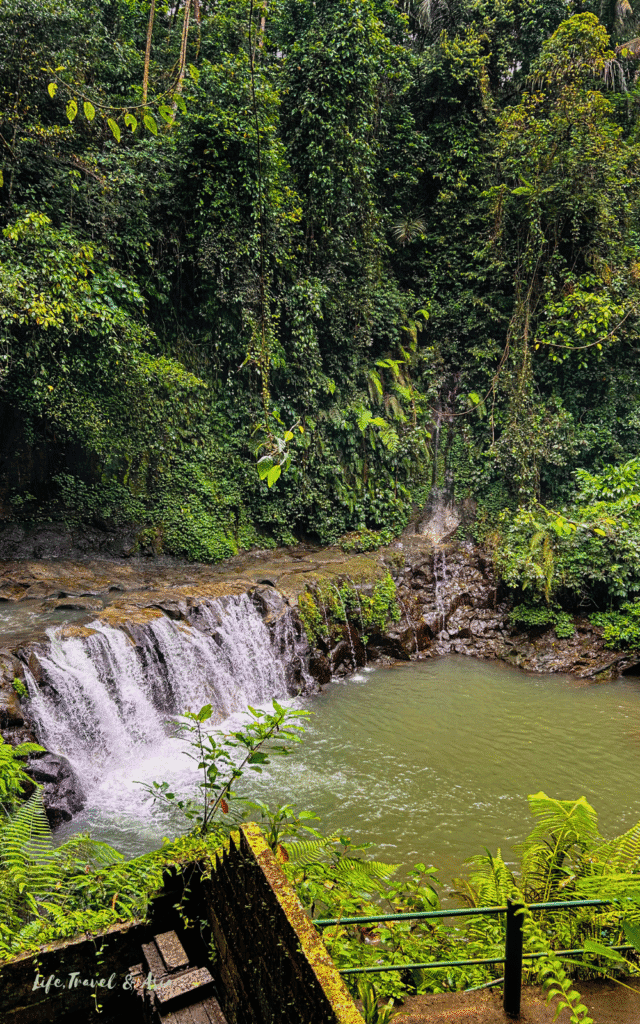
I 100% recommend adding this to your itinerary, even if your guide suggests otherwise. I’ve noticed that many local drivers tend to steer you toward the more “famous” waterfalls, and while those are great, don’t skip lesser-known spots like this one.
Taman Sari is perfect if you’re looking for a structurally unique waterfall that’s still great for swimming. While getting into the water isn’t quite as effortless as it is at Tibumana, the natural pool still has a sandy bottom, so it’s very safe once you’re in.
The best part? It’s not touristy at all. Even if you arrive a bit later in the morning, you’re likely to share the space with only a couple of other people.
4. Goa Rang Reng Waterfall: The Scenic Spot
Goa Rang Reng was the final stop on my day trip, and it was the only one where I didn’t actually swim.
This waterfall has one of the most scenic and unique settings of them all. Instead of a single drop, it’s a wide, horizontal cascade that flows down a rock wall and into a rushing river below. If you’re feeling adventurous, you can actually climb the wet rock face by holding onto a rope on the left side to reach the top of the canyon.
Just a heads-up: make sure you’re wearing water shoes or sturdy flip-flops with a good grip. The rocks are incredibly slippery, and the current is strong, so you’ll want that extra stability.
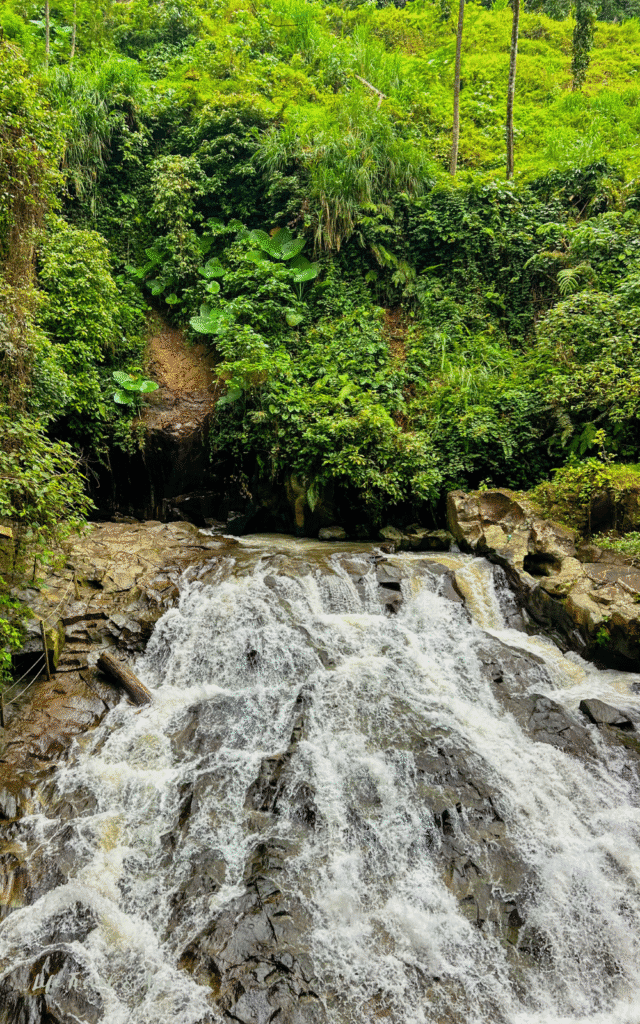
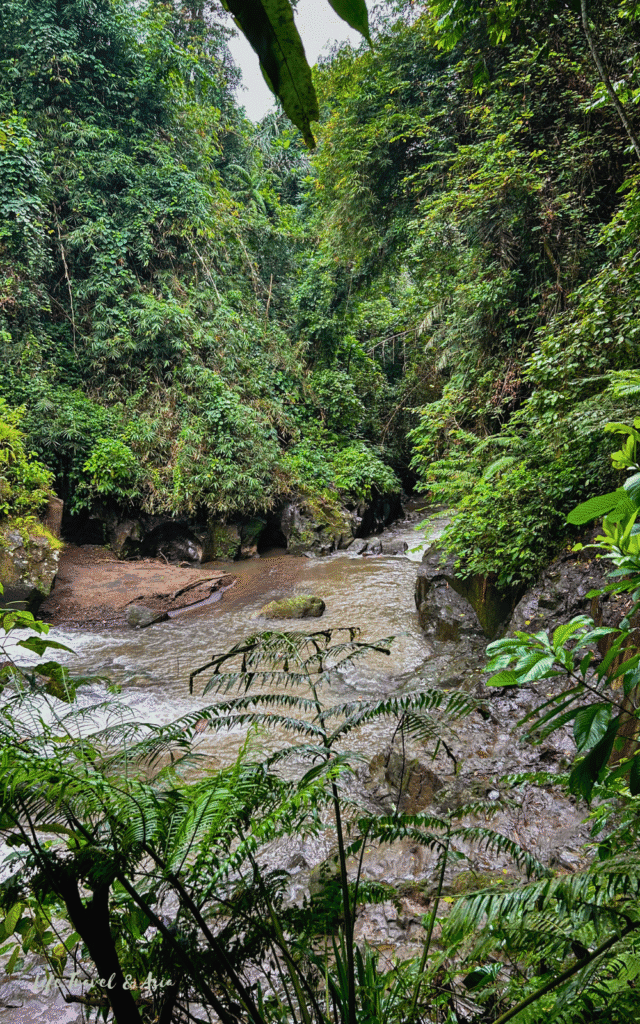
You can cross the waterfall wall to potentially take iconic pictures right in the middle of the water flow. The current was way too strong when I visited, due to heavy rain in the previous days.
If you want to explore deeper, cross the stream, swim in the hidden canyon pool, or trek along the river. I highly recommend booking a guided tour (and the waterfall staff suggests it too). It’s not something I’d feel comfortable doing solo.
Unfortunately, most organized waterfall tours don’t include Goa Rang Reng, which is a shame. However, I did find a tour you can consider, which includes a visit to Goa Rang Reng, and it has good reviews on the provider’s site. The provider is Summerinbali Tour, as mentioned on the tour operator. You can find them directly on Instagram for more information.
Goa Rang Reng Waterfall is incredibly scenic and truly a hidden gem, so hidden that even many local guides skip it, and it’s rare to find group tours that include it. But if you’re up for an adventure, a guided visit is the best way to experience it fully.
That said, if, like me, you’ve already had your fill of swimming after three waterfalls, you can enjoy Goa Rang Reng on your own.
How To Plan Your Waterfall Hopping Day Trip
1. How to Get Around
To plan your day trips around Ubud, you have two main options: rent a scooter or “hire” a driver for the day.
- Renting a scooter: This is the more affordable and flexible option, but I only recommend it if you feel confident driving on your own. Most roads are paved, but heading east means dealing with lots of ups and downs, curves, occasional potholes, as well as dogs running into the streets without warning.
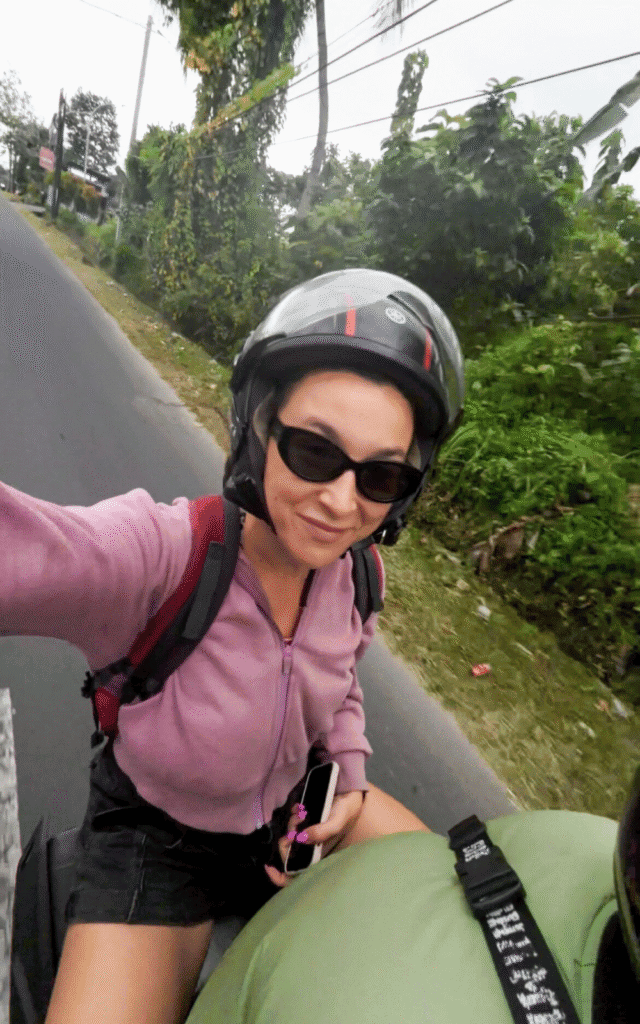
- Hiring a driver for the day: If you’d rather relax on the backseat of a scooter while enjoying the rice-field scenery, this is a great choice. I didn’t officially book a driver through an agency. I met a Grab driver who was super friendly and ended up arranging a few-day trip with him.
If you’re looking for all the best tips on how to get around Bali, from the popular hubs to the most remote corners, check out my full Bali transportation guide. I’ve packed it with all the wisdom I earned from over six months of living on the island to help you plan your trips like a local.

2. Best Time to Visit the Waterfalls Around Ubud
Most waterfalls in Bali officially open at 8:00 am, so I decided to hit the road around 7:00 am. Keep in mind that many falls are actually accessible even before opening time; just remember to pay for your entrance ticket and parking as you leave.
Arriving early is, without a doubt, the best way to experience these spots, especially the popular ones like Tibumana. This way, you’ll likely have the location all to yourself and beat the tour groups that start arriving mid-morning.
In terms of the best time of year to visit, you might be surprised to hear that waterfalls are often at their best during or right after the rainy season (from March onwards). Naturally, the more rain that feeds the rivers, the more these falls are in full, overflowing force.
The dry season is still a great time for a waterfall tour in Bali, but there is one thing to watch out for: sometimes the water is diverted to irrigate the nearby rice fields. If it hasn’t rained in a while and the fields need water, you might find the falls looking a little thinner than expected!
3. How Long Does this Waterfall Trip Take?
To help you plan your own day trip around Ubud, here’s a full breakdown of the driving times between each stop and how long I spent at each one, from leaving Ubud to coming back.
- Ubud → Suwat Waterfall: 13 km – around 55 minutes (no morning traffic if leaving at 7)
- Suwat → Tibumana Waterfall: 11 km – around 25 minutes
- Tibumana → Taman Sari Waterfall: 1.5 km – around 10 minutes
- Taman Sari → Goa Rang Reng: 2 km – around 10 minutes
I stayed about 30 minutes at each waterfall to take a dip, swim, and (of course) take a few photos and videos. In total, the entire trip took approximately 3.5 hours, with around 1 hour and 40 minutes of driving time.
4. What To Pack for Your Waterfall-Hopping Trip
Here are a few items you don’t want to forget:
- Cash is essential, as ticket offices don’t accept card payments. It is better to have 20K and 50K banknotes, if possible, as they sometimes don’t have change. Below is a breakdown of the entry fees I paid.
- Water shoes or sturdy flip-flops: Although there is no intense trekking or muddy paths involved, some of the stairs can become slippery, especially near the falls.
- Swimsuit
- Insect repellent: Mosquitoes are aggressive in the jungle
- Quick-dry towels: One or two, preferably microfiber, so they dry quickly and don’t stay wet in your bag all day.
- Change of clothes: Optional, but nice if you get soaked or plan to stop for lunch right after.
- Dry bag: Super useful as you’ll likely leave your bag on wet rocks or steps while swimming, and a dry bag is way better than a regular tote or backpack.
- GoPro, waterproof case, or phone
- Sunscreen & sunglasses: If it’s a sunny day, you’ll want both, especially for the scooter rides.
5. Entry Tickets
Here are the current entry fees for each waterfall (as of July 2025), so you can plan your cash. Most ticket counters only accept cash and may not have change for large bills, so it’s best to bring small denominations.
- Suwat Waterfall – 40K IDR
- Tibumana Waterfall – 25K IDR
- Taman Sari Waterfall – 25K IDR
- Goa Rang Reng Waterfall – 30K IDR
So in total, expect to spend around 120K IDR ($7.50) for entry to all four
6. Cost Breakdown: What I Spent on My Ubud Waterfall Tour
Here’s exactly what I spent on my self-organized tour, so you can plan your budget depending on how you move around:
- Driver – IDR 300K ($18.50). If you rent a scooter instead, expect to spend around IDR 150K–200K for the day
- Waterfall Entry Fees – IDR 120K ($7.50) for all four waterfalls
- Parking Fees (if renting the scooter) – Around IDR 20K total (usually IDR 5K per stop)
Total with driver: Around IDR 420K ($26)
Total with scooter: Around IDR 290K ($18)
7. The Best Ubud Waterfall Tours
Here are a few tours I recommend that include some of the waterfalls I mentioned, along with a few other highlights around Ubud.
- Ubud: Waterfalls, Water Temple & Rice Terraces: This full-day tour includes three waterfalls — Kanto Lampo, Tibumana, and Tukad Cepung (which I’m planning to visit soon myself, along with other northern falls). It also covers two of the most iconic sights near Ubud: the Tegallalang Rice Terraces and the Tirta Empul Water Temple. This tour is ideal if you want to combine nature and culture.
Other Waterfalls Around Ubud To Extend Your Itinerary
As I mentioned, there are plenty of other waterfalls east of Ubud, some more well-known, others less, that you could add to your itinerary — even though, personally, I wouldn’t recommend squeezing in more than one extra.
Sometimes quality is better than quantity, and doing more doesn’t always mean leaving happier. Waterfall hopping is fun (and also extremely tiring), but exploring slowly can be so much more rewarding than just ticking off stops.
That said, if you do feel like extending your tour, here are a few more falls located in the same area:
- Kanto Lampo Waterfall: This one’s a tourist favorite. I met a woman who had just been there and told me how stunning it was — a wide, horizontal fall cascading beautifully over a rock wall. Just keep in mind, everyone is there to get the perfect Instagram shot, so if you want to go, make it your first stop of the day.
- Bangkiang Djaran Waterfall: A bit more off the radar and less crowded, this waterfall is great if you want a quieter alternative. It’s located in a beautiful green valley and requires a bit more walking to reach.
You can check out the map above for even more lesser-known falls on the Eastern side of Ubud (marked in red on the map).
There you go, that was my waterfall-hopping day trip around Ubud, and honestly, I’d 100% do it all over again.
Starting the day surrounded by jungle and water is something truly unmatched. In Bali, there are so many waterfalls worth a visit, and if you’re into it, make sure to check out my favorite waterfalls in Bali. 13 locations that undoubtedly deserve a spot on your itinerary
If you’re still planning your trip to Bali and desperately looking for some information, here’s my complete Bali travel guide, with all the tips after living here for over six months.
Other Bali Reads You May Like
- Best Time to Travel to Bali in 2026: Weather, Crowds & Experiences
- 21 Bali Must-Haves: What to Pack for Bali Rainy & Dry Seasons
- 12 Best Day Trips From Ubud: Hidden Waterfalls, Sacred Temples & Sandy Beaches
Did you find it helpful? 📌 Save it on Pinterest!