Bali Travel Guide: Best Tips After 6 Months Here
Last Updated on March 12, 2026
Are you planning your first trip to Bali and looking for the best places to visit, things to do, and essential travel tips to help your trip run smoothly?
I’ve been living in Bali for the past six months, based in Ubud, and during that time I traveled all around the island, from the beach town of Uluwatu to the traditional village of Kintamani in the north.
In this Bali travel guide, I’ll share everything you might need for your trip: tourist visa information, the places that truly stole my heart, and what you absolutely need to know before you go.
This is going to be a long article, so make sure to use the table of contents to look for the information you need.
This article may contain affiliate links. This means that if you purchase through one of the links, I may be paid a small commission at no extra cost to you. Thank you for supporting the blog and allowing me to keep sharing meaningful travel experiences with you.
Don’t have time now?📌 Save it for later!
A Little Bit More About Bali
Bali has become a very popular tourism destination in the past decade, following the release of the film Eat, Pray, Love in 2010. After the film, Bali became known as a paradise for wellness, spiritual healing, and, of course, gorgeous natural locations.
Bali is part of Indonesia, but unlike the rest of the country, most of the population here practices Balinese Hinduism.
Balinese Hinduism can be considered a local blend of traditional Indian Hinduism, Buddhism, and indigenous culture, focusing on the connection with nature, ancestors, and daily small and bigger ceremonies.
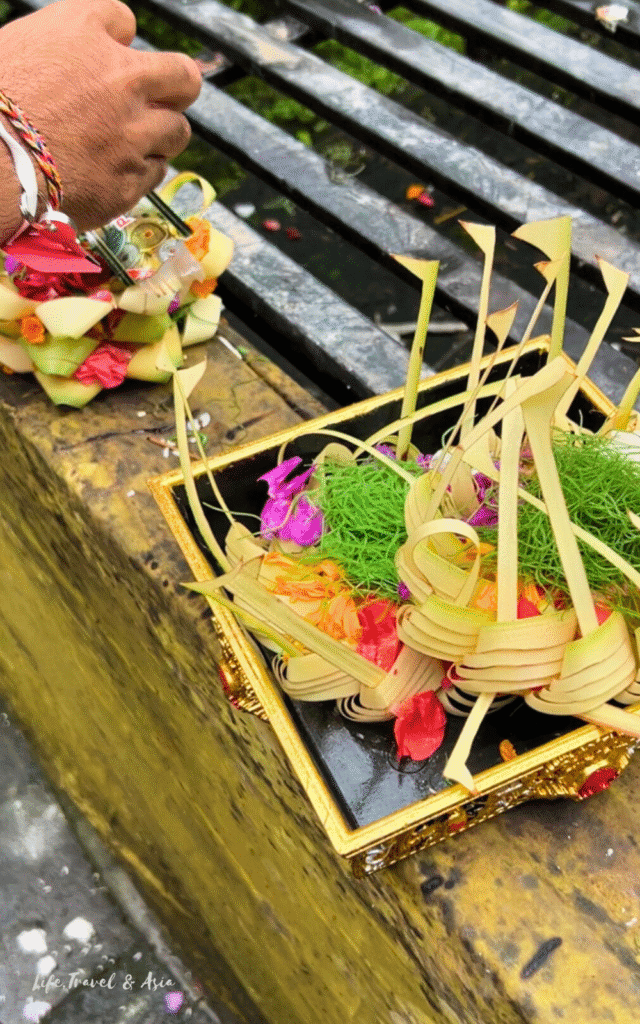
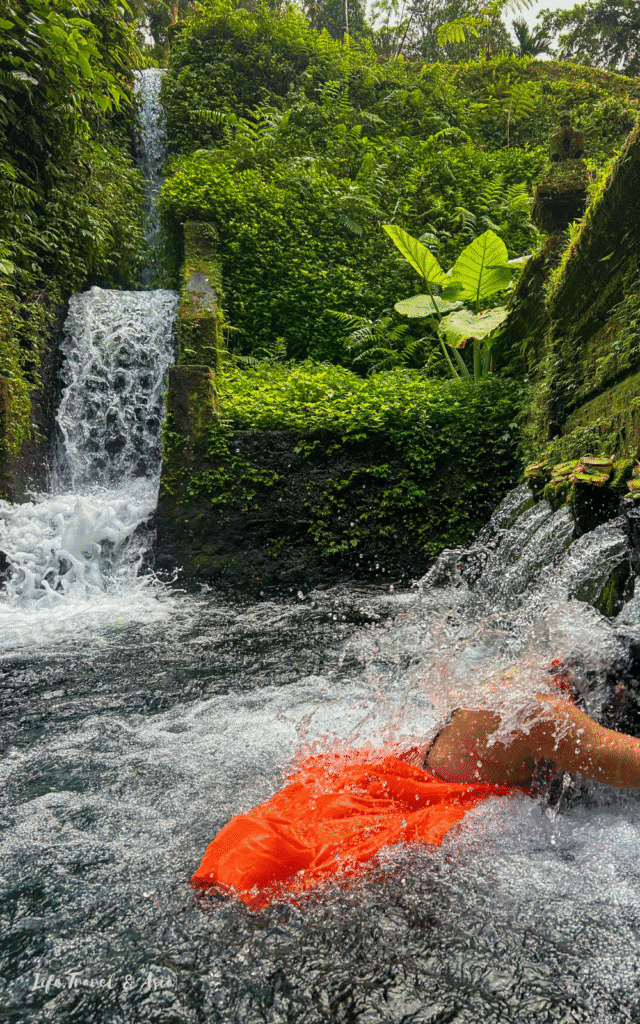
The blend of religion and local wisdom is one of the most culturally interesting aspects of exploring Bali. It shows up in daily rituals such as cooking, crafting daily offerings called canang sari, temple ceremonies, and prayers.
Recently, Bali has also become a popular destination for digital nomads. As a consequence, certain areas of the island have developed to welcome more and more Westerners (some losing their cultural roots).
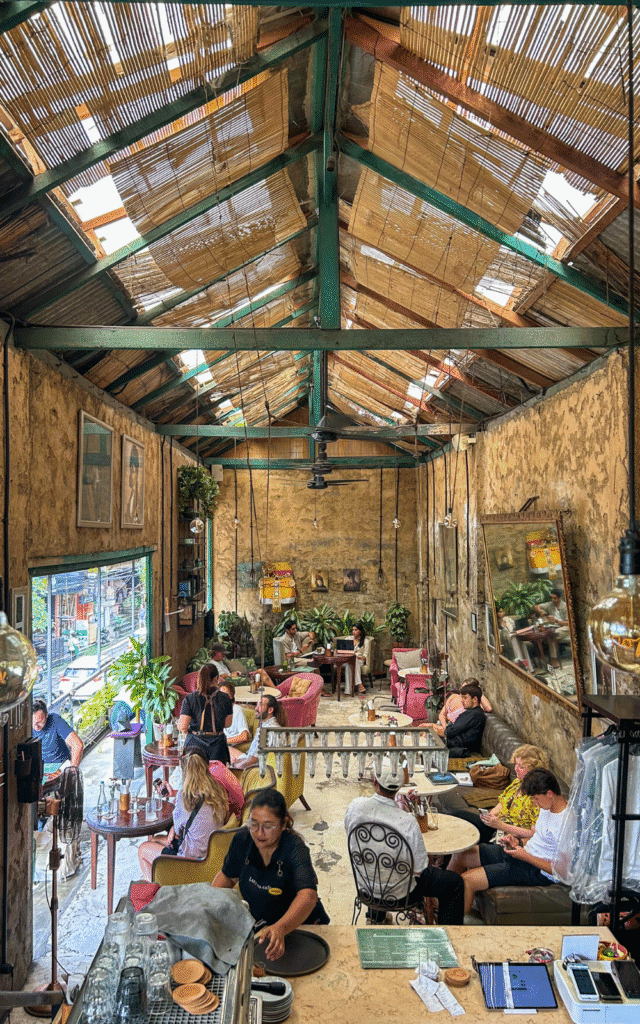
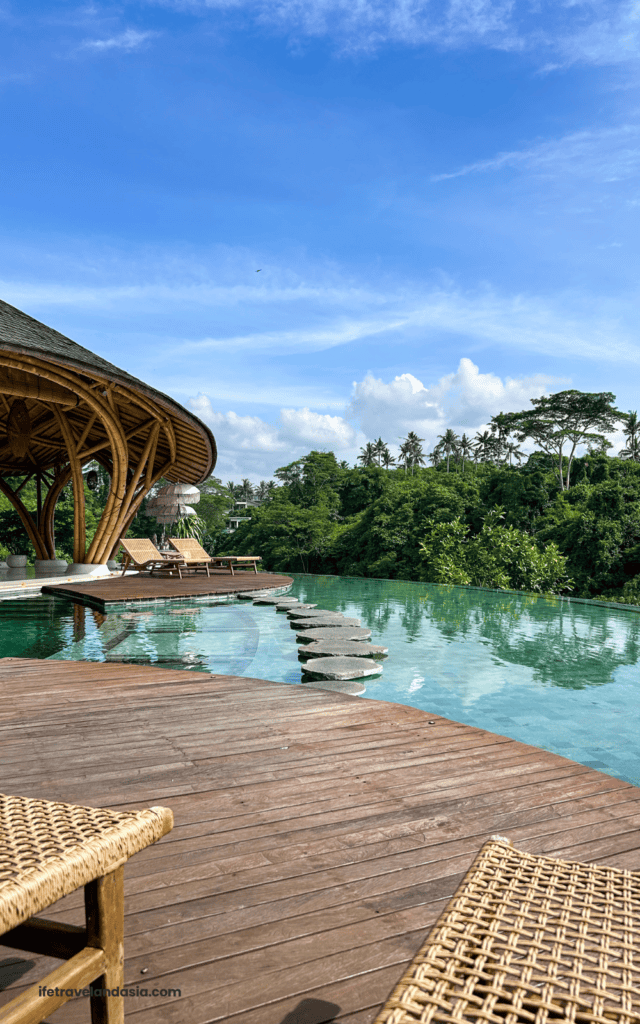
Amenities such as hyper-modern gyms, aesthetic restaurants, cool beach clubs, and cafés have popped up in major digital nomad hubs.
On the other hand, in some areas, life is still unfolding as it was decades ago, revolving around agriculture and farming. These areas are, in my opinion, definitely worth visiting if you want to understand what the real Bali is.
As a consequence of overdevelopment, Bali’s roads are now widely famous for hosting more cars and scooters than they can handle, resulting in long traffic jams that I’m sure many of you have seen in videos. But don’t worry, as the Balinese say, traffic is never really stuck in Bali, and not all areas are like that.
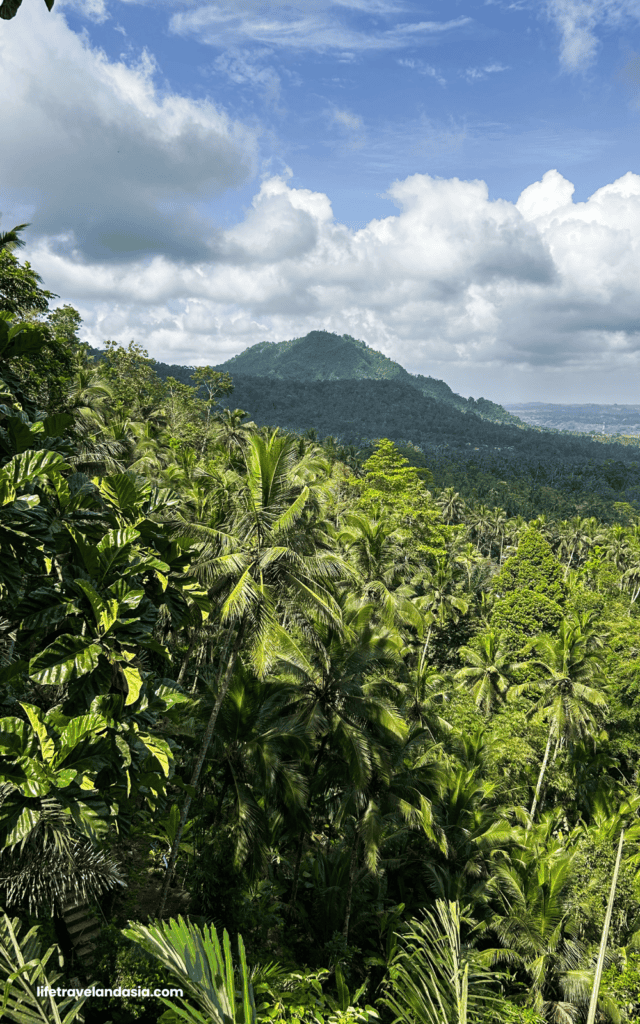
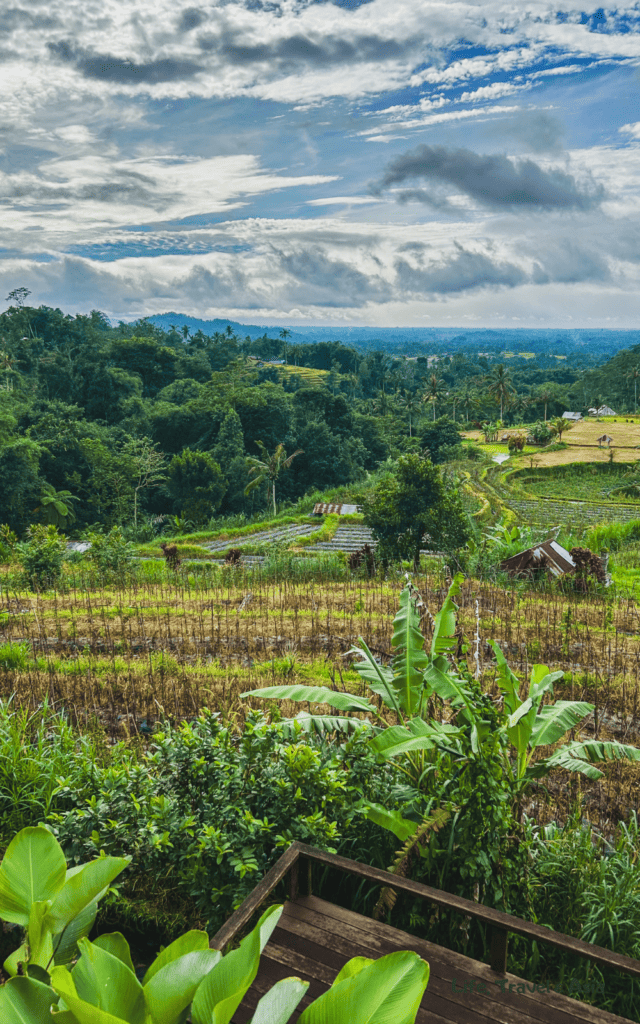
Despite the opinion of people who say that Bali is not like it was 20 years ago and not worth visiting anymore, I do believe that a trip to Bali is still worth it if you visit the right places and avoid getting caught in the beach club–café–party loop (unless that’s your idea of a holiday).
To truly experience Bali as it once was, still surrounded by its wisdom, beliefs, and rituals, you’ll need to go a bit off the usual tourist path, and I’m here for that.
But, first things first, let’s start with the boring stuff (but so important): visas, entry requirements, airport procedures, essentials to have with you before departure, and all that jazz.
2026 Bali’s Entry Requirements
Usually, Bali’s entry requirements involve a visa, a valid passport (with at least 6 months of validity), payment of the IDR 150,000 levy fee, a return ticket, and, as of September 2025, all travelers entering Indonesia must complete an arrival declaration using a new mobile app called All Indonesia (likely replacing the old self-health and customs declaration).
Visa Requirement
Most countries require a visa to enter Indonesia.
The simplest visa to apply for is the e-VOA (also called the visa on arrival). With this visa, you’ll be able to stay in the country for one month, and you can potentially extend it for 30 more days (you’ll need to apply online for the extension and then head to the Denpasar immigration office for the picture and interview).
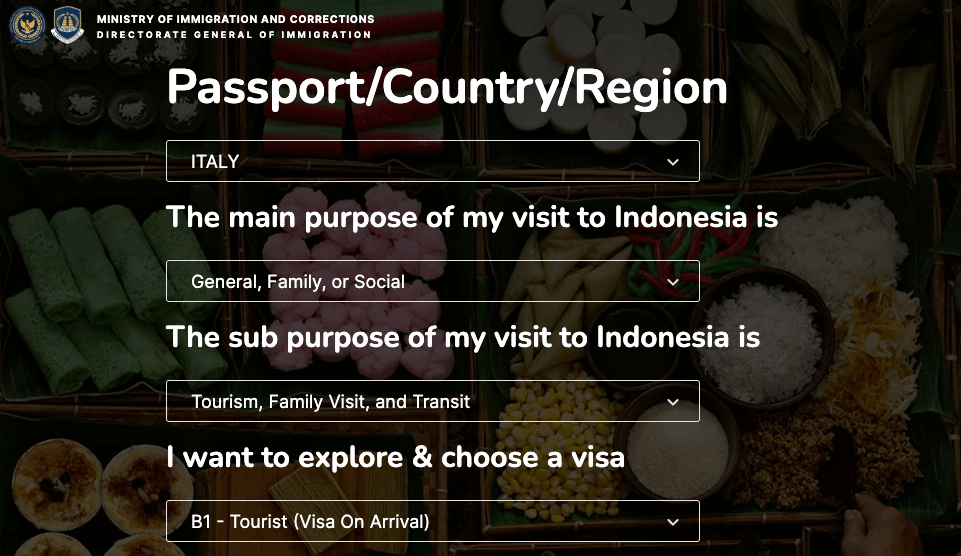
Regarding visa requirements based on your country, you can mock your application on the official website and check what’s required depending on your country of origin.
When it comes to the e-VOA, it’s not mandatory to apply online, but doing so can help you avoid lengthy airport procedures. For this reason, I highly suggest applying online around 2–3 weeks before your departure.
Levy Fee
Every tourist visiting Bali has to pay a levy fee before landing. The levy fee is IDR 150K (around $9) and is a contribution to help protect Bali’s nature and tourist sights. You can pay the fee through this website at any time before your departure.
Other Requirements
- Return Flight Ticket: If you’re not sure whether you’ll be extending your stay, it can be a bit tricky. I’ve always been asked for a return ticket, even if this is still considered a grey area. So, if you don’t know when you’re coming back, I suggest buying a cheap flight to any nearby destination in Asia. That way, if you don’t use it, it won’t be a big loss.
- All Indonesia App: The new app, in use since September 2025, combines immigration, health, quarantine, and customs into one app/web platform to reduce airport procedures. You can fill in your travel card up to 3 days before departure.
How to “Survive” Bali’s Airport
If you’ve applied for your e-Visa online and correctly used the All Indonesia App, you should be able to land at Ngurah Rai International Airport in Denpasar and pass straight through the automatic immigration check. The luggage pick-up area is right after.


For me, the best way to handle your arrival is by pre-booking a private car. I’ve been using Klook every single time, and I couldn’t be happier with my choice. It’s usually much cheaper than random taxis at the airport, booking a Grab car or shuttles organized by hotels.
Your driver will track your flight, be aware of any delays, and wait for you for up to two hours free of charge. I’ve always had such a smooth experience.
Best & Worst Time to Visit Bali
After traveling to Bali during the worst of the rainy season and living there from June to December, I can honestly say I’ve seen it all.
When it comes to weather, Bali has two seasons: the dry season, which “usually” runs from around April to the end of September, while the rainy season goes from October to March. Usually is in brackets because I feel like this is a rule that no longer really applies.
In 2025, June was extremely rainy, and October was extremely sunny and hot. The weather in Bali is always unpredictable, and unfortunately, rain can hit no matter the season.
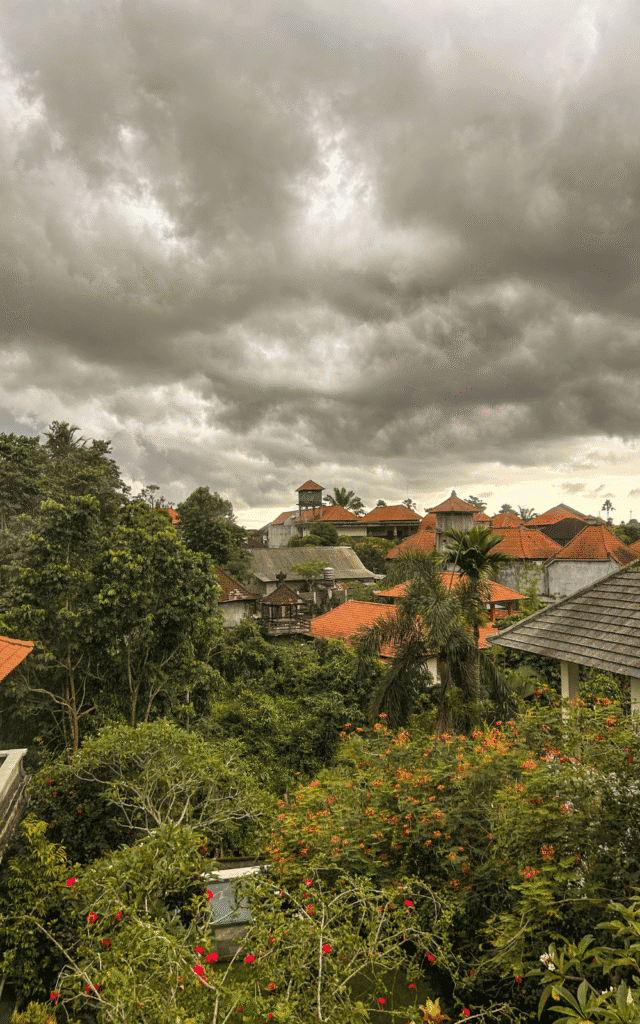
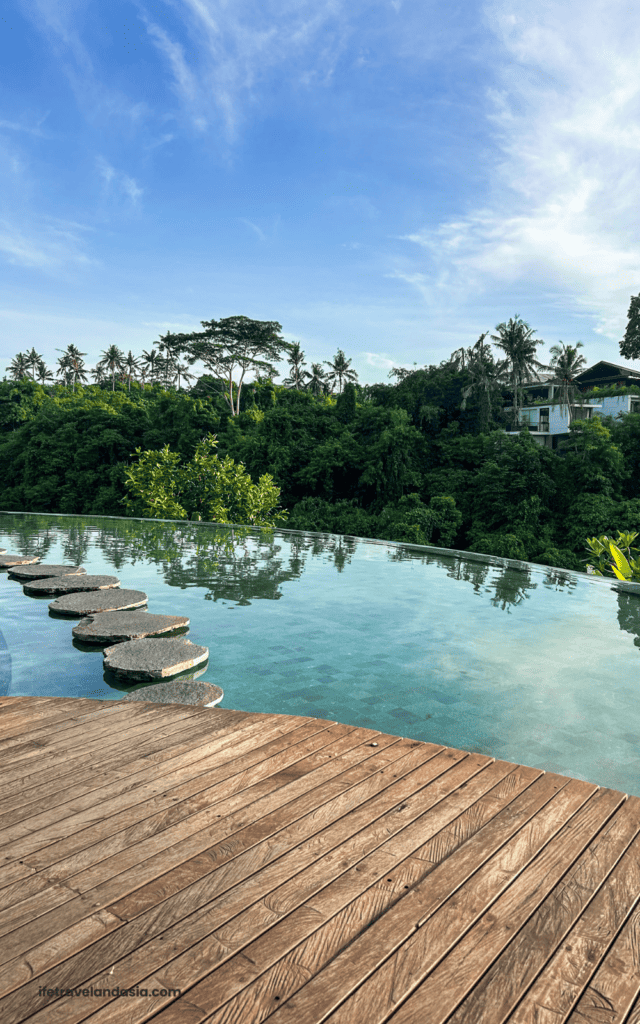
That being said, based on my experience, you’ll be pretty much safe in terms of weather in July and August, even if during this time prices are higher (though still low compared to peak tourism season in Europe, for example) and crowds are much bigger.
If you want to save money and still find good weather, September is a great compromise and likely the best time to travel.
If I could, I’d avoid the period between Christmas and New Year: prices are as high as peak season, but the weather is usually poor.
Guess in which period I traveled to Bali for the very first time? Yes, between Christmas and the New Year. Despite all I said, if you have no choice and that’s your holiday time, no panic. In the article linked here, I share why Bali in December still managed to capture my heart.
Balinese Religious Ceremonies to Keep in Mind
Religious ceremonies are frequent in Bali; they can literally stop traffic and impact your trip. Here are a couple of holidays to keep in mind:
- Nyepi: Around the 20th of March every year, Bali completely shuts down: the airport and shops close, and no one is allowed to be outside. It can be an opportunity to practice some self-reflection, but if you don’t want to lose a day from your itinerary, this is definitely something to keep in mind.
- Ogoh-Ogoh Parade: The day right before Nyepi. If you decide to include the Day of Silence in your itinerary, this is a lively parade featuring the Ogoh-Ogoh, massive statues with scary faces representing evil spirits. The parade is about purifying the island from evil spirits before the day of silence that follows.
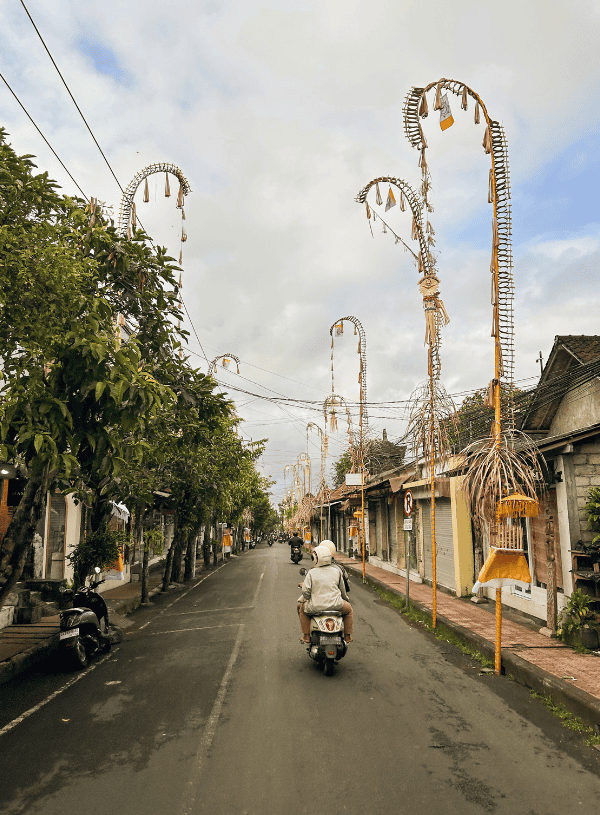
- Galungan and Kuningan: I had the privilege of being in Bali during these two ceremonies, held in November, 10 days apart. They celebrate the victory of good over evil, and the best part is the striking penjor decorations along the streets, making Bali’s towns and villages even more picturesque.
Essential Apps & Items To Pack
There are a couple of apps and items you shouldn’t forget to download or purchase before landing in Bali.
I’ve written a more complete packing list for both the rainy and dry seasons if you’re looking for more information on clothes and additional items.
- e-SIM: First and foremost, an internet connection. You’ll find Wi-Fi pretty much everywhere, but an e-SIM is the best way to stay connected when exploring. I’ve used Airalo for all my trips to Asia and throughout my six months in Bali, and I couldn’t be happier with it. If your phone doesn’t support an e-SIM, you can purchase one at the airport arrival lobby; the main provider is Telkomsel.
- Grab/Gojek: You can download both to compare prices. The purpose is the same: these are the two ride-hailing apps that are non-negotiable (unless you’re renting your own scooter). You can link your credit card and avoid having to carry cash to pay drivers.
- Rate exchange app: I personally added the feature to my iPhone calculator, but you’ll want an easy way to check how prices in Indonesian Rupiah translate into your local currency to avoid overspending.
- Raincoat: A must. You should always carry one with you because, as I said, the weather in Bali is unpredictable.
- Mosquito Spray and SPF: You’ll easily find cheap local mosquito spray (the most popular one is called Soffel and comes in a pink plastic container). When it comes to SPF, however, it’s quite expensive in Bali, especially if you’re looking for a good one.
- Shower filter: This one is controversial because, depending on the length of your trip, you might want to save space and skip it. However, if you’re planning to stay one month or longer, I’d bring it. Trust me, you don’t want to know what came out of mine when I took it off, and that water goes straight on your hair and skin.
- Stomach pain relievers: Food poisoning is a thing in Bali. I personally never really got it (just a very mild version), but it’s best to come prepared. I’ll also share some tips to avoid it at the end of this blog post.
How to Get Around in Bali
As you may know, traffic is a thing in many areas of the island, especially in places like Canggu, Ubud, Denpasar (around the airport), Seminyak, and sometimes Uluwatu.
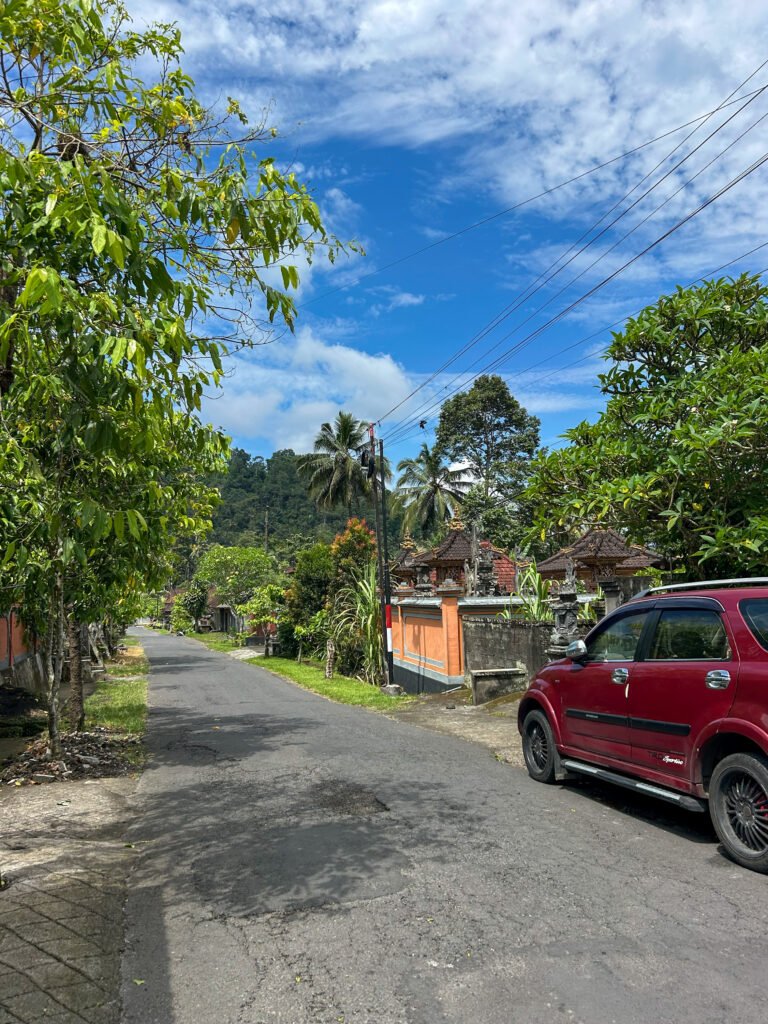
Let’s just say the roads were not built with the idea of welcoming so many scooters and cars: they’re narrow, sometimes not well paved (especially in less touristy or more remote areas), and very often not designed for walking around.
That being said, here are some tips on how to get around in Bali, between cities, within cities, and how to plan your day trips.
How to Get Around in Cities
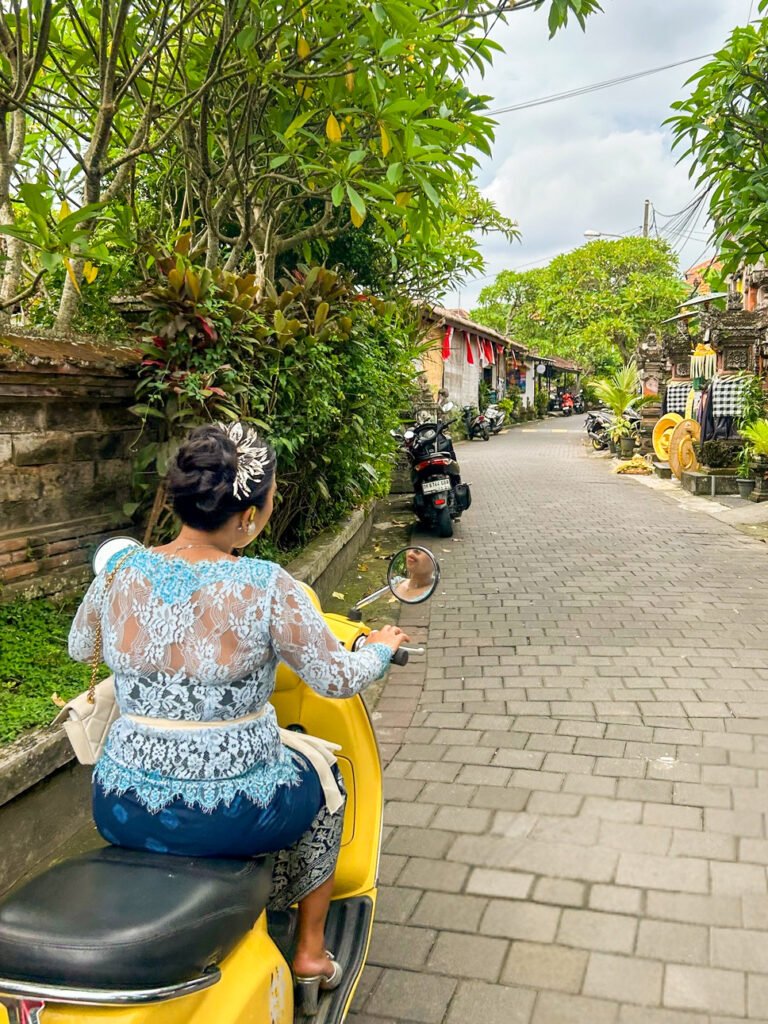
- Renting a scooter is possible everywhere on the island, and it’s the most affordable and flexible way to get around. Daily rental ranges from IDR 80,000 (around $5) to IDR 250,000 (around $15), depending on the model. Petrol is available all around the island through petrol stations or small stalls (especially in less touristy areas), where it’s usually sold in plastic bottles containing a very vivid blue liquid.
- Touristy Locations: Grab and Gojek are available for ride-hailing in major areas such as Canggu, Seminyak, Ubud, Sanur, and Uluwatu, so you won’t have problems getting around there.
- Remote locations: if you can’t drive, you’ll need to plan something different for places like Kintamani, Amed, Sidemen, and other lesser-known locations. In these areas, Grab or Gojek is not available; you’ll need to hire a driver and plan a sort of day trip itinerary.
How to Get Around Between Cities
- Book a Grab Car: Through Grab, you can book a car, even in advance. It’s very convenient.
- Hire a private driver: If you’re planning a day trip, you can hire a driver for the day, agree on an itinerary, and not worry about anything. This is the service I usually recommend. Since sneaky extra fees can sometimes come up (overtime, pick-up locations not included in the offer), this is the most transparent service I’ve found.
If you need more information on this topic, I’ve written a full guide on how to get around in Bali. You’ll find all the transportation options by area (as they may vary), along with my tips on how to find a reliable driver and some personal recommendations.
Where to Stay in Bali as A First-Timer
Bali may seem like a small island, but there are many different areas where you could stay, each offering a very unique experience.
This section is meant to help you decide where to go during your itinerary, based on the type of vacation you’re planning.
1. Ubud
Ubud is very popular with tourists and digital nomads in Bali, and for a reason. There’s honestly so much to see and do in and around town that even five days wouldn’t be enough.
Ubud really deserves its own travel guide: plenty of temples to explore (and many others you can’t visit because they’re active worship sites), hidden waterfalls surrounded by jungle, some more popular, others still relatively unknown, and, of course, plenty of secluded rice field trails.
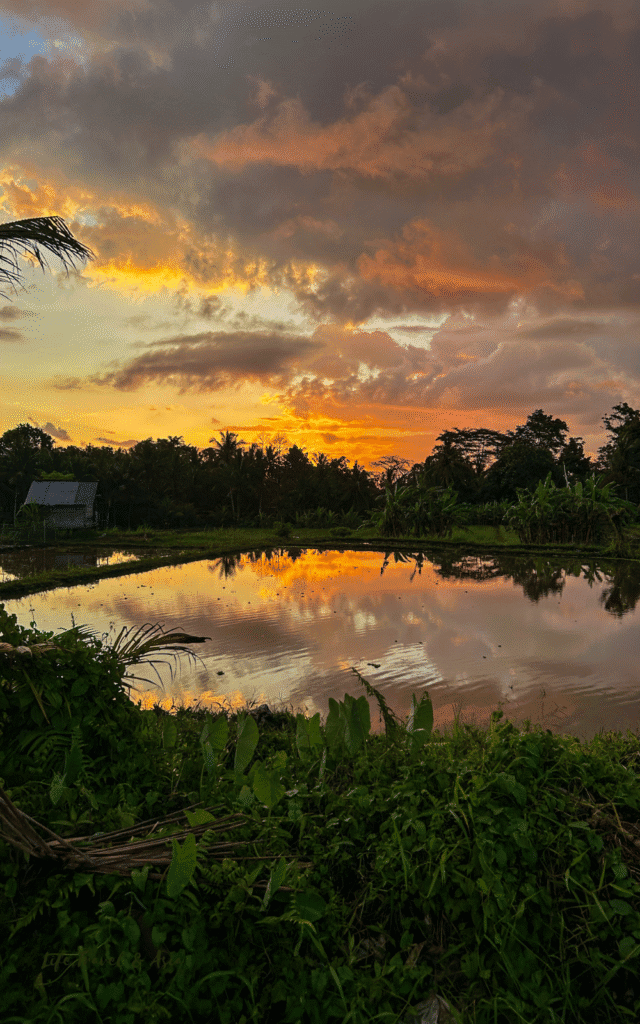
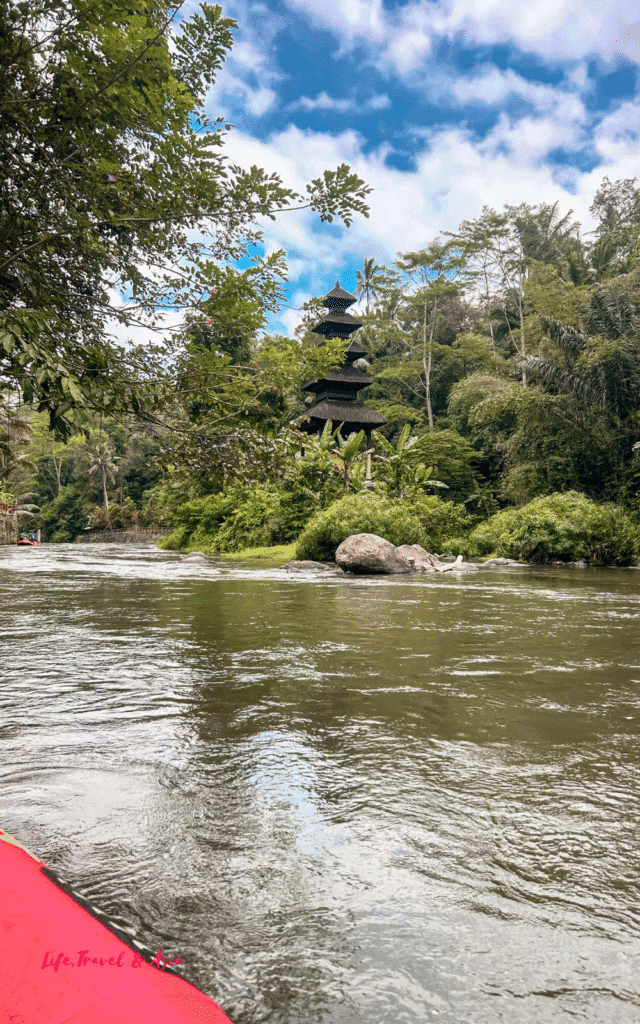
Ubud is also the spiritual center of the island. Here you’ll find both ancient and more modern wellness practices, some of the best yoga centers, and incredibly relaxing retreats to recharge. If you’re planning a wellness-focused trip, you really can’t miss it.
Finally, Ubud is centrally located, making it an ideal base for day trips without the need to change locations multiple times.
Here are a couple of places I stayed in Ubud that I can recommend:
- Candy Villa (high budget): That’s the first place I stayed in Ubud, and I was blown away by the beauty of the property, set amid the Sayan rice fields. Candy Villa offers stunning bungalow villas with private pools, and everything, from the breakfast to the service, is incredibly high quality.
- Bisma Jaya Bungalow (low-budget): If you’re on a tight budget and looking for a peaceful stay right in the heart of the city (but away from the busy areas), I stayed at Bisma Jaya Bungalow for some time, and it was absolutely perfect for what I needed.
2. Sidemen and East Bali
East Bali is usually not included in most first-timers’ itineraries. Less popular but also farther away from the southern areas, it’s one of those regions that still holds onto Bali’s roots and traditions.
In particular, the villages of Sidemen and Amed are truly worth stopping by. Sidemen is often described as what Ubud was before mass tourism arrived: narrow and quiet village roads surrounded by deep jungle and rice fields, no traffic in sight, local kids zipping by on scooters, and women transporting farm produce perfectly balanced on their heads.
Like Ubud, there’s plenty to see and do around Sidemen: picture-perfect waterfalls like Gembleng Waterfall and Jagatsatru Waterfall, surreal viewpoints of Mount Agung like Lahangan Sweet, and more historical sights such as Tirta Gangga Water Palace, the former residence of the last king of Karangasem.
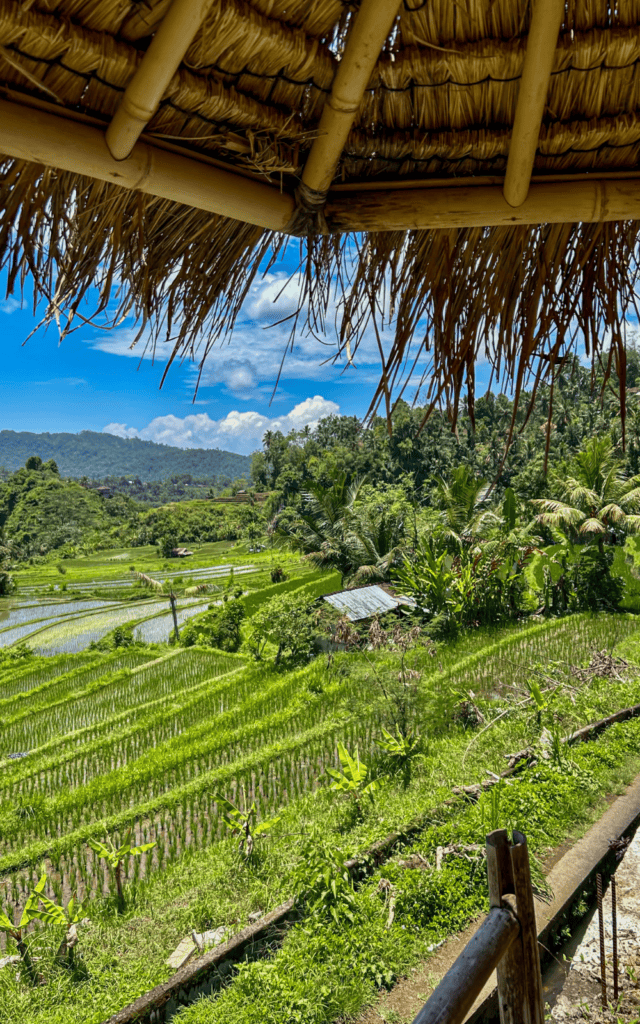
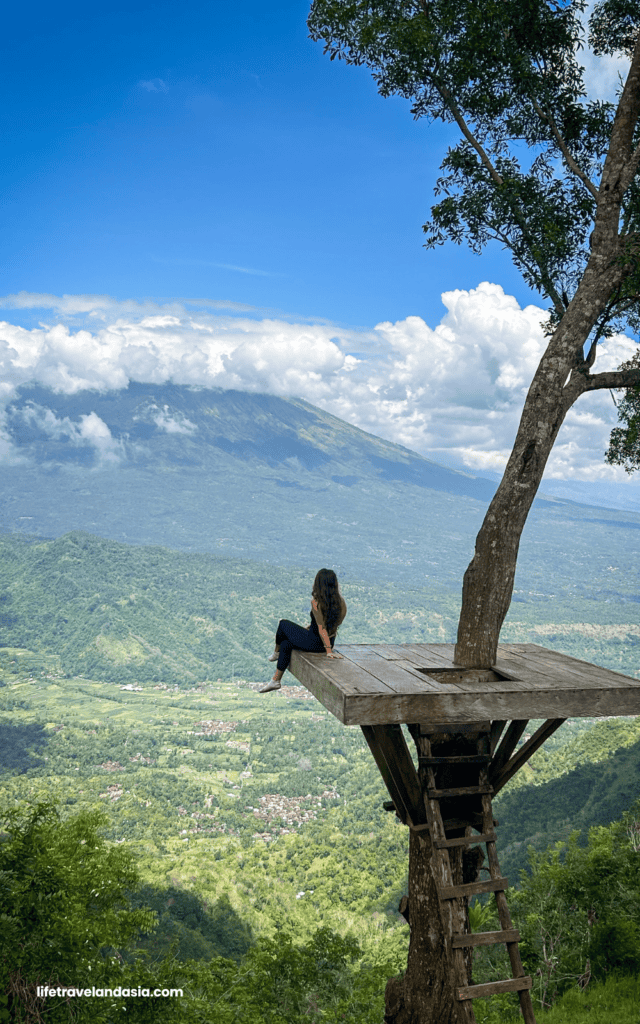
Sidemen completely captured my heart, and I honestly recommend it to anyone looking to experience a more traditional side of Bali.
On the other hand, Amed is a small fishing village, well known for its black volcanic sand beaches with views of the nearby Mount Agung.
Here you’ll experience some of the best snorkeling and diving in Bali: vibrant coral reefs, swimming alongside turtles, and exploring the USS Liberty Shipwreck, resting on the seabed just offshore.
Here are a couple of places in East Bali that I can recommend:
- Giri Swari Homestay (Sidemen): This is where I stayed in Sidemen, and if you’re looking for a good budget option, it’s perfect. The rooms are spotless, with beautiful views over the rice fields, and scooters are available for rent directly at the property.
- Wapa di Ume Sidemen: One of the most popular and highly rated 5-star resorts in Sidemen. Everything, from the location to the amenities and the breakfast, feels perfect. If you’re looking for an effortless stay where you have everything you need on site (including a spa and gym), this is the place to be.
- Amed Beach Resort: The location of this stay is excellent, just 50 meters from Amed Beach, perfect for both sunrise and sunset by the ocean. The rooms are clean and comfortable, and the outdoor pool is definitely the highlight of the property.
3. Uluwatu
Uluwatu is one of my favorite locations in Bali. In my ideal life, I’d live there (and maybe I will).
Uluwatu really embodies the essence of simple island life: dreamy sandy beaches all along its coastline (even if getting down to them usually involves quite a few steps), small luxury villas, homestays, and boutique hotels lining its narrow coastal streets, and of course, it’s the place to be if you want to learn how to surf.
Uluwatu is slowly becoming a new destination for digital nomads in Bali, so you’ll also find some of the coolest gyms and studios, healthy restaurants and cafés spread all over, and, of course, a thriving wellness community (as is the case almost everywhere in Bali).
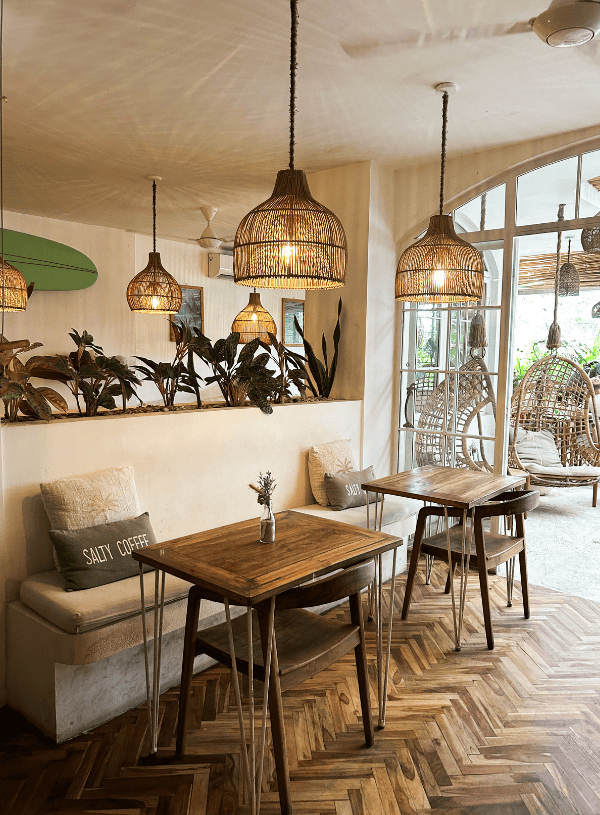
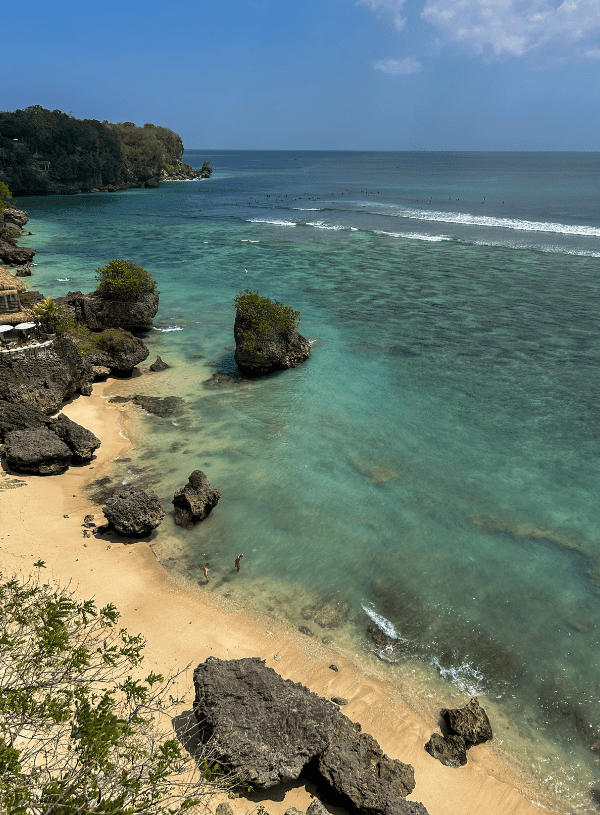
Nightlife is also on point here: you’ll find clubs with different events throughout the week, as well as some of the coolest beach clubs on the island.
The only downside of Uluwatu, at least for me, is that it’s not very walkable, so you’ll need to have your own scooter or constantly rely on Grab / Gojek.
Tip: Be aware of scams here. Uluwatu is the only place where a Grab driver tried to charge me IDR 200,000 for a 15-minute ride. Make sure to always book your rides through the app, or agree on the price beforehand if you take a ride outside the app.
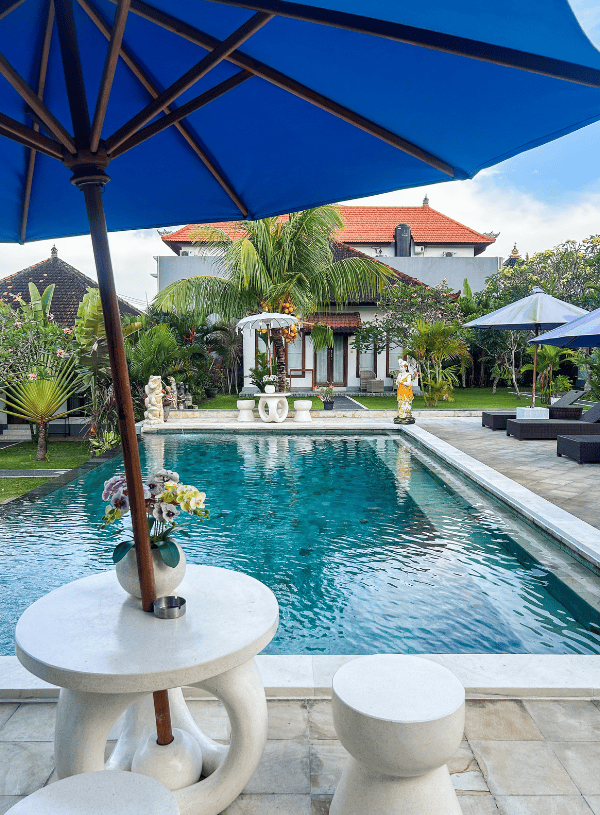
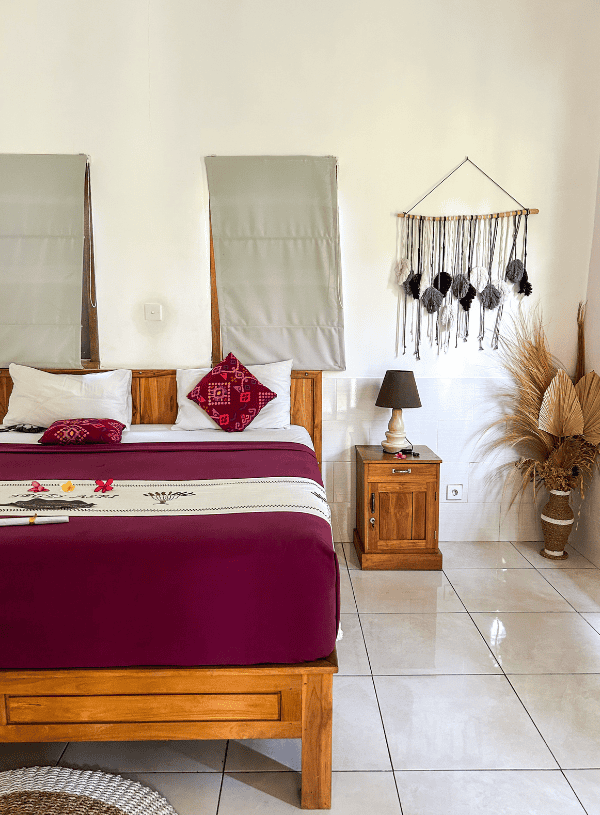
If you’re looking for the cutest budget homestay in Uluwatu, I loved Teges Asri by Bukit Vista. The rooms were spacious and so clean. However, the highlight was undoubtedly the garden and the stunning pool.
4. Nusa Lembongan
The next destination in my top 5 list is Nusa Lembongan. I had never heard of this tiny island before moving to Bali, and if that’s the case for you, too, Nusa Lembongan is located close to the much bigger Nusa Penida, but very different at heart.
Nusa Lembongan can be compared to Uluwatu in vibe and vacation type: pure island bliss is the word.
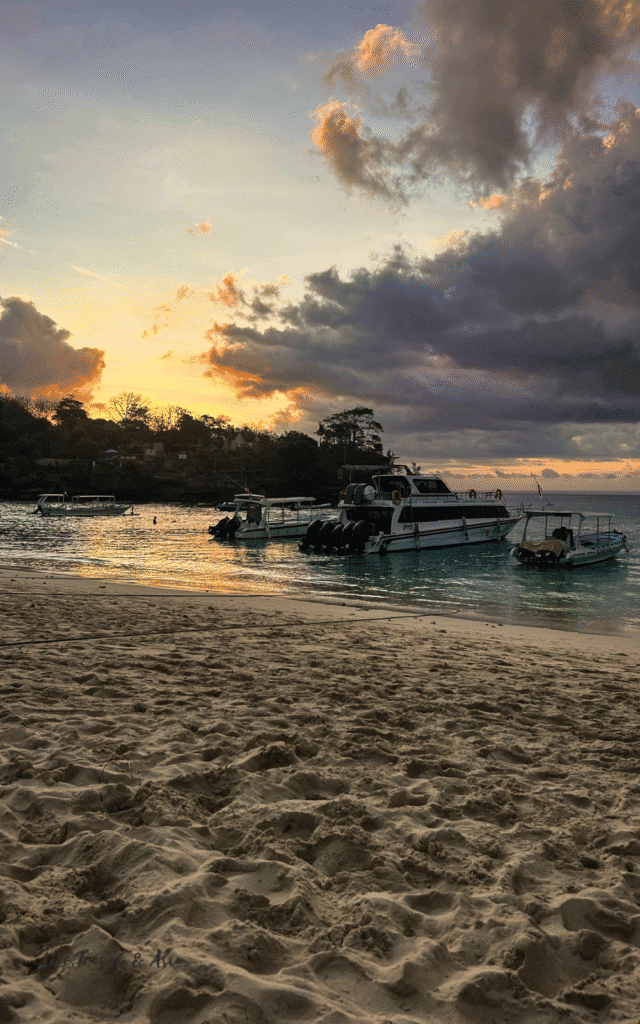
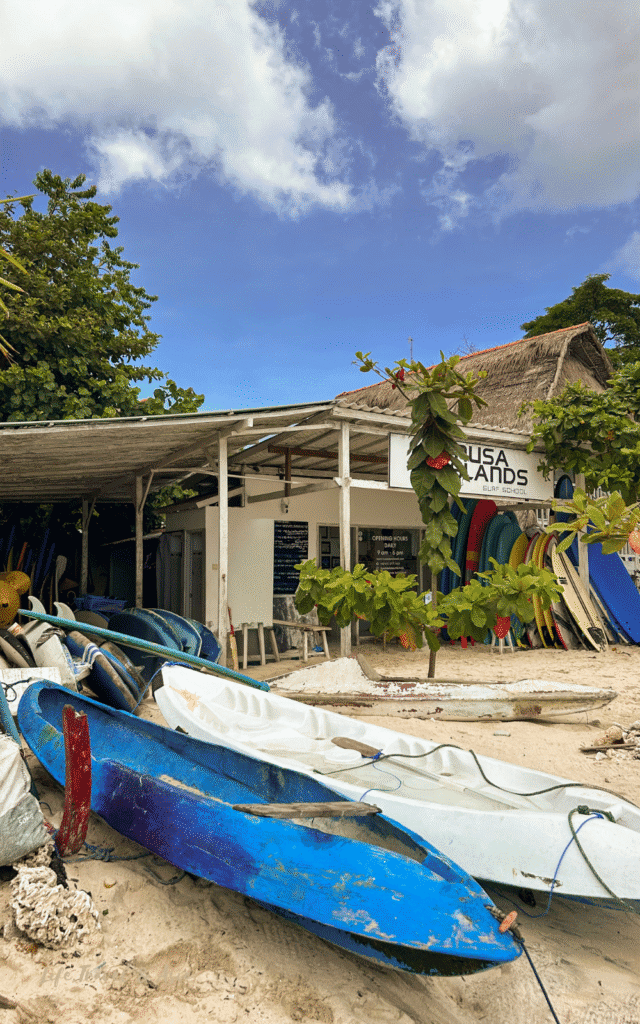
However, life here is even simpler. No traffic, no cars. You’ll see scooters zipping by and small open-air pick-up trucks. You can easily walk around the main tourist area, and all the beaches on Nusa Lembongan are super accessible, usually within walking distance from your bungalow or homestay.
Everything is compact, and the island can be explored on a small scooter in less than an hour. Here you’ll witness some of the best sunsets in Bali, with viewpoints like Blue Lagoon and Mahana Point (which are actually on Nusa Ceningan, but the two islands are connected by the Yellow Bridge).
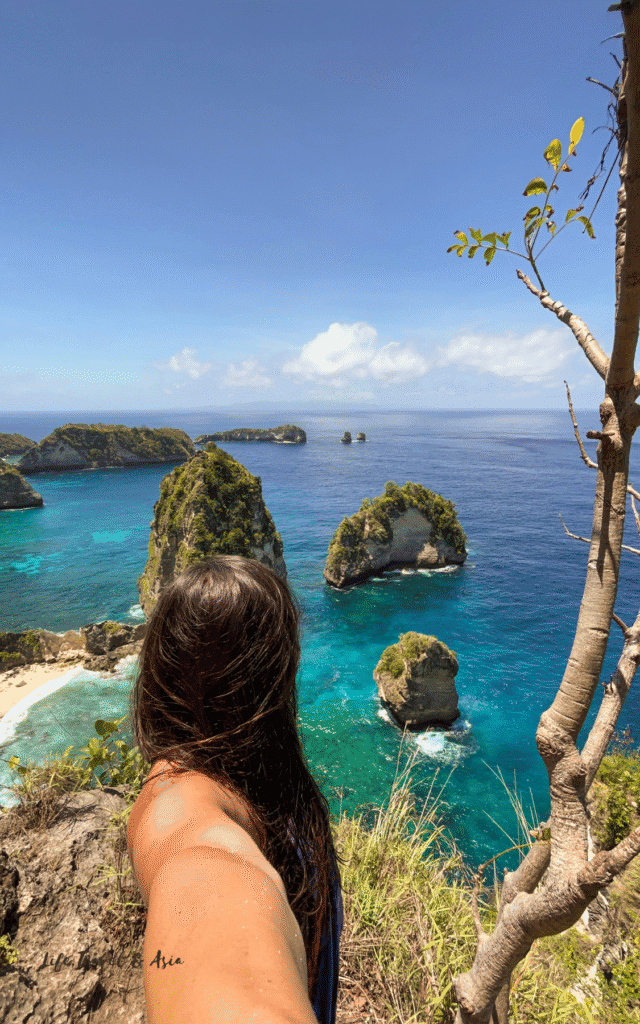
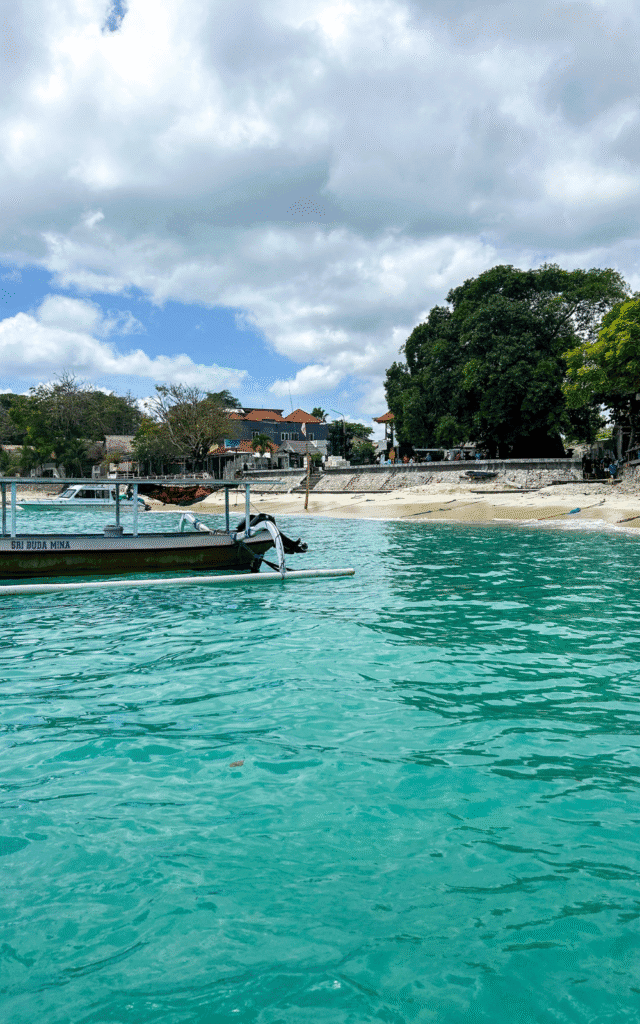
Being this close to Nusa Penida, it’s very easy to plan a day trip there or a snorkeling adventure exploring some of the best spots around the two islands. And finally, the cherry on top: Jungut Batu Beach is a great place if you want to learn how to surf — and it also works well if you already have some experience and are looking for good waves.
Here are a couple of places I stayed in Nusa Lembongan that I can recommend.
- Pattri Garden (low-budget option): This is where I stayed on Nusa Lembongan. The location is perfect, just a five-minute walk from Mushroom Beach, with plenty of restaurants and Warungs nearby.
- Dream Beach Huts (mid-budget option): I didn’t stay overnight at Dream Beach Huts, but I spent two full days at their pool club and tried many of their services, including the spa and restaurant. The property is just above Dream Beach and has lovely beachfront bungalows.
- Hai Tide Beach Resort (high-end option): This property has the best location. Its bungalows are located right in front of Mushroom Beach. The pool area, reserved exclusively for resort guests, is a dream, and the nearby Hai Bar & Grill serves some of the best seafood I’ve had on the island.
5. Canggu/Seminyak Area
In this list, mainly because Canggu and Seminyak are very popular among first-time travelers. They’re both located in the south of the island, close to the airport.
I’ve never been to Canggu and only stayed a couple of days in Seminyak (right before and after my flight). Friends have described Canggu as very party-oriented and, of course, traffic-heavy (but this is not news).
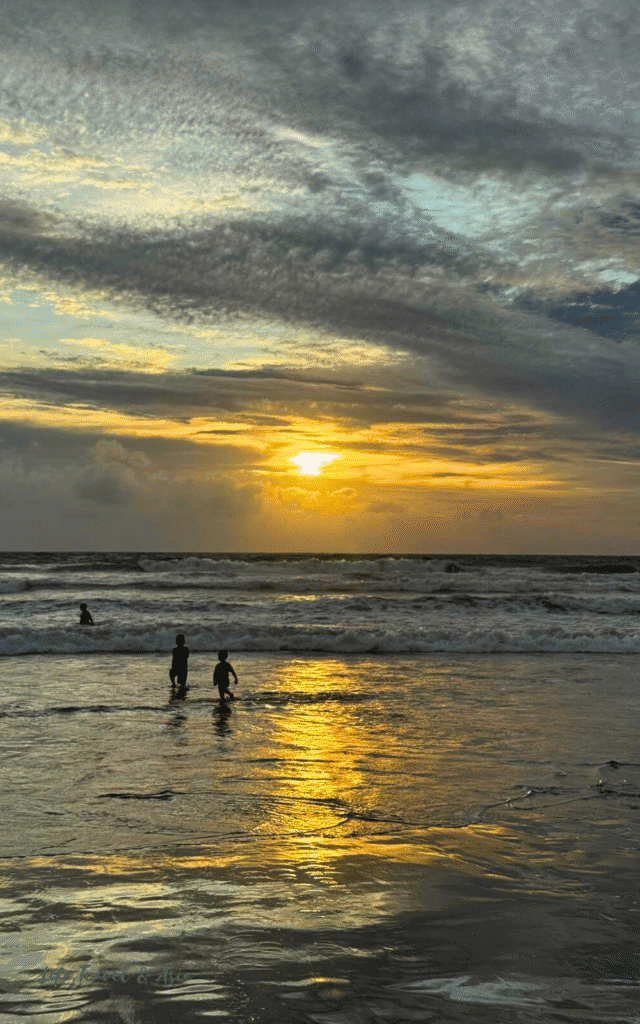
Perks of visiting Canggu are, of course, the beautiful cafés all over town and the fiery sunsets you can enjoy on a clear day. Beaches are not it, especially compared to Uluwatu, but if you need your daily dose of ocean, you’ll have it here.
It’s the main Bali hub for digital nomads, so of course, you’ll find hyper-aesthetic cafés, cool gyms, and all amenities catered to a Western crowd.
When it comes to Seminyak, it’s very similar to Canggu, with great restaurants, shopping, and resorts.
Here are a couple of places I stayed in Seminyak that I can recommend.
- Tijili Hotel: Located right in the center of the city, it’s perfect if you need a place to stay on the day of your arrival or right before your return flight. Breakfast and the swimming pool are the highlights.
- Djabu Seminyak Hotel: I loved the rooms with pool views, the floating breakfast, and how available the staff was. The location is, again, perfect if you want to be close to everything.
Of course, there are many more locations worth stopping by in Bali. However, on a first itinerary, we often can’t see it all. If you’re curious, here are a few other locations worth exploring for first-time visitors to Bali.
Best Things to See in Bali
There is so much to see in Bali, and seeing everything in a short time is absolutely impossible. Here I’ll share my favorite natural sights, so you can decide whether they’re worth including in your itinerary.
Beaches
DIAMOND BEACH (Nusa Penida)
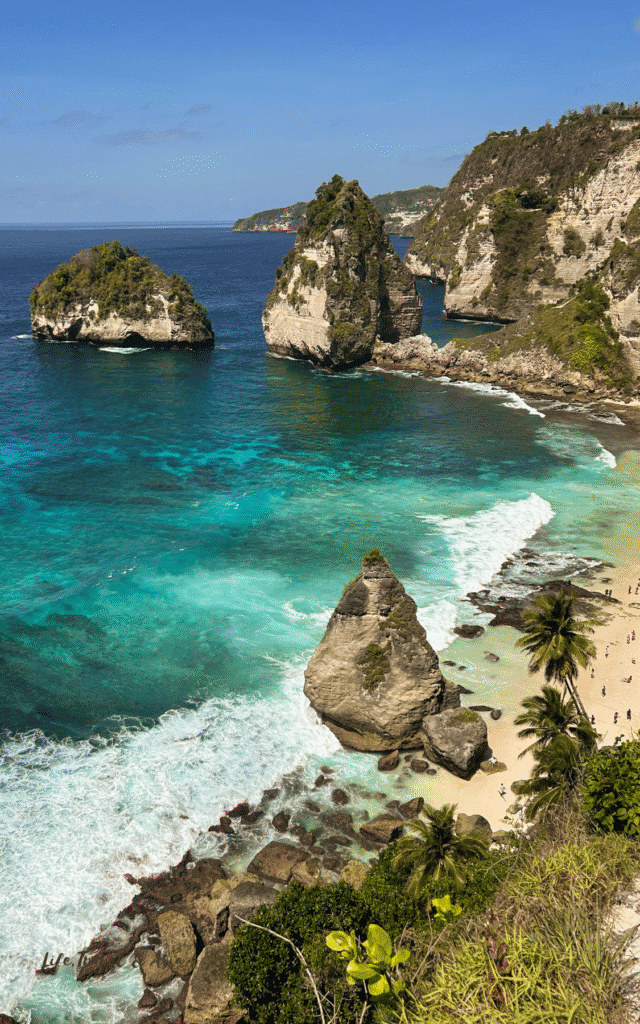
I organized my day trip to Nusa Penida just to see Diamond Beach. It’s located on the east side of the island, farther away from the port and therefore not the easiest to reach, but honestly, the two-hour car ride was worth it. I really think the pictures speak for themselves. Don’t miss the nearby bay of Atuh Beach, which is perfect for swimming during high tide.
KELINKING BEACH (Nusa Penida)
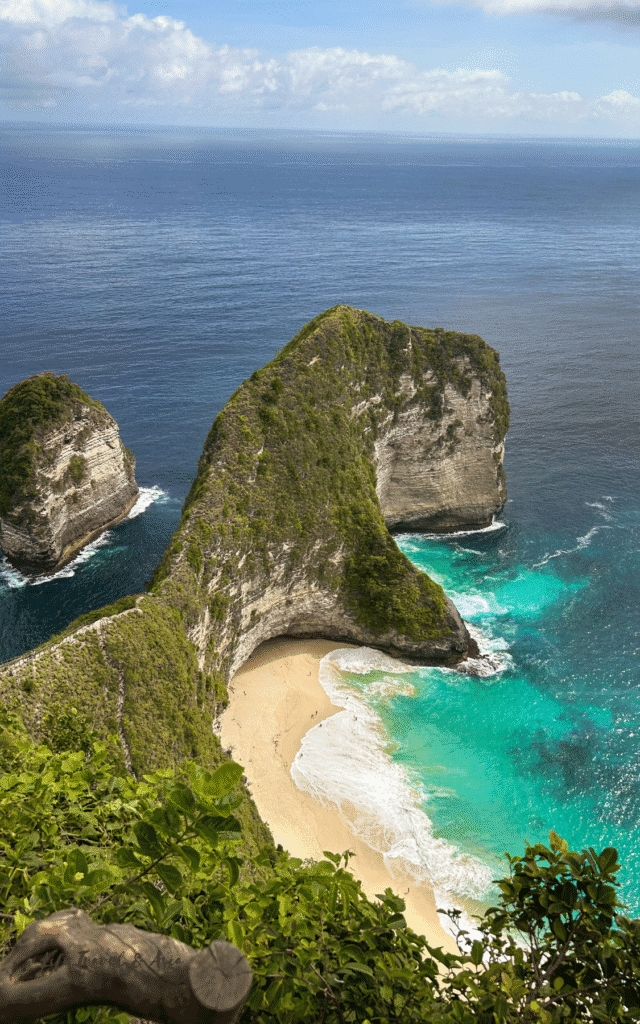
Kelingking Beach needs to be part of this list. Despite the crowds at almost any time of day, the view from the top is honestly unforgettable. Make sure to arrive early and head down to the small stretch of sand that seems so far away from above.
THOMAS BEACH (Uluwatu)
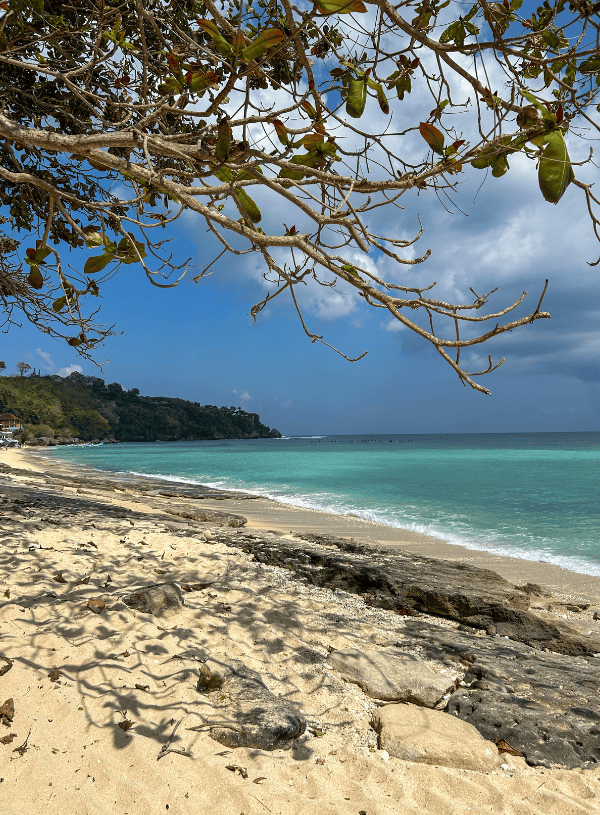
Thomas Beach is one of the most underrated beaches in Uluwatu. It’s peaceful, perfect for swimming and sunbathing, and far from the crowds you’ll find at more touristy spots like Dreamland Beach.
BALANGAN BEACH (Uluwatu)
I witnessed the most amazing sunset at Balangan Beach. The long stretch of sand is lined with a few beach cafés and warungs. It’s the perfect place to lie down with a coconut while watching the sun disappear. The cherry on top? It’s also one of the most accessible beaches in Uluwatu.
DREAM BEACH (Nusa Lembongan)
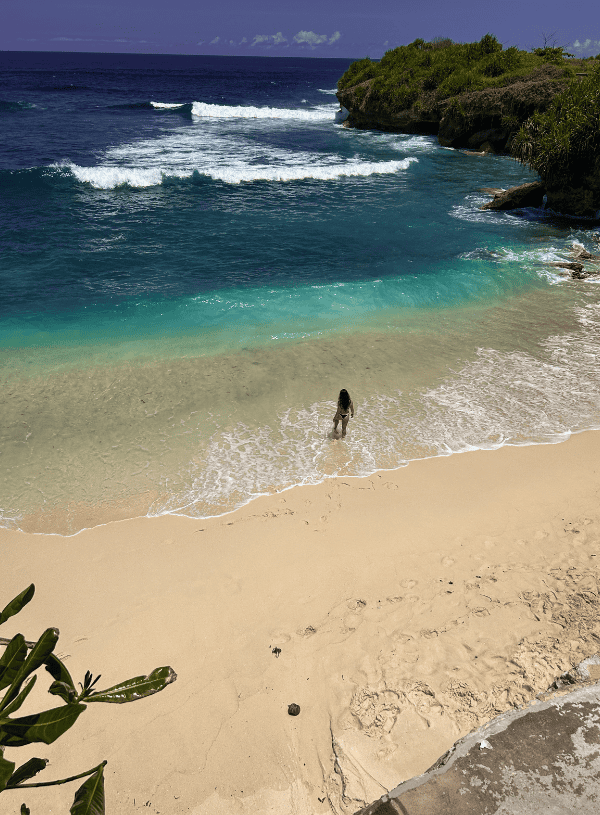
Dream Beach is not ideal for swimming, but if you’re looking for dramatic views of rushing waves and the bluest water, you won’t be disappointed. You can choose to lie down and sunbathe on the sand, or rent a sunbed by the pool at Dream Beach Huts.
Temples
PURA BESAKIH
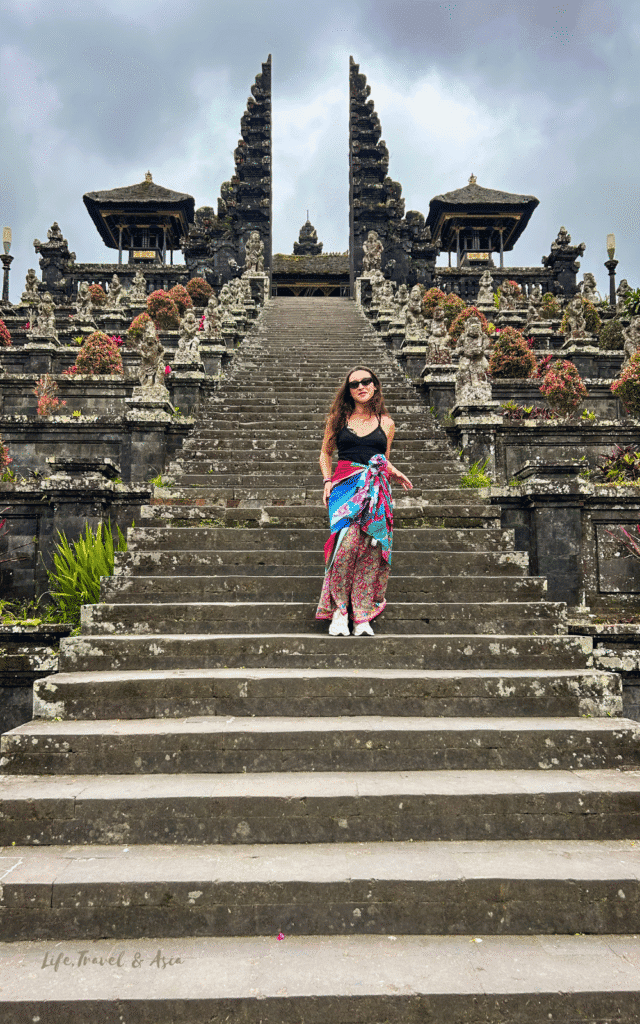
Located in East Bali, around 50 minutes from Sidemen, Pura Besakih is also known as Bali’s most sacred spiritual site on the island and is made up of 23 temple complexes that together form the larger site.
The location itself contributes to its suggestive atmosphere: the temple sits right at the foot of Mount Agung, and it was miraculously spared during the volcano’s last eruption.
PURA ULUN DANU BRATAN (Bedugul, Central Bali)
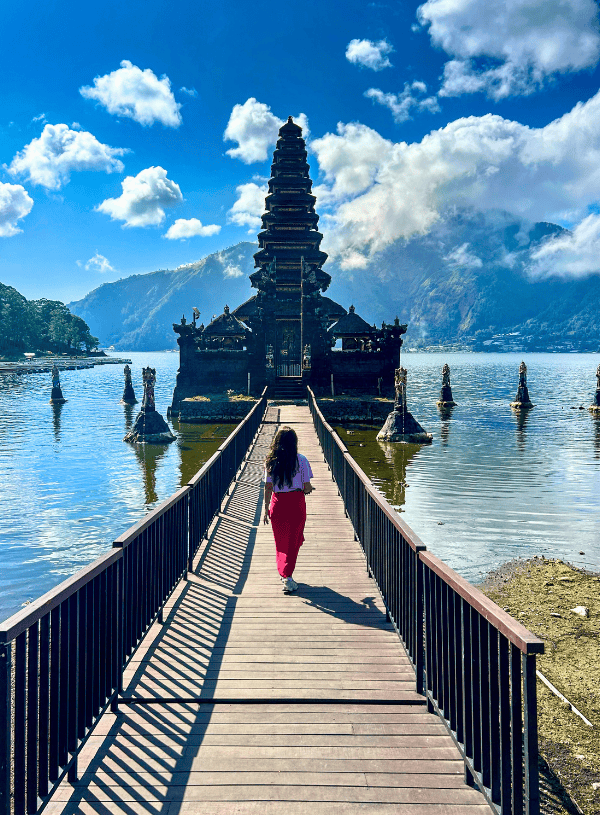
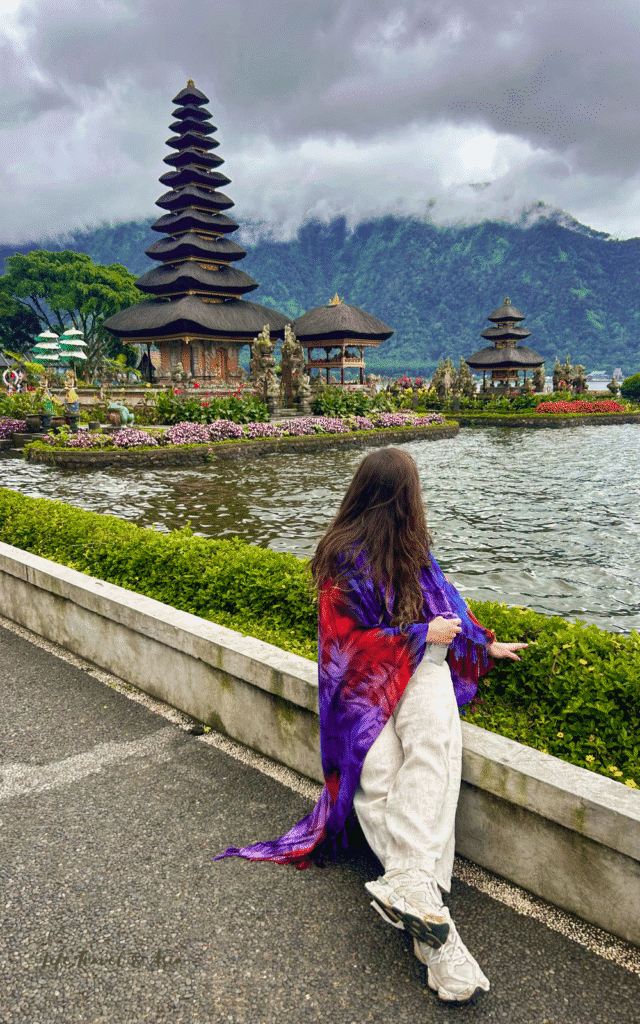
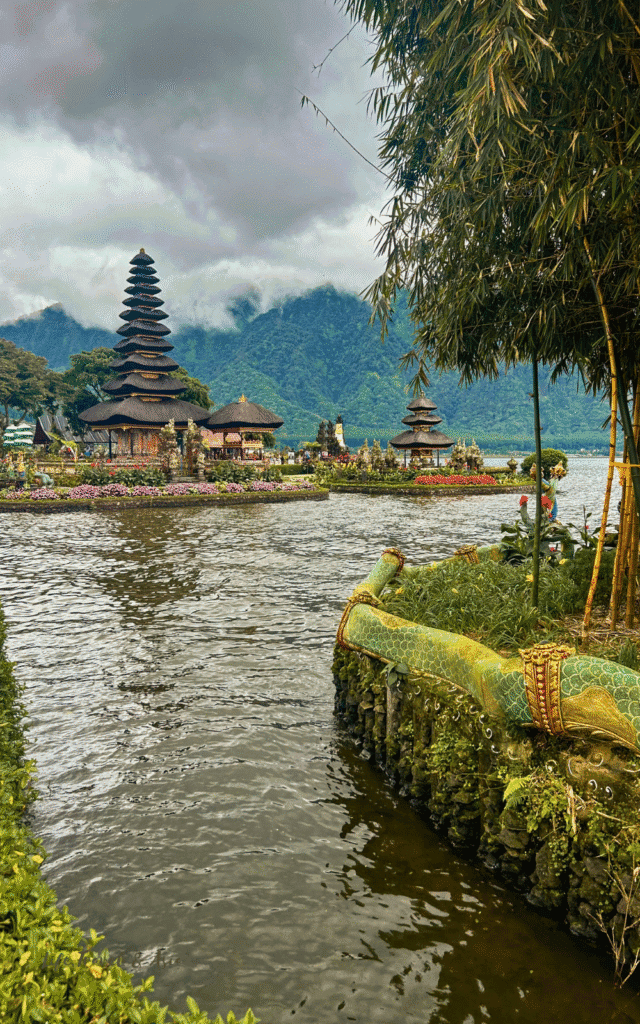
Likely one of the most photographed temples on the island, especially the 11-storey meru-style shrine dedicated to Shiva, which seems to float on Lake Bratan. It is touristy, but the surrounding mountainous landscape of Bedugul, the lake, and the suggestive atmosphere make Ulun Danu Beratan Temple a must-see.
PURA TIRTA EMPUL (Tampaksiring, Ubud Surroundings)
Another must-see temple around Ubud, but do yourself a favor and head there very early in the morning, because it gets packed. Visitors usually come here to practice the Melukat purification ritual (I’d personally choose Pura Mengening for that).
The temple grounds are often overlooked, but beyond the crowded bathing pools lies the most interesting part of the complex, the jeroan, where the holy spring used for purification is located and where locals pray and carry out their rituals.
PURA GUNUNG KAWI SEBATU (Sebatu, Ubud Surroundings)
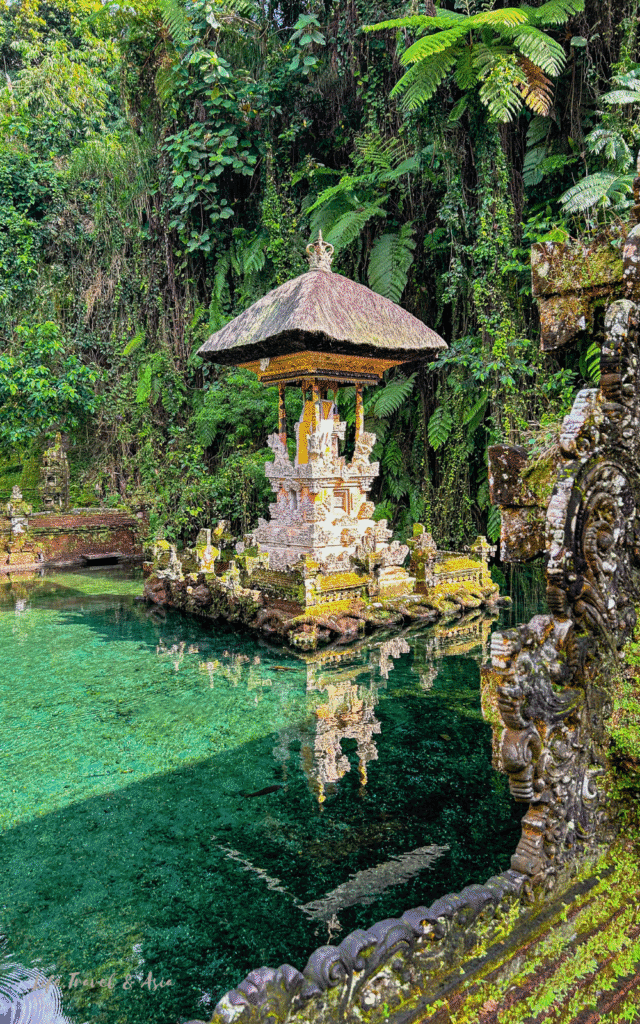
One of the most enchanting temples I’ve visited in Bali. Gunung Kawi Sebatu (not to be confused with Gunung Kawi Tampaksiring) is tiny, hidden, and usually empty, but its intricate details and architecture make it a real little gem.
I couldn’t stop taking pictures and ended up spending around an hour wandering through its small courtyards, trying to take in every detail of its traditional bathing pools, tropical gardens, and adorned altars.
SARASWATI TEMPLE (Ubud Center)
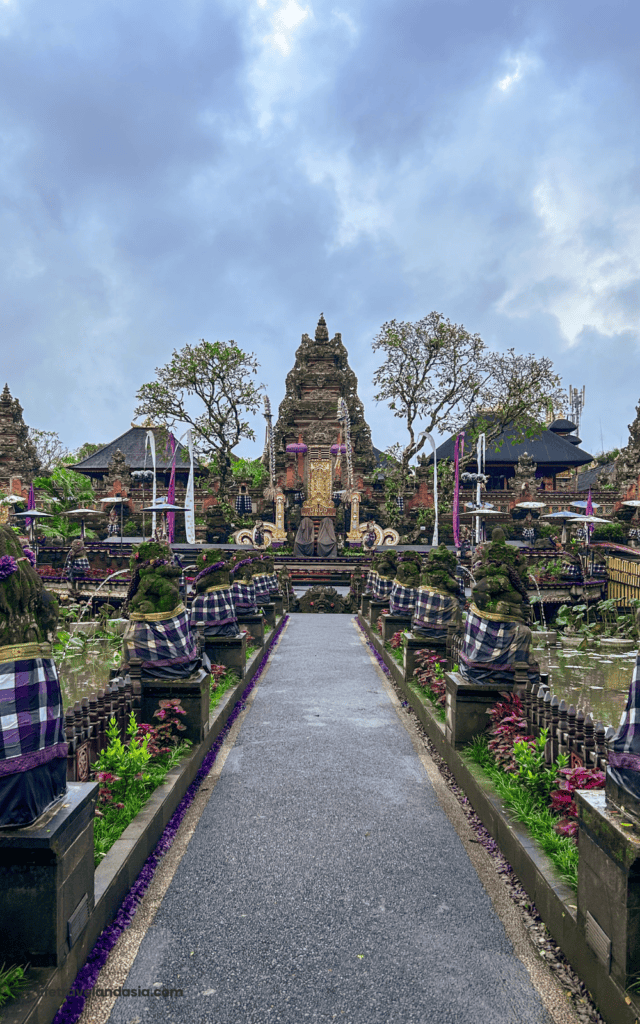
Saraswati Temple is located right in the center of Ubud, and while walking along Jalan Raya Ubud, you’ll immediately notice the beautifully maintained garden with a lotus pond and three adorned red sandstone gates in the background.
That’s actually the temple garden, and it’s the only section that can be visited. Make sure to head there early; the garden is small and fills up quickly.
Waterfalls
LEKE LEKE WATERFALL (Tabanan, Central Bali)
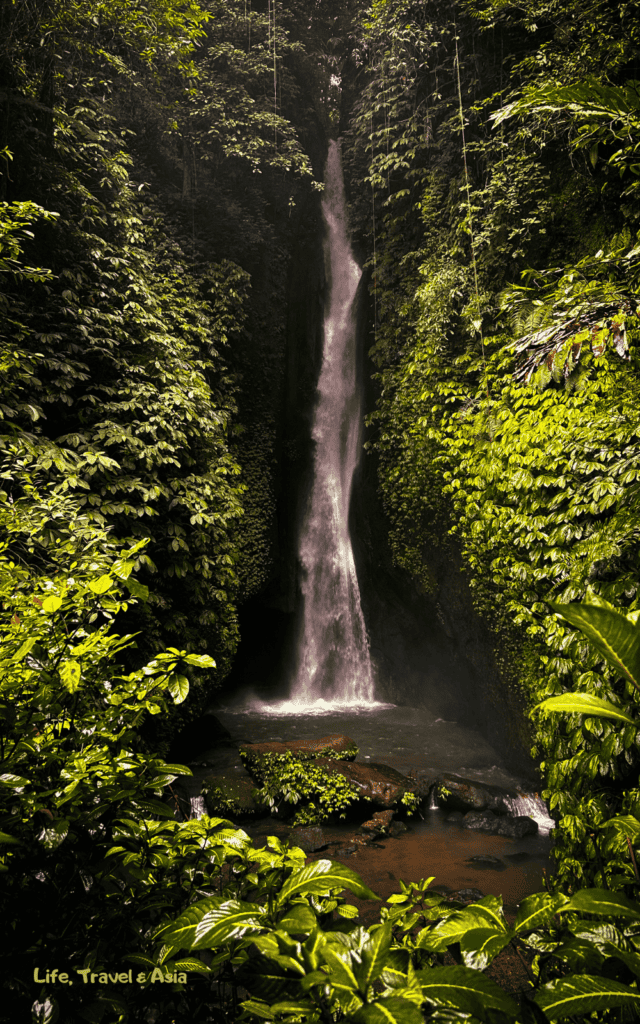
To date, Leke Leke Waterfall is still my favorite waterfall in Bali, and also the first one I ever visited. There’s something incredibly magical about it, from the trail through the deep (and humid, I must add) jungle, all the way to the moment you arrive in front of the waterfall.
The view takes your breath away: the power of the cascade rushing down into the pool, the sound covering everything around you, and the mist it creates, which feels almost surreal.
TIBUMANA WATERFALL (Ubud Surroundings)
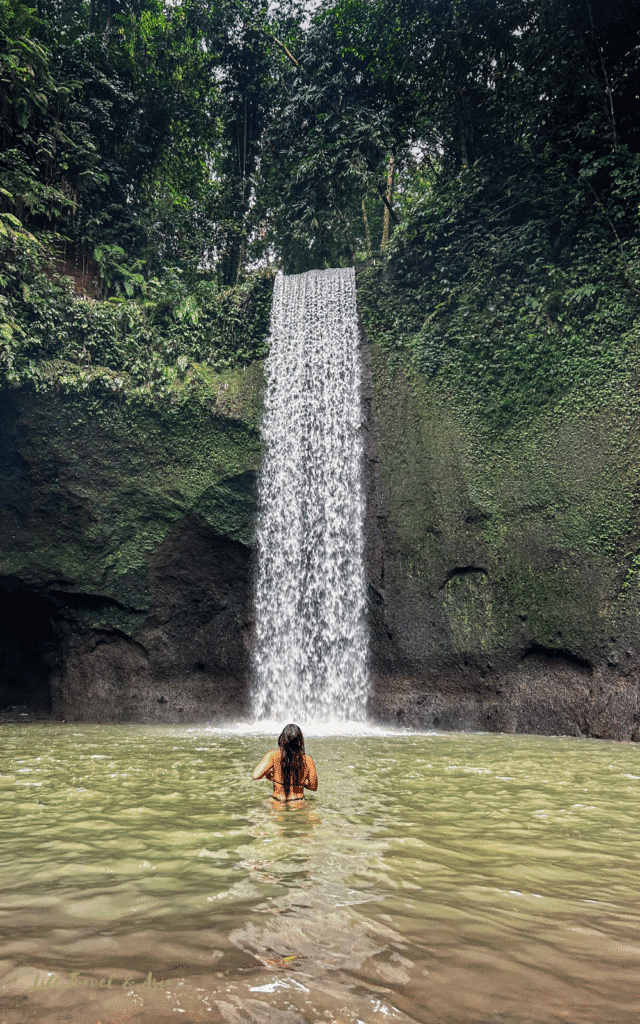
Tibumana Waterfall is perfect if you’re looking for easy access, a sandy ground, and a spot to swim while enjoying the sounds of the surrounding jungle. By visiting in the morning, you can avoid the crowds, which are much thinner compared to other waterfalls around Ubud. The small, single cascade flows straight through the jungle and drops into a clear, shallow pool.
TUKAD CEPUNG (Bangli, Central Bali)
Tukad Cepung Waterfall is one of the most scenic waterfalls on the entire island. You won’t get there without some effort; the hike takes around 20 minutes. The waterfall is hidden inside a canyon, where you’ll be watching the cascade rushing through the rocks while sunlight peeks in and mist spreads all around.
GEMBLENG WATERFALL (Sidemen)
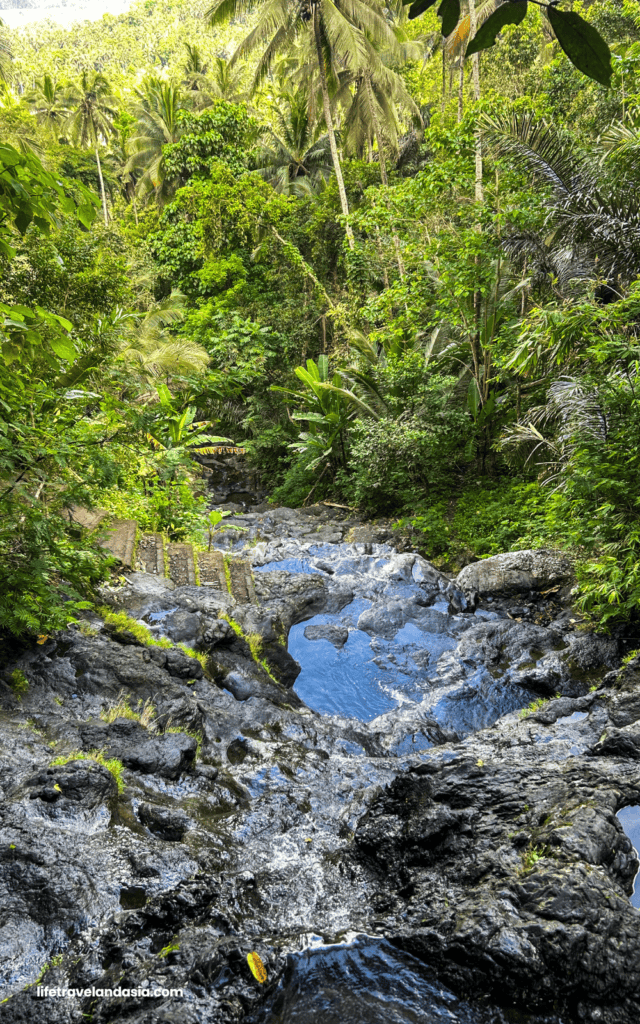
Gembleng Waterfall is the most aesthetic waterfall on the island. If you’re visiting Gembleng near Sidemen, don’t expect majestic or powerful cascades; the waterfall is small and gently flows along the surrounding rock walls.
What truly makes this waterfall worth visiting are the natural pools created by erosion, and the view over the East Bali jungle that you get while taking a dip in the fresh water.
SUWAT WATERFALL (Ubud Surroundings)
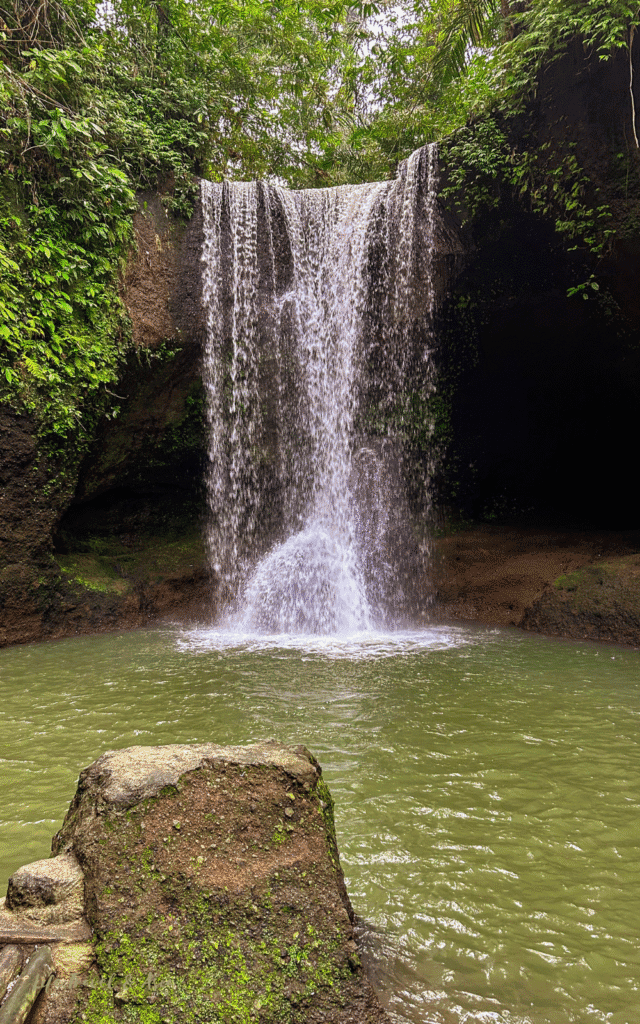
Suwat Waterfall is one of those underrated waterfalls that leaves you speechless once you visit. You don’t really expect it, but the way the path opens up, revealing the small cascade hidden between sheer rock walls and the jungle, is just unforgettable.
It’s similar to Tibumana Waterfall in structure; however, access here is not as easy, and the crowd is usually much smaller. This is definitely the waterfall to visit if you’re looking for a more intimate, less crowded experience.
Related Articles
Rice Terraces
JATILUWIH (Central Bali)
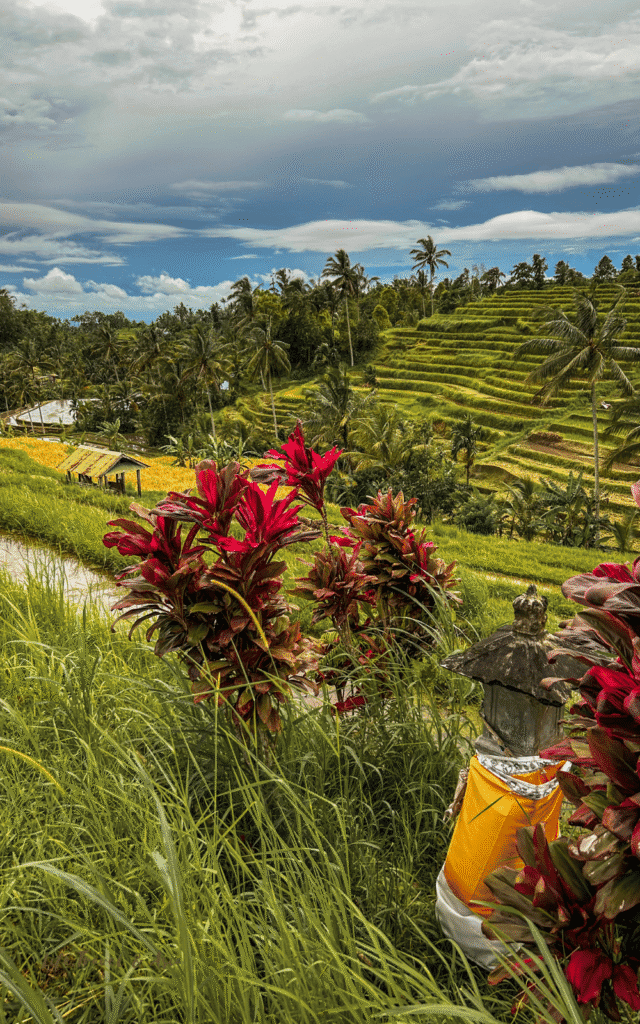
Jatiluwih Rice Terraces were the very first rice terraces I visited in Bali, and honestly, I set myself up for disappointment during later visits to other rice fields.
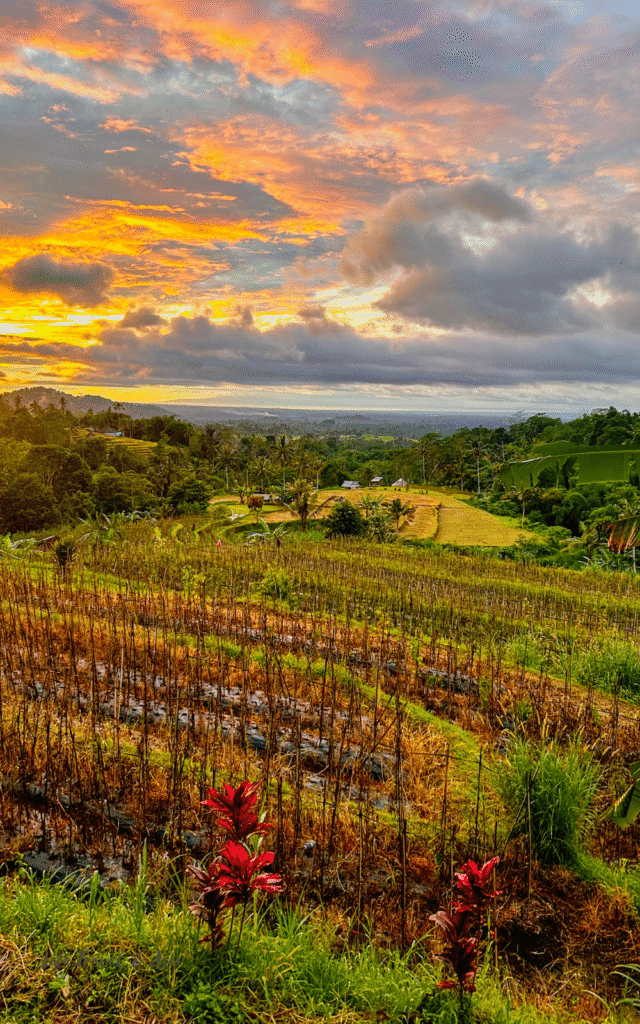
Everything about Jatiluwih makes the journey to Central Bali worthwhile: the scale of the site, the authenticity you can feel all around, and the colors. The bright green of the palm trees combined with the deep red of tropical plants and the vivid blue of the sky is still something I can recall so clearly.
SIDEMEN RICE FIELDS (Sidemen)
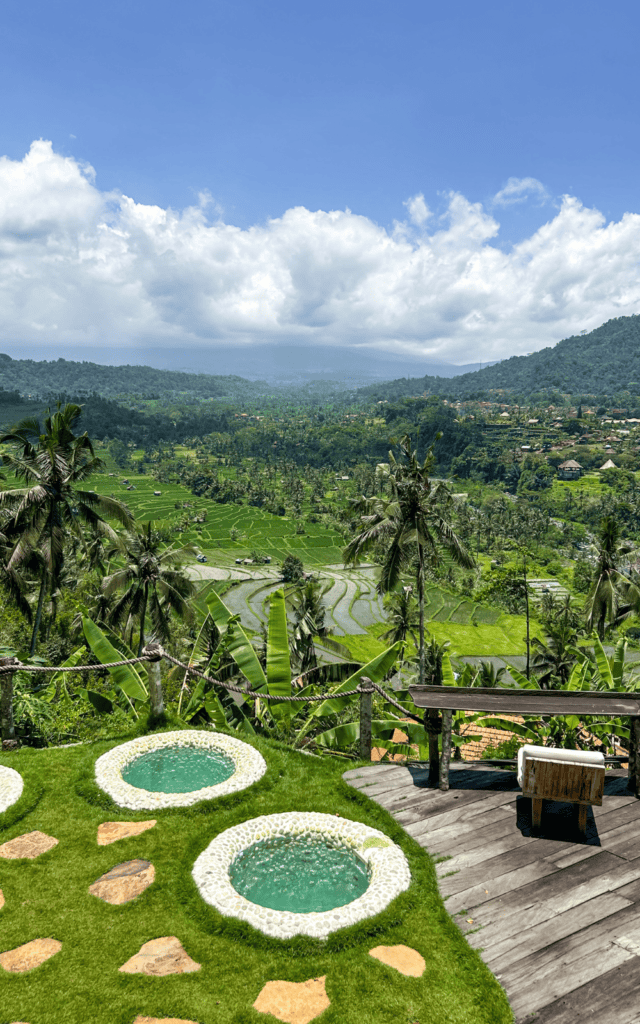
The view over Sidemen’s rice fields feels like a breath of fresh air after spending time around busier, more crowded sights. The sea of green seems never to end, stretching all the way to the slopes of Mount Agung.
Rice fields surround Sidemen, and it’s surprisingly easy to stumble upon unofficial trails and get lost in what feels like a labyrinth. If you don’t know where to start, in Sidemen you’ll find a signposted trail called Sidemen Trekking.
TEGALLALANG RICE FIELDS (Tegallalang, Ubud)
If you don’t want to go all the way to Jatiluwih Rice Terraces or Sidemen, you can stop at Tegallalang Rice Terraces, located around 30 minutes from Ubud. The site is very touristy and quite different from Jatiluwih or Sidemen; however, its structure is unique. The lush fields cover both sides of the valley, creating a truly striking view.
Best Things to Do in Bali
Nature Activities
WHITE WATER RAFTING
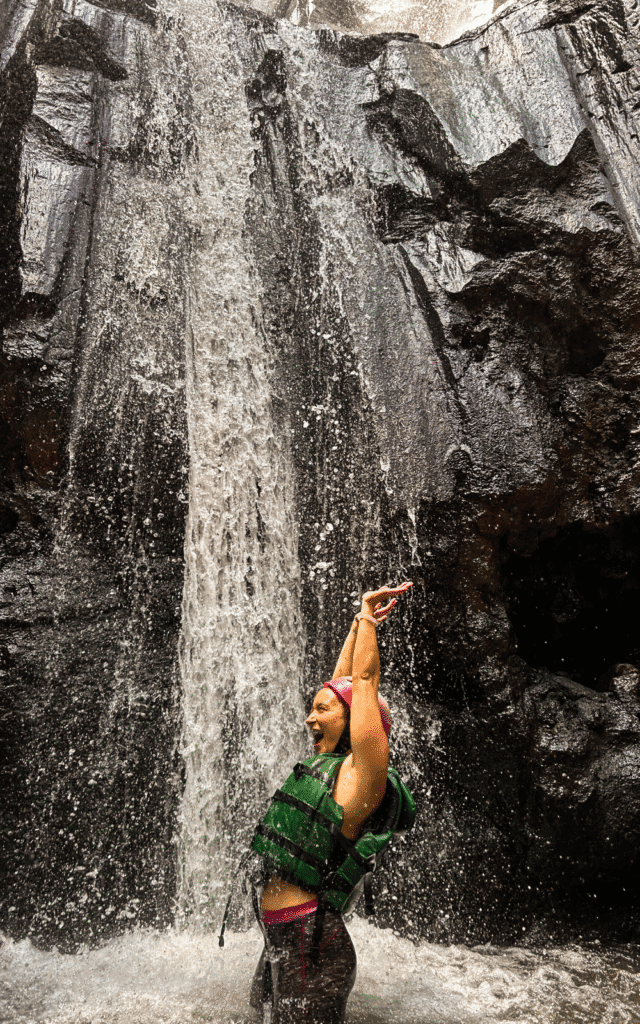
Rafting is one of the most exhilarating activities you can do in Bali, and I honestly wouldn’t skip it. It’s a great way to experience the island’s untouched nature from a different perspective, away from the crowds and city noise.
In Ubud, in particular, you can go river rafting on the Ayung River, a two-hour experience covering around 11 km of its stream. It’s great whether you’re a beginner or more experienced, and the Balinese guides are one of the highlights of the experience, joking around while guiding you the whole way.
SURF (Uluwatu, Nusa Lembongan)
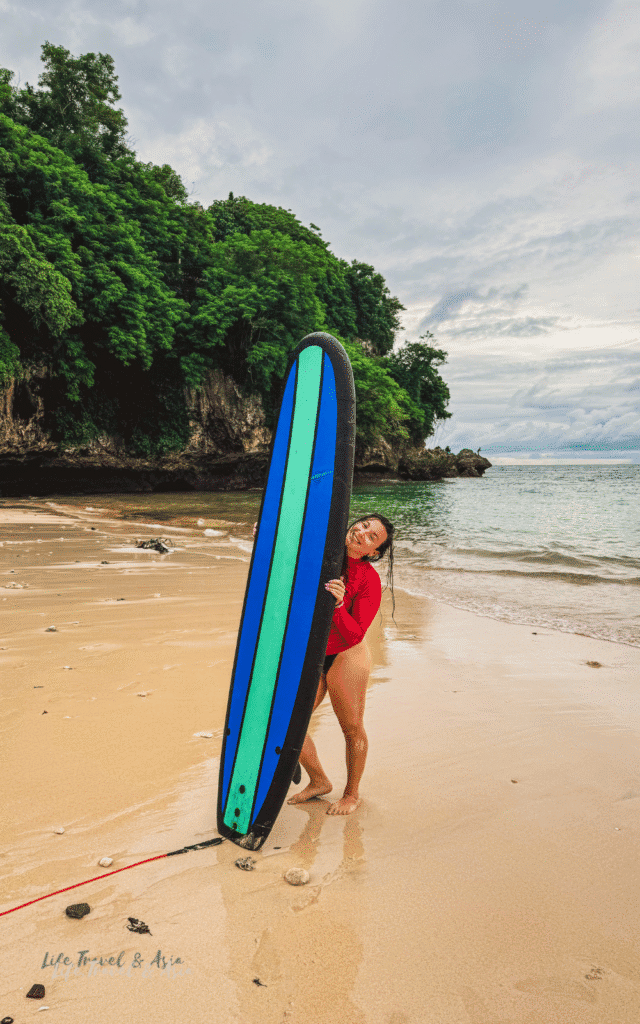
I had my first surf lesson at Padang Padang Beach, and I honestly never thought I’d manage to stand up. In Bali, you’ll find plenty of places to learn how to surf, mainly in Uluwatu, but also in Canggu and Seminyak. Some spots are better for beginners than others (Padang Padang was great for me).
Nusa Lembongan also offers great reef breaks for both beginners and more experienced surfers, especially around Jungut Batu Beach.
SNORKELING & DIVING ( Nusa Islands, Gili Islands, East Bali)
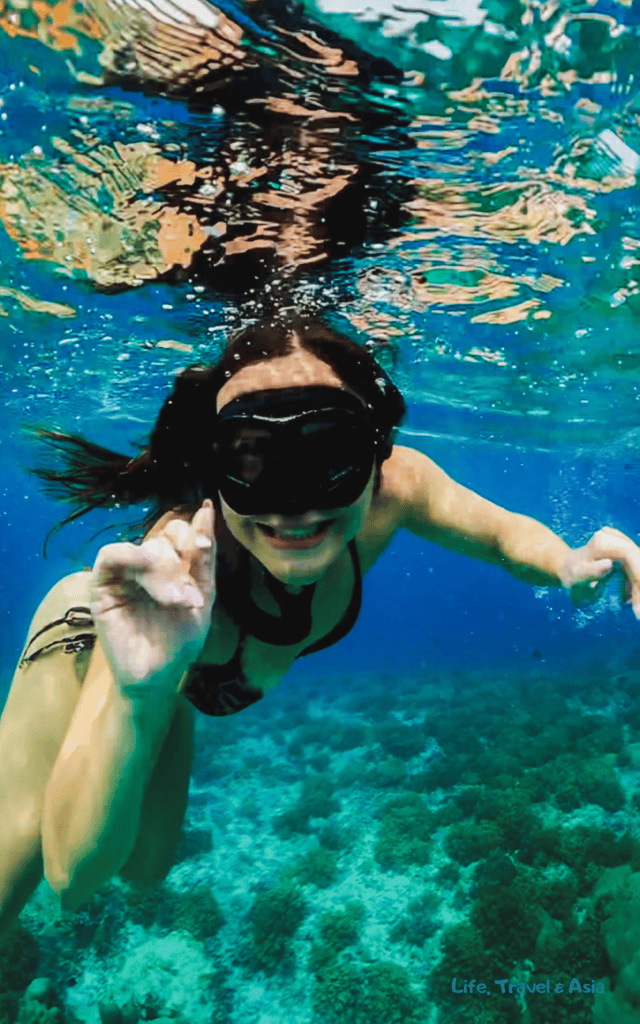
The underwater marine life off the coast of Bali definitely deserves to be explored. Sea turtles, manta rays, incredibly colorful fish, and surprisingly healthy coral reefs.
Some of the best snorkeling spots are off the coast of Nusa Penida (Manta Bay, Crystal Bay, and Gamat Bay are among the most popular), or around the Gili Islands if you want to swim alongside sea turtles.
East Bali also offers great snorkeling opportunities, especially off the coast of Amed and Padang Bai, with spots like Blue Lagoon.

HIKING (Rice Terraces, Jungle Trails, Mount Agung, and Mount Batur)
The opportunities for hiking in Bali are endless. If you ditch the coastal, touristy cities for more inland locations like Ubud, Munduk, or Central Bali, you’ll have plenty of chances to hike through rice fields, jungle trails, and past waterfalls.
However, Bali also offers something not many destinations do: the chance to hike active volcanoes like Mount Batur or Mount Agung.
Cultural Activities
BALINESE COOKING CLASS
Attending a cooking class in Bali is the best (and most fun) way to learn about one of the rituals of Balinese daily life: cooking. Cooking and eating are often shared among family members and represent an important communal moment for many families.
Cooking classes are often held at family compounds or farms with their own gardens, and they usually include a visit to the local market, choosing ingredients, cooking, and sharing the meal.
SILVER SMITHING WORKSHOP
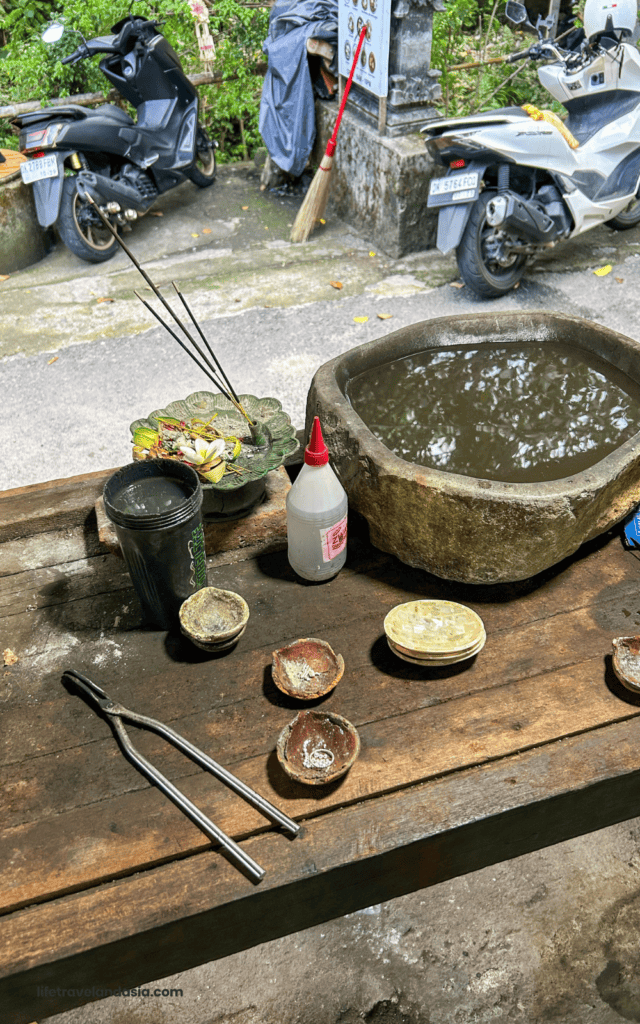
If you’re looking to bring home a new, very unique souvenir, crafting your own ring or pendant could be the perfect way to do just that. I had my first silversmithing experience in Sidemen, but it’s a popular activity all across the island.
A silversmithing workshop usually lasts around two hours, and you’ll be given about 7 grams of silver to create your own piece.
CANANG SARI WORKSHOP
Canang sari are the omnipresent offerings you’ll notice immediately when arriving in Bali. They are small daily offerings to the gods, placed in front of every single building.
Learning how to make canang sari and, above all, understanding the meaning behind the offerings, is such a unique way to explore this ritual.
BALINESE PURIFICATION CEREMONY
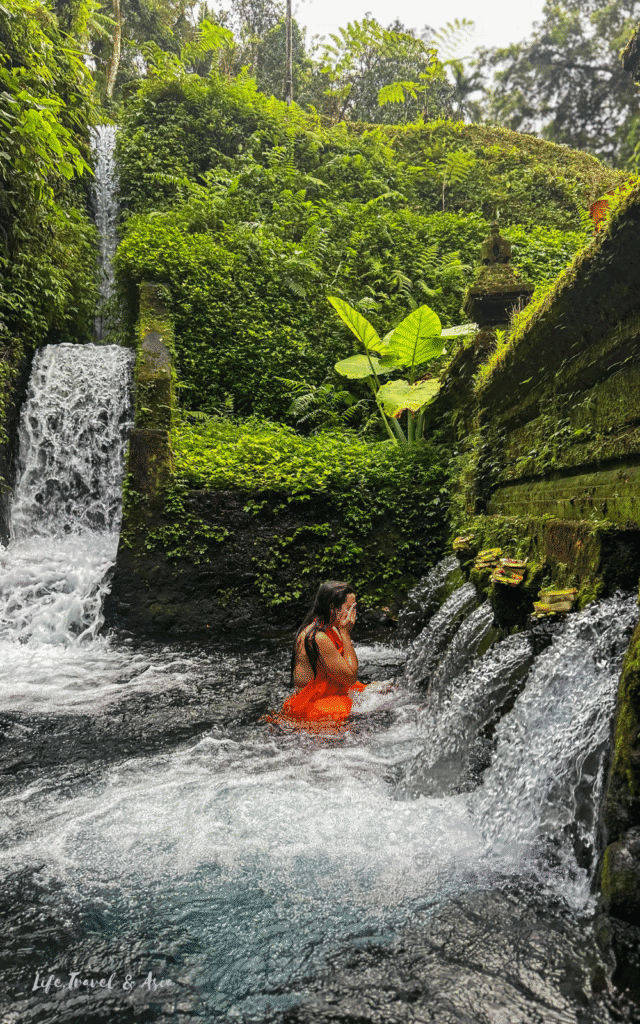
If you believe in the power of rituals, a Balinese purification ceremony (also called Melukat) is a once-in-a-lifetime experience. The purpose of the Melukat is to cleanse the body, mind, and soul from negative energies, preparing yourself to receive new blessings.
Most visitors head to Pura Tirta Empul for this experience; however, I personally recommend Pura Mengening or Pura Gunung Kawi Sebatu, two smaller and more intimate temples.
Best Restaurants in Bali (+ Indonesian Specialties You Have To Try)
If you’re worried about eating well while in Bali, you really don’t have to be. Food in Bali is absolutely delicious, everywhere. Ingredients are fresh, often locally sourced, and you’ll be surprised by how affordable everything is.
You’ll find all kinds of cuisines: local Indonesian food, many different Asian cuisines, great Italian restaurants, elegant French bistros, and places that pay close attention to allergies and special dietary requirements (you’ll be asked at every meal if you have any allergies).
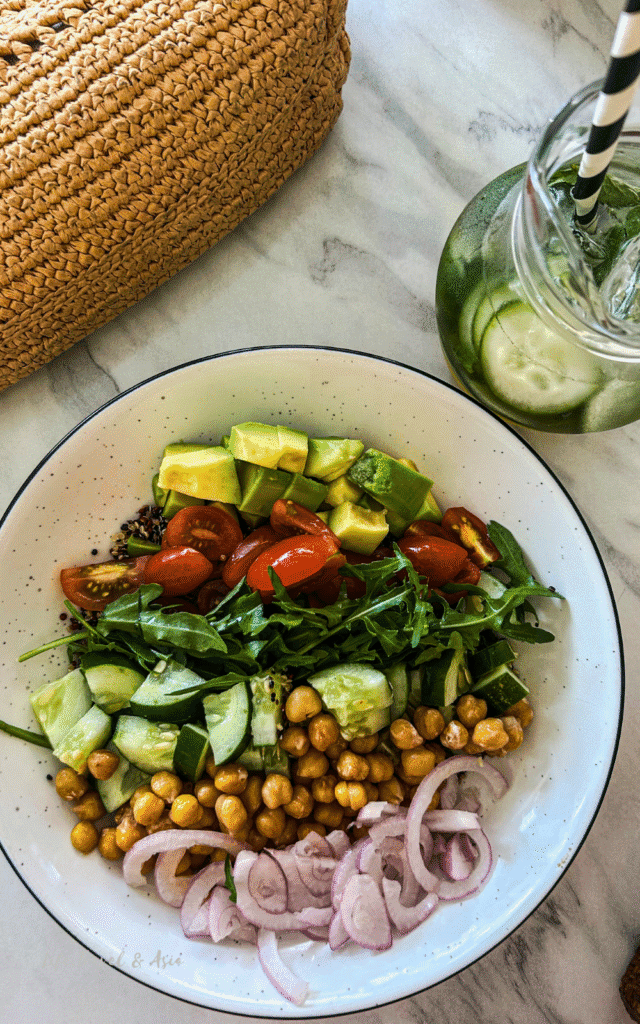
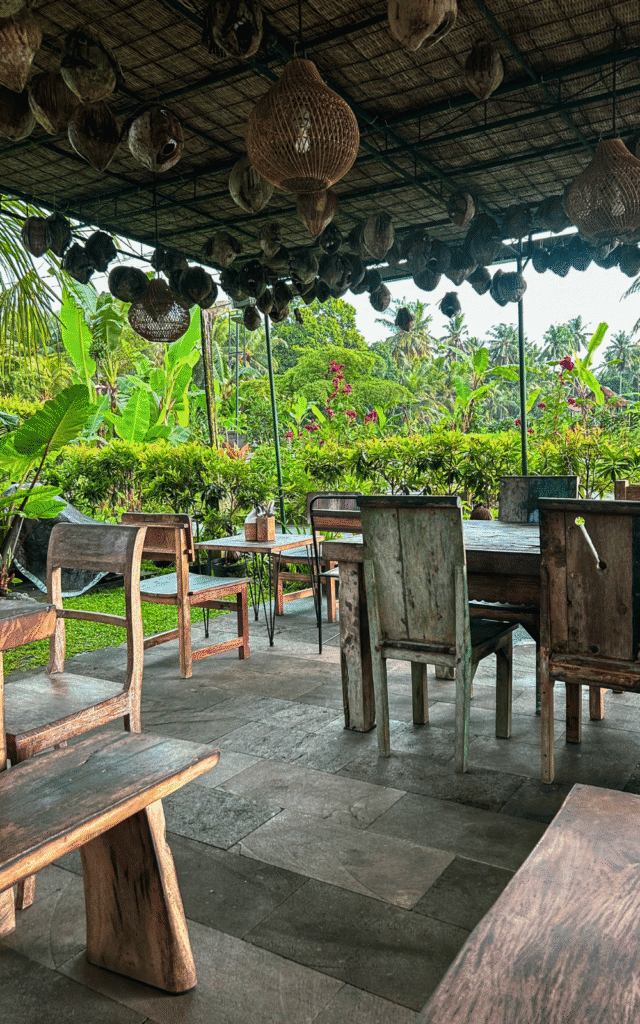
After six months of living in Bali, I’ve compiled my list of local specialties you absolutely have to try if you’re visiting the island, as well as restaurants you should check out.
What to Eat in Bali
- Nasi Campur: A local dish made up of small portions of meat (chicken, pork, or vegetarian), fried corn, rice, local vegetables, crackers, tempeh, and creamy peanut sauce. What you’ll find on the plate varies by location, but it’s the best way to try multiple things at once.
- Nasi Goreng / Mie Goreng: Fried rice or fried noodles with vegetables, a fried egg, and some kind of meat or vegetarian protein.
- Gado-Gado: Your go-to if you’re vegetarian. It’s a mix of boiled vegetables with boiled eggs, tempeh, and/or tofu, all topped with creamy peanut sauce.
- Bakso: The most popular meatball soup in Indonesia. It’s a favorite comfort food, and you’ll often find it sold at street food stalls.
- Dadar Gulung: My absolute favorite Indonesian dessert, a green-ish crêpe filled with coconut and palm sugar, often served with honey and fruit.
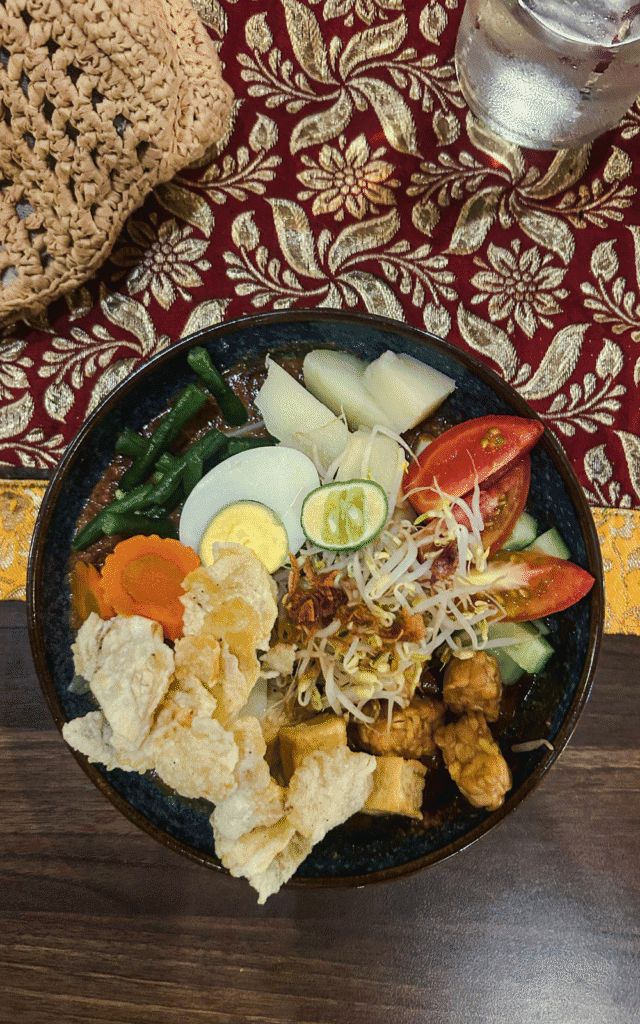
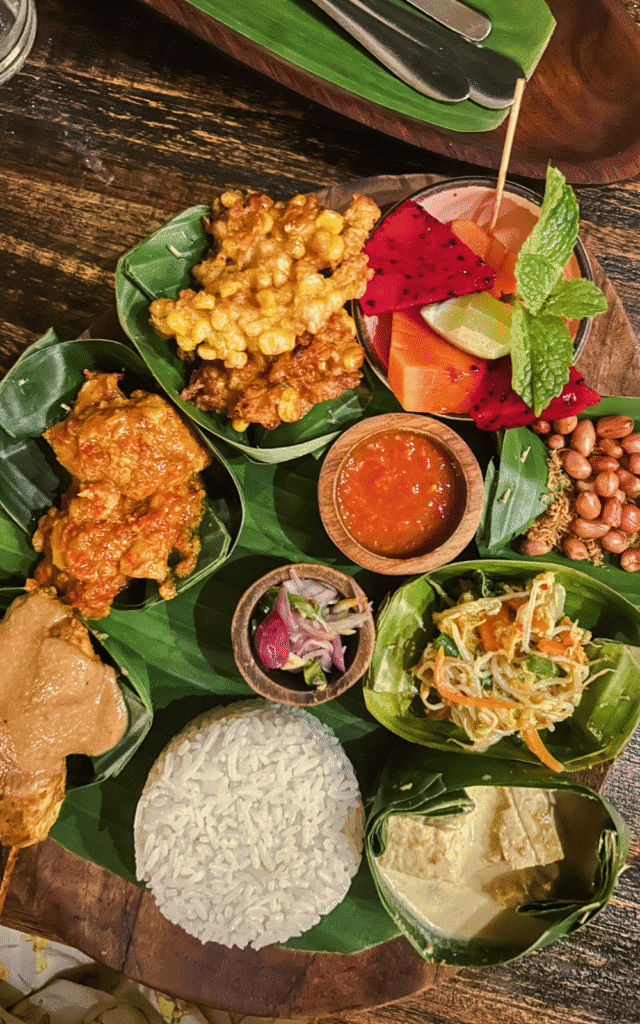
My Favorite Restaurants in Bali
- Compound Warung (Ubud): The absolute best, and most affordable, warung I tried in Bali. Go early, because queuing here is the norm. Their Nasi Campur is a work of art.
- La Baracca (Ubud): My favorite Italian restaurant in Ubud. If you’re craving pizza, this is absolutely the place to be.
- Paperhills Café (Kintamani): An insane view over Mount Agung and Mount Batur. The ideal place to relax before your volcano hike.
- Artisan (Uluwatu): Love the food, love the vibe, love the aesthetic. If you’re planning a nice dinner out, make sure to book — it’s always packed.
- Le Cliff (Uluwatu): An incredible view over the turquoise ocean and a small, intimate white-sand beach to relax on afterward.
- Sundari Restaurant (Sidemen): One of the most unbelievable views over Mount Agung in Sidemen. The food is delicious, and the staff is lovely.
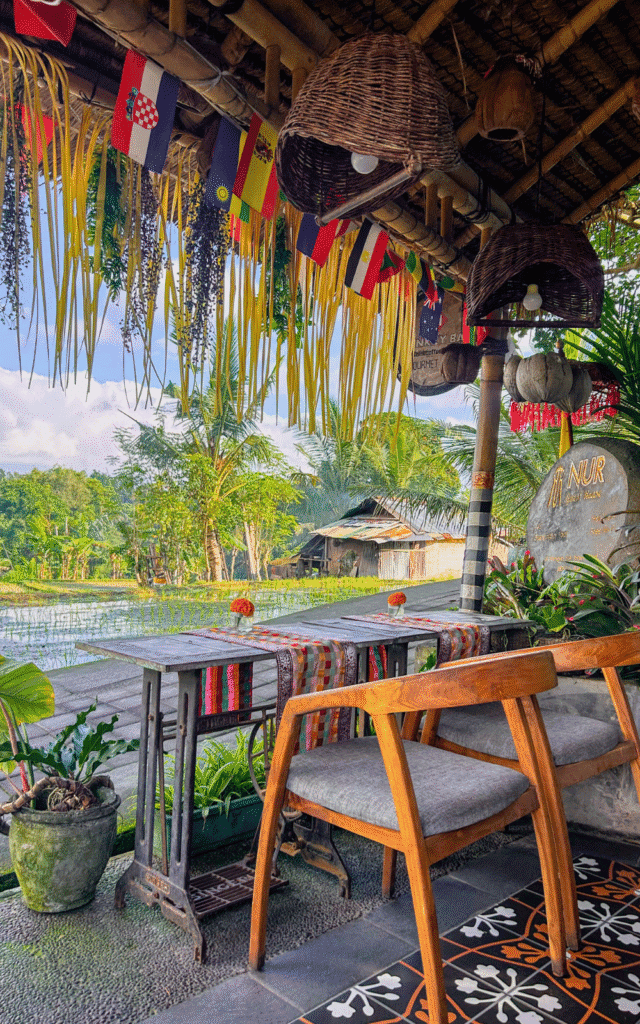
- KAFE (Ubud): Not the most affordable, but still my favorite place to get work done in Ubud. They have the biggest and most delicious salad I’ve ever had, and their golden latte is chef’s kiss.
- Hai Grill & Bar (Nusa Lembongan): The best seafood I had in Bali, with the loveliest view over Mushroom Beach
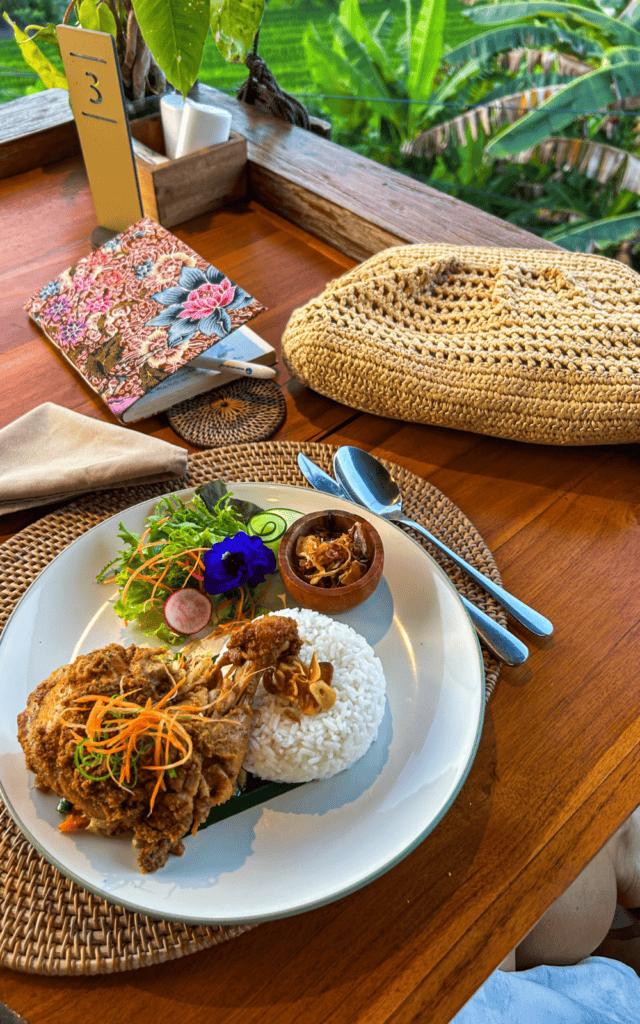
Best Day Trips in Bali
In Bali, no matter where you are on the island, you can usually plan a fun day trip to explore a completely different and unique area.
Here are my favorite day trips to plan, especially if you’re based around Ubud (Central Bali, Kintamani, and Sidemen) or in the south (the Nusa Islands).
Central Bali
I feel like Central Bali was the very first area I fell in love with, especially the regions of Tabanan and Bedugul.
Here, the landscape is completely different from the south: the scenery is mountainous, with lakes embraced by lush green hills and even cooler evening temperatures (by Balinese standards, of course).
Life feels more genuine: less tourism, less traffic, and more temples and nature to explore.
A typical day trip to Central Bali includes a visit to the extremely aesthetic Pura Ulun Danu Bratan and exploration of the lake area, as well as stopping by waterfalls like Leke Leke Waterfall or Munduk Waterfall.
You can also add a hike around the Jatiluwih Rice Terraces, or even head all the way to the Bali Twin Lakes trekking point.
Kintamani
The mountainous region of Kintamani is located just about an hour from Ubud. Of course, planning the Mount Batur sunrise hike is almost a given if you’re planning a day trip to Kintamani, but there’s so much more to see and explore here.
Nature truly takes center stage: Mount Batur and Mount Agung dominate the landscape, with Lake Batur stretching between them. The scenery feels raw and powerful, the kind of place where you recognize the power of nature.
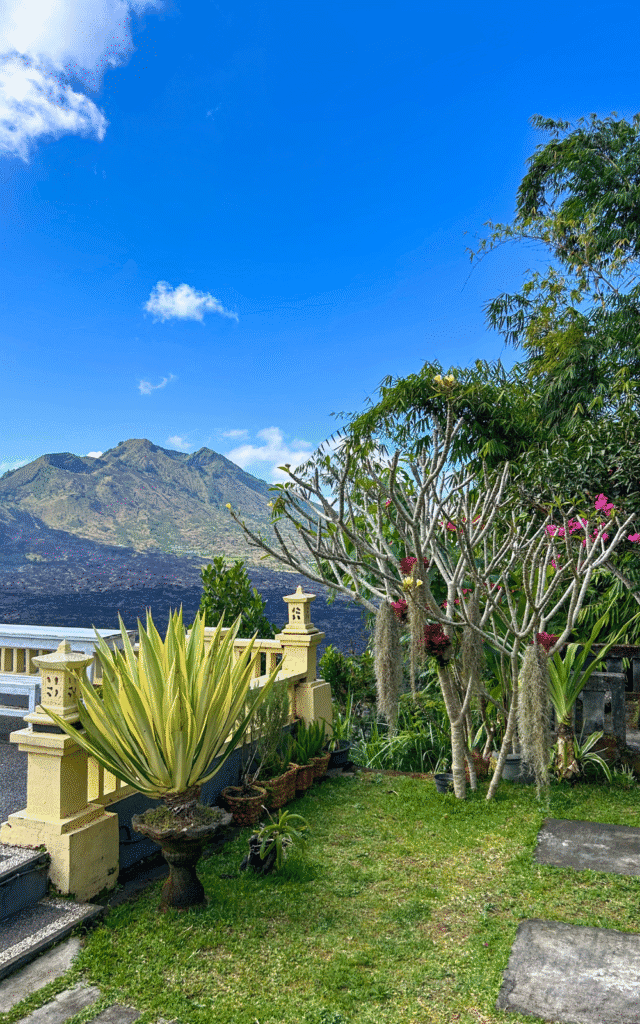
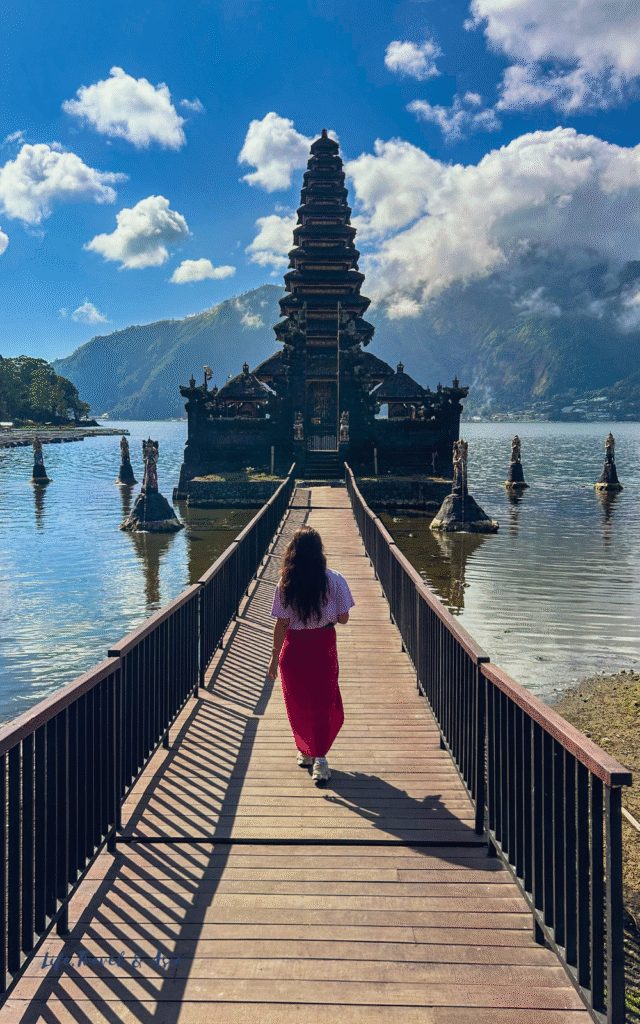
It’s the perfect area to rent a scooter and explore freely, stumbling upon small family-run warungs and traditional villages.
Ancient temples like Pura Ulun Danu Segara sit right on the edge of the lake, with Mount Agung rising in the background, and the view from Jalan Penelokan, the main road overlooking the caldera, is simply unforgettable.
Sidemen
Sidemen is located just a little over one hour from Ubud, or about 1.5 hours from Amed, making it a perfect day trip considering how much there is to see and do in and around the area.
A day trip here may include stops at waterfalls in the surrounding area, such as Gembleng Waterfall, Tukad Cepung Waterfall, or Goa Raja Waterfall.
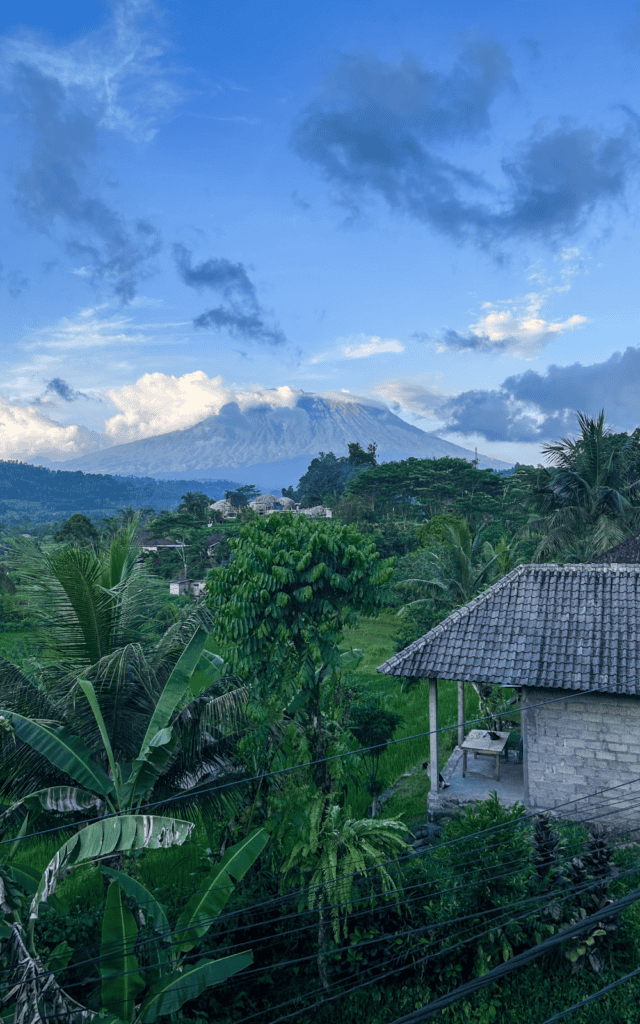
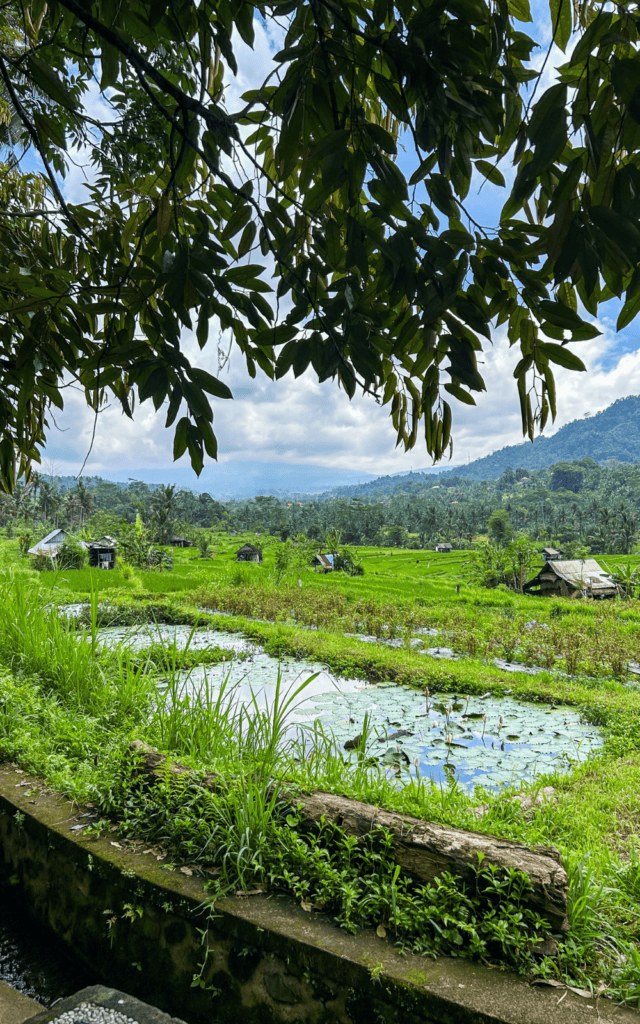
A visit to the Sidemen rice fields is also a must. I feel like every rice field in Bali has its own character, and those in East Bali are vast, not touristy at all, and completely wrap around the Sidemen Valley.
Other interesting stops in the area include visiting Bali’s most sacred temple, Pura Besakih, or, if you’re coming from Amed, heading to the Lahangan Sweet viewpoint overlooking Mount Agung.
Nusa Lembongan
Heading to Nusa Lembongan for a day trip is such an underrated idea, but honestly, if you want to relax, slow down, and enjoy beach days without the crowds, Nusa Lembongan is just the best. And let’s be honest, the island vibe here is unmatched.
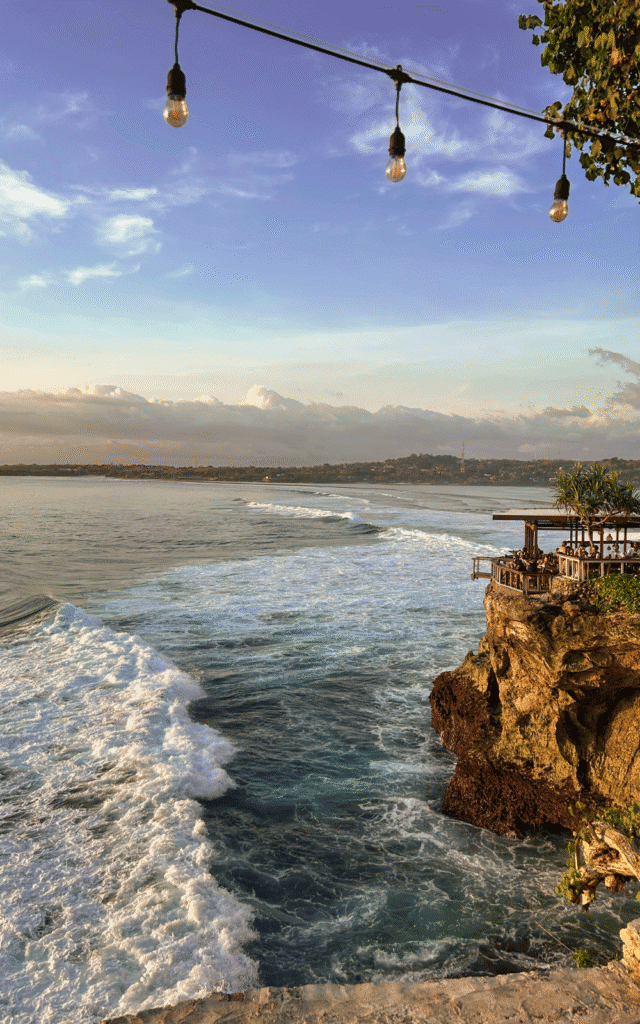

All you need to do is take a 30-minute ferry from Sanur, and of course, take it back. In rare cases, bad weather can mean you end up staying an extra night, but usually you’ll be back the same day without any issues.
A typical day trip to Nusa Lembongan may include renting your own scooter and exploring freely, crossing over to Nusa Ceningan via the Yellow Bridge, beach hopping, visiting a beach club, and even fitting in some snorkeling or diving.
Nusa Penida
Last but not least, I do believe Nusa Penida deserves a visit if it’s your first time in Bali. I’ll be honest, it’s not the easiest day trip to plan.
Nusa Penida is often (and by often, I mean almost always) crowded, especially on the west side of the island, which is where most day trippers tend to go.
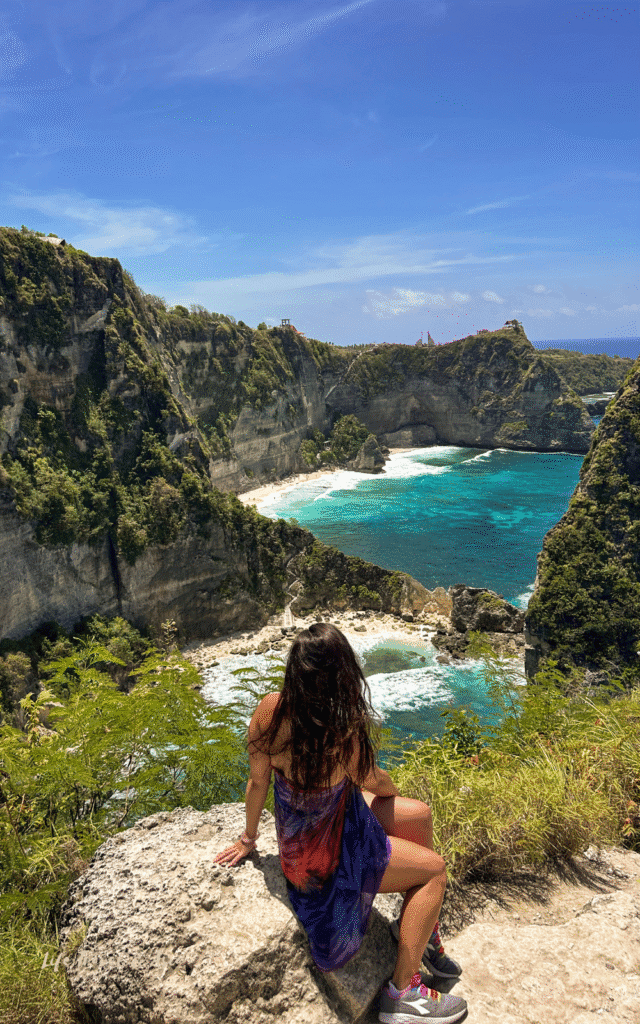
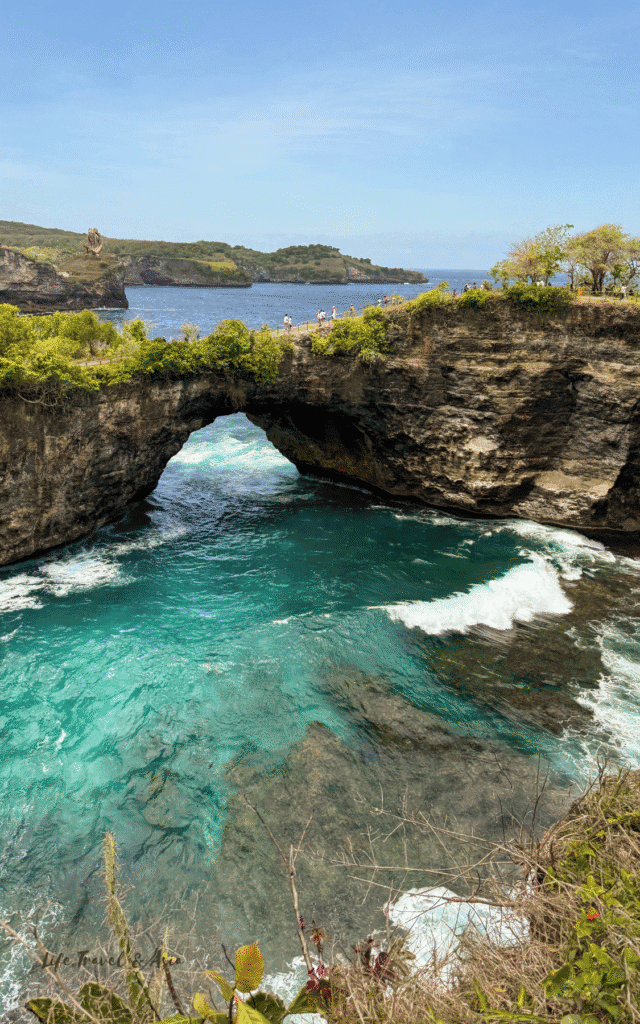
If you have more than one day, I’d actually suggest staying overnight. But if that’s not an option, a typical day trip usually includes spots like Kelingking Beach, Broken Beach, Angel’s Billabong, and Crystal Bay, unless you decide to head to the eastern, more remote side of the island.
There, you’ll get to see Diamond Beach, Atuh Beach, and some of the most insane viewpoints on the island.
In this Nusa Penida day trip guide, I share the pros and cons of each side of the island and what to expect if you really want to include it in your itinerary.
15-Day Bali Itinerary Inspiration
After six months of living in Bali, and my very first 10-day trip (during which I honestly wish I had skipped two days in Seminyak), here’s a short itinerary inspiration on how I would actually spend two weeks in Bali.
- UBUD (Day 1-4): There’s so much to do in Ubud that even four days don’t feel like enough: ancient temples, secluded waterfalls, spiritual rituals like the Melukat purification ceremony, playful monkeys wandering through the forest, endless rice terraces, and so much more. Here’s a short Ubud itinerary to help you get started.
- CENTRAL BALI (Day 5): One night is actually enough if you leave early from Ubud, explore throughout the day, and then spend the night in Bedugul or somewhere in Tabanan Regency. The landscapes shift completely here: cooler air, misty hills, temples rising from the water. Here’s a short itinerary for inspiration.
- EAST BALI (Day 6-9): With three days in East Bali, you can easily split your time between two very different places: the traditional village of Sidemen and the peacefulfishing town of Amed.
- GILI ISLANDS (Day 10-12): Considering you’re already in East Bali, this is the perfect transition to Padang Bai and the ferry to the Gili Islands. Just about two hours away, you’ll find the paradisiacal white sands of Gili Trawangan, Gili Air, and Gili Meno. Here’s a 3-day Gili Islands itinerary to inspire your trip.
- ULUWATU (Day 13-15): It might sound counterintuitive, but I’d actually suggest planning a few more beach days in Uluwatu before flying out. Alternatively, you could make things easier and stop in Canggu, which is closer to Denpasar Airport. Here’s how to plan a short stay in Uluwatu.
Other Travel & Safety Tips
Here are some final travel and safety tips to help you plan your trip to Bali:
- Food poisoning: There’s a lot of content online about how to avoid “Bali Belly.” However, I do believe one important factor is how resilient your gut is to completely different ingredients and water used in cooking. Ice is safe, filtered water is safe, and food is generally safe. Yet two people can eat the same things, and one might get food poisoning while the other doesn’t.
Some tips to reduce the risk: wash your hands as often as possible and carry hand sanitizer, avoid brushing your teeth with tap water, and eat at places that are busy. If you see locals and tourists eating there, it usually means the food is fresh, and turnover is good.
- Money: It’s smart to always carry some cash with you. Cards are generally accepted, but if you travel to less touristy areas or stop at a street food stall, you’ll need cash. Also, be aware that when paying by card, a 3% commission is sometimes added.
- ATMs: The safest ATMs in Bali are usually those owned by major banks, such as Bank Mandiri, Bank Central Asia (BCA), Bank Negara Indonesia (BNI), and Maybank. I personally used Maybank throughout my time in Bali: no commission and never had a single issue.
- Tipping: Tipping is not mandatory, but it’s very appreciated, and sometimes subtly encouraged. When it comes to restaurants, be aware that the price you see on the menu is rarely the final price you’ll pay. Service and government taxes are added on top.
- How to be respectful: Don’t leave your trash around (the island already has a waste disposal issue). Dress appropriately when visiting temples (wear a sarong), and avoid walking around shirtless or in a bikini.
- Scams to be aware of: A sarong is always included in the ticket price at temples (some ladies might try to convince you otherwise). You may meet kids who ask to practice their English, but it ends up being a way to try to sell you something. Make sure to agree on the price of a bike ride if you hop on one without booking through the apps (to avoid being overcharged).
Here you have it! This will likely be the longest post I’ll ever write on this blog, but hopefully, this Bali travel guide gives you all the helpful information you need to plan your trip.
If you still have any unanswered questions, feel free to drop them in the comments, and I’ll make sure to reply. I hope you enjoy your time in Bali.