STOTT Pilates Teacher Training: Everything You Need to Know (From Someone Who Just Did It)
Last Updated on October 6, 2026
Are you thinking about getting certified with STOTT PILATES but feeling confused (if not completely overwhelmed) by all the information online?
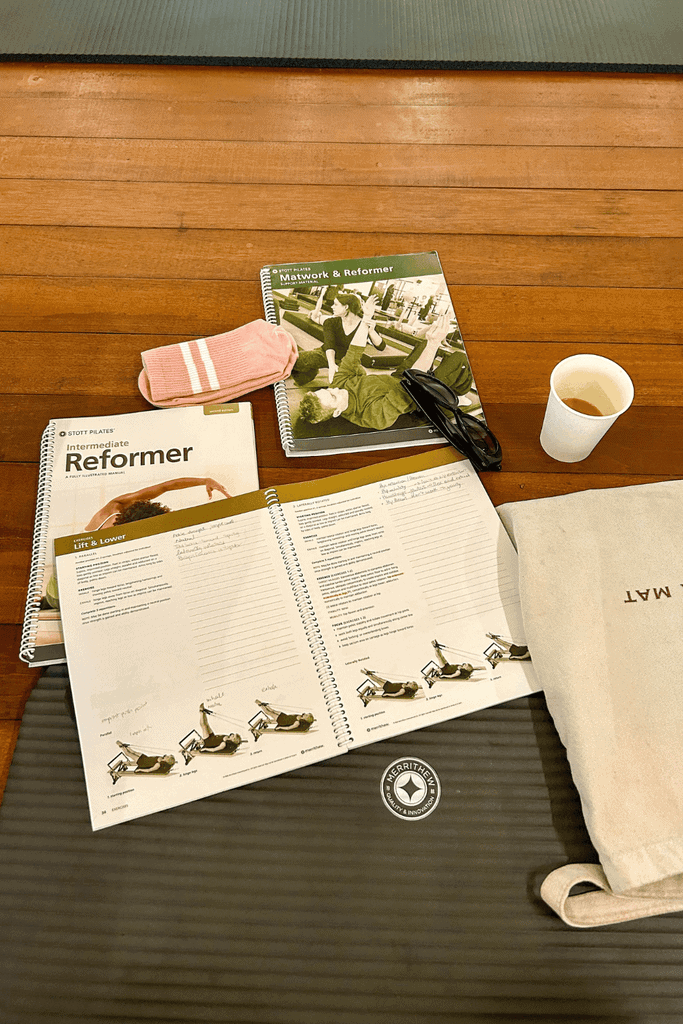
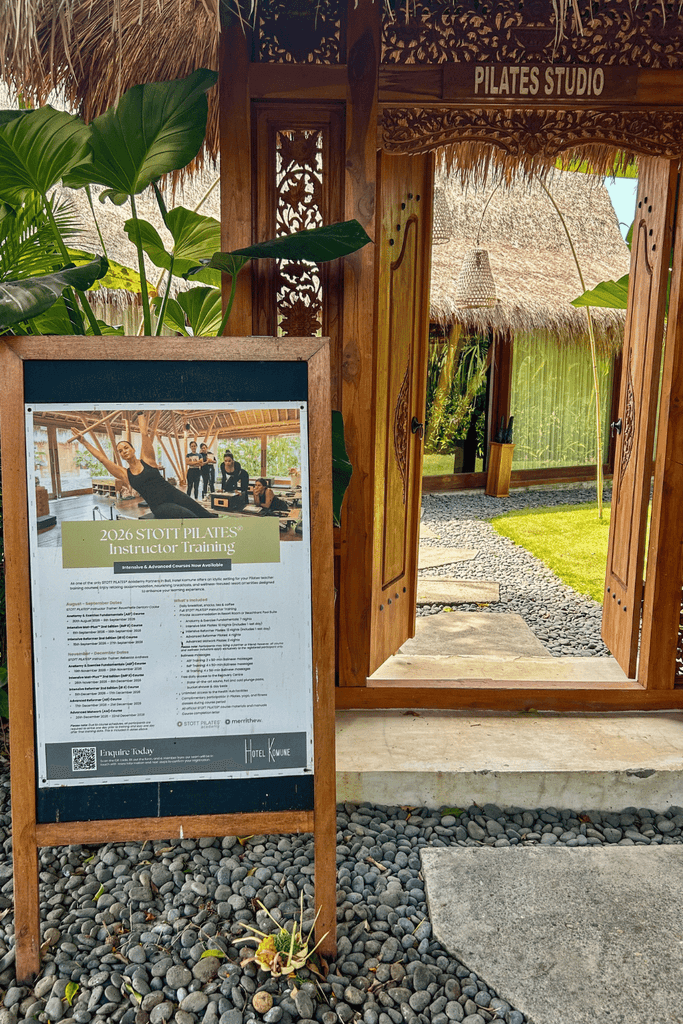
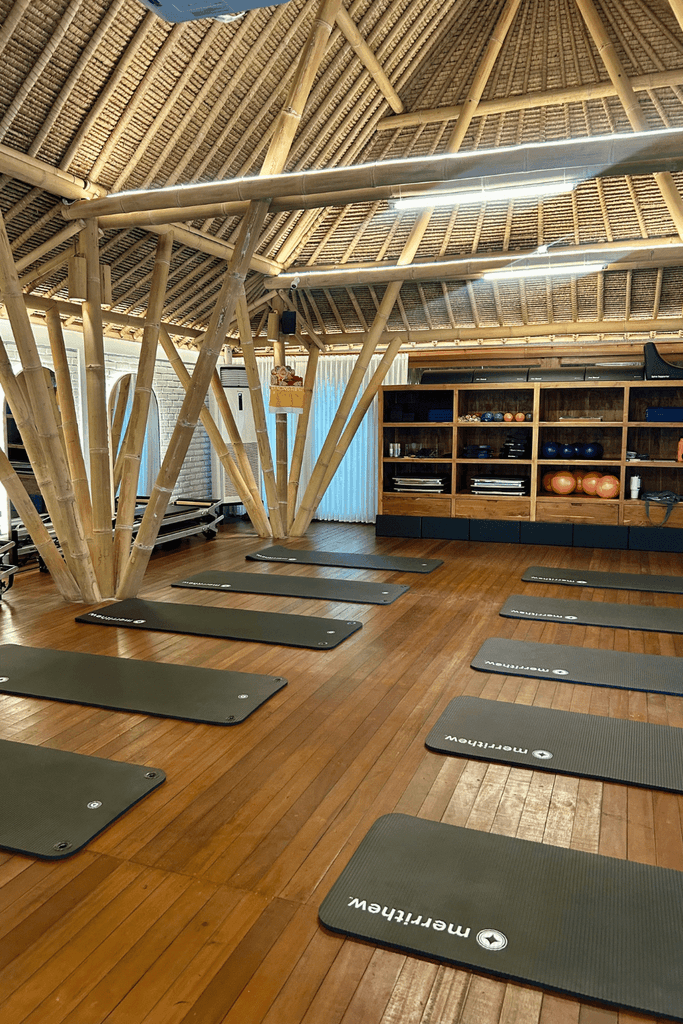
I just wrapped up my one-month intensive instructor training at Hotel Komune in Bali, and I’ve heard firsthand the confusion and questions shared by my classmates.
I’d love to break down everything I learned over the past month. From how the training itself actually works to the exam structure, costs, passing scores, and what the entire certification journey really looks like.
So, if you’re trying to gather all the facts before making an informed decision, keep reading!
Quick Summary
| Aspect | Quick Facts |
|---|---|
| Prerequisites | At least 30 hours of Pilates practice and a Functional Anatomy Course (or official degree) |
| Duration | Intensive courses (Matwork, Reformer & Cadillac, Chair & Barrel) are delivered in 2-3 weeks. The Comprehensive Program includes a 3-month period of courses + apprenticeship |
| Post-training requirements | Hours of practice teaching, observation, and physical review. |
| Exam window after training | 6 months after the last STOTT Pilates training |
| Passing score | 80% total (minimum of 75% in both written and practical exam) |
| Minimum requirement to get certified | Functional anatomy + Intensive Mat or Reformer Course |
| Price | The price of one single course depends on the location, the package, and what’s included: Functional Anatomy: $950 USD Intensive Matwork: $2,000 USD Intensive Reformer: $3,000 USD |
| My tips for a successful STOTT Pilates teacher training | 1. Take your time to study anatomy properly 2. Practice the classical Pilates repertoire 3. Once given access to the STOTT Material, read it beforehand |
| Where to start | Find the course you want to enroll in here. Contact the host center to learn about prices, additional courses, and inclusions. |
Is a STOTT PILATES teacher training worth it?
To answer this question, I need to look at it from a few different angles.
Having the STOTT PILATES trademark on your CV is definitely worth it. It’s one of the world’s most respected Pilates academies.
Thanks to its science-backed, highly detailed approach, studios worldwide actively look for STOTT-trained instructors. In an industry where quick weekend certifications are popping up everywhere, a STOTT PILATES credential is a true seal of quality for studio owners.
That said, I strongly believe the Instructor Trainer (IT) delivering your course matters as much as the brand itself. Every trainer has their own style and priorities.
Depending on their background, one IT might spend more time on postural analysis and biomechanical principles, while another might prioritize practice teaching over exercise demonstrations.
If I could give you one piece of advice, it would be to do your research on the Instructor Trainer leading the course.
Look closely at their years of experience within Merrithew/STOTT PILATES. An experienced IT brings brand knowledge, exam tips, teaching insights, and real-world advice that can completely transform your learning experience.
As a new instructor, I feel my training gave me a solid foundation, deep knowledge, and the confidence to start teaching right after the course, and to me, that makes it 100% worth it.
STOTT PILATES Intensive vs. Comprehensive Program: What’s the difference?
When I researched courses for myself, I felt completely overwhelmed by all the confusing information online (especially when trying to figure out which track to commit to without any prior teaching experience).
The Intensive Track
STOTT PILATES Intensive courses require a shorter time commitment in class. While they were originally designed for certified movement professionals, today they are open to everyone. They are fast-paced: a massive amount of information and repertoire is covered in a short time, which can feel intense at times. This is the track I chose!
The Intensive program includes (every course has a separate fee):
- Functional Anatomy / Anatomy Prerequisites (mandatory if you don’t hold a recognized anatomy credential)
- Intensive Matwork (IMP)
- Intensive Reformer (IR)
- Intensive Cadillac, Chair & Barrels (ICCB)
The Comprehensive Track
In contrast, the Comprehensive program (hosted at the Merrithew Headquarters in Toronto) is longer and more slow-paced.
It includes 12 to 15 weeks of classroom learning followed by an apprenticeship period. Students on this track can choose between the Comprehensive Matwork & Reformer program or the Comprehensive Cadillac, Chair & Barrels program.
STOTT PILATES Anatomy, Intensive Matwork, and Intensive Reformer: How do they connect?
My one-month training at Hotel Komune in Bali included a 6-day Anatomy course, an 8-day Matwork course, and a 10-day Reformer course.
Across all three modules, the core STOTT PILATES Biomechanical Principles were consistently explained and applied through movement.
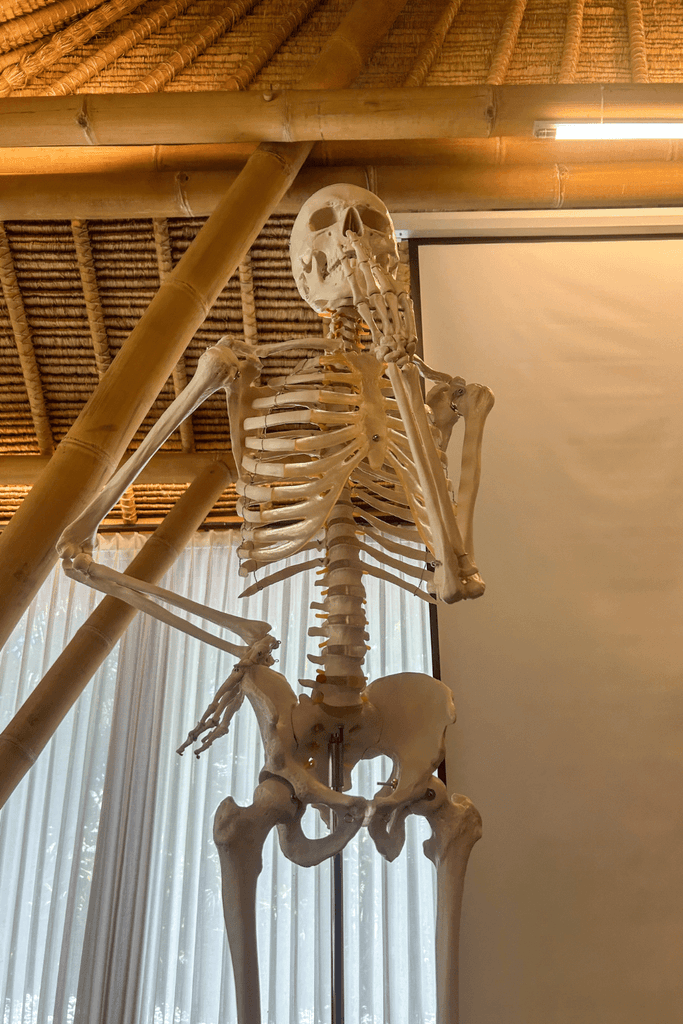
- Anatomy & Fundamentals: This foundational module covers the essential theory required to understand human movement: levers, bones, muscles, planes of motion, and joint mechanics. Depending on your Instructor Trainer, this course can be very interactive, incorporating group exercises, short quizzes, and open discussions to retain the concepts.
- Intensive Matwork (IMP): Over the course of 8 days, you dive deep into the Essential and Intermediate Matwork repertoire. The amount of hands-on practice teaching varies depending on your IT (and in my opinion, the more practice teaching, the better!). A full Postural Analysis session is also part of the course. Our IT dedicated an entire day to postural analysis, whereas many trainers cover it in just one hour (which is exactly why choosing the right IT makes such a huge difference!)
- Intensive Reformer (IR): Over 10 days, you cover the complete Essential and Intermediate Reformer repertoire through instructor demonstrations, exercise breakdowns, and practice teaching sessions. Just like in the Matwork module, another dedicated Postural Analysis session is included to help you learn how to program reformer workouts based on different body postures.
How to Prepare For Your STOTT PILATES Teacher Training
1. Learn and Understand Anatomy
If you’ve never studied human anatomy before, expecting to master it all in 6 days is unrealistic.
It took me a full year of study to truly grasp the concepts, muscle actions, and critical thinking required to understand movement patterns.
You might be excited to jump into your training as soon as possible, but taking an extra 6 to 12 months to build a solid anatomy foundation will completely transform your learning experience. And if you don’t do it beforehand, you’ll still have to do it afterward!
2. Study the Classical Pilates Repertoire
STOTT PILATES is a contemporary method, but it is deeply rooted in classical Pilates. Both the Matwork and Reformer repertoires build directly upon classical movement patterns.
Familiarizing yourself with the classical exercises before day one will boost your confidence, make practice teaching easier, and allow you to focus on absorbing the biomechanical details during class instead of learning the choreography from scratch.
3. Work on your Personal Practice, Flexibility, and Endurance
The training is physically demanding if you aren’t prepared.
While an instructor should never be judged solely on their ability to perform every advanced exercise, ITs naturally respect students who practice what they preach.
During my training, I saw participants who had never taken a real Pilates class, had never performed a Rollover, or struggled with a basic chest lift. While everyone starts somewhere, coming unprepared won’t help you stand out to your Instructor Trainer (who could very well be someone who hires you in the future!)
4. Review your Training Materials Early
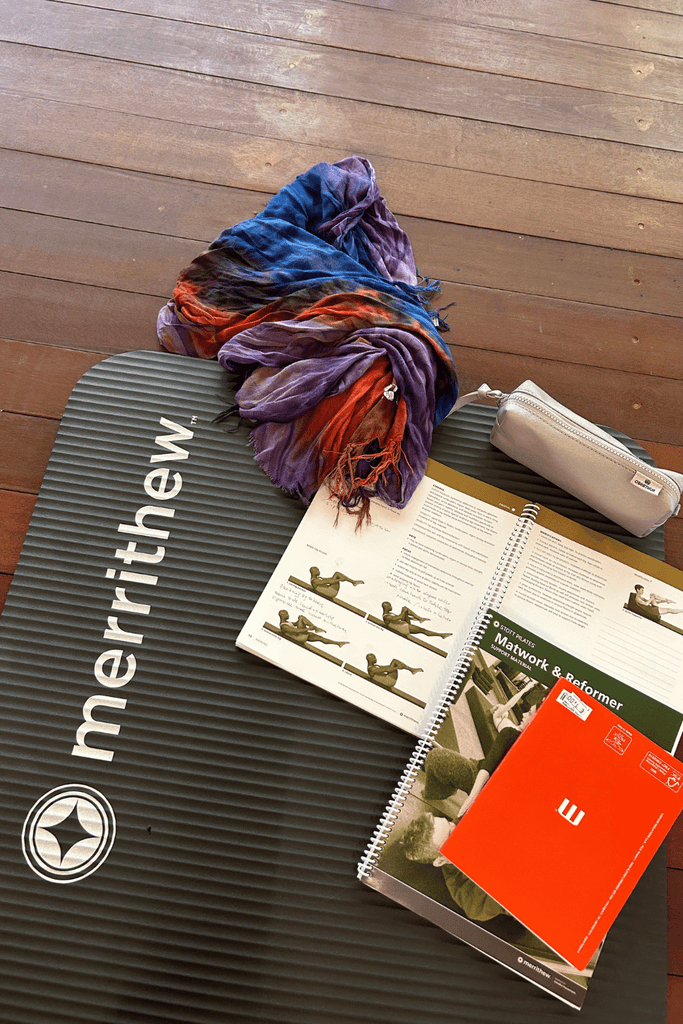
Once you receive access to your manuals and the Merrithew Connect streaming platform, start studying immediately. Read through the 5 Biomechanical Principles and watch the exercise videos beforehand. Going in with a basic understanding will make digesting the massive amount of new information so much easier.
STOTT PILATES Instructor Training: What’s the Price and What’s Included?
The overall price of your training depends on how many modules you enroll in and where you choose to take them. For example, host locations in Asia or Latin America often have lower prices than studios in Western Europe or North America.
What’s Included (and What Might Be Extra)
- Merrithew Connect: Once enrolled, you typically get digital access to course packages on Merrithew Connect, the streaming platform hosting exercise videos, course repertoires, and extra study tools.
- Printed Manuals: Policies vary by Training Center. In my training, all physical course manuals were included in the total package price, but that isn’t always the case. Some centers charge separately for course materials, so always double-check what’s included before signing up to avoid unexpected costs!
Estimated Cost Breakdown: While exact rates fluctuate by location, currency, and host center, here is a general cost breakdown:
- Functional Anatomy: $950 USD
- Intensive Matwork (IMP / Level 1): $2,000 USD
- Intensive Reformer (IR / Level 1 – Essential & Intermediate): $3,000 USD
Do You Have to Take Everything Together?
No, you aren’t required to complete all modules at once. You can choose to take only Matwork or only Reformer. However, keep in mind that the Anatomy requirement applies to all tracks unless you hold a recognized degree or qualifying certification.
What is the Minimum Requirement to get certified with STOTT PILATES?
The minimum requirement to become a certified STOTT PILATES instructor is to complete Functional Anatomy (or hold an approved equivalent) plus one primary module, either Intensive Matwork (IMP) or Intensive Reformer (IR), and then pass the exam.
Both Matwork Level 1 and Reformer Level 1 cover the Essential and Intermediate repertoires. This repertoire is the foundation of what is typically taught in standard group classes and private studio sessions worldwide.
How to Log Your STOTT PILATES Hours (Observation, Practice Teaching & Physical Review)
After completing your classroom course, you are required to log a specific number of hours for Observation, Practice Teaching, and Physical Review before you can take the certification exam.
The exact number of hours varies depending on whether you’re doing Matwork, Reformer, or a comprehensive track.
This post-course phase is often the most confusing part for trainees (and unfortunately, the reason many delay or never finish their certification).
The good news? Logging your hours is much simpler than it seems once you understand how it works!
Observation Hours
- What it means: Watching certified STOTT PILATES instructors in action to observe client cues, class sequencing, and posture modifications.
- How to log them: Ideally, you would observe live classes at a licensed STOTT PILATES studio. However, if there isn’t a training center near you, you can complete your observation hours digitally by watching official videos on Merrithew Connect or other online platforms.
Practice Teaching Hours
- What it means: Teaching practice where you rehearse verbal cues, corrections, exercise ordering, and pacing.
- How to log them: You do NOT need to be fully certified to start practice teaching! You can teach family members, friends, or even run virtual sessions over Zoom for friends living abroad.
- What about Reformer? Practicing Reformer teaching can be trickier if you don’t have immediate access to equipment. Your main options are: Joining a local studio as a student-teacher or renting studio equipment off-peak, practicing at the host center where you took your course, investing in your own home Reformer.
Physical Review Hours
- What it means: Personal practice time dedicated to learning the exercise repertoire in your own body (focusing on breath patterns, movement choreography, alignment, and modifications).
- How to log them: Matwork review is easy to do anywhere at home. For Reformer review, you’ll need to rent studio time, practice during off-hours at a studio where you work, or practice on a home machine.
Do You Need Someone to Sign Off on Your Logbook?
Here is something that surprises almost every trainee: no one actually signs off on your practice teaching, observation, or physical review hours!
However, don’t let this tempt you into skipping them. Every single hour spent observing, teaching, and reviewing builds the muscle memory and confidence you will desperately need on exam day. You aren’t filling out your logbook just to check a box; you’re doing it for yourself!
How to Pass the STOTT PILATES Exam: Timeline, Structure, and Scoring
One of the biggest fears for students after finishing their classroom hours is the certification exam. Understanding the timeline, format, and scoring system takes away a lot of the mystery and helps you plan your study schedule more effectively.
When Do I Have to Pass My Exam?
Your exam never takes place immediately after your classroom training ends. You have 6 months from the final day of your last course to take and pass your exam.
Here is what you need to know about managing your exam timeline:
- Need more time? If the 6-month deadline is approaching and you don’t feel fully prepared, you can request a 6-month extension. To qualify, you must book a paid 1-to-2-hour Private Review/Reinstatement Session with an Instructor Trainer (IT) to evaluate your progress.
- Taking additional courses? If you enroll in another qualifying course within those 6 months (for example, taking Reformer right after Matwork), your 6-month period automatically resets from the end date of your newest course.
Where Can You Take Your STOTT PILATES Exam?
Ideally, it’s best to take your exam with the Instructor Trainer (IT) who delivered your course (that way, you already know their teaching style and what to expect). However, when it comes to location, your options are much more flexible than you might think:
- At a Licensed Training Center or Host Facility near you: You don’t have to return to the exact same studio where you trained. You can contact any nearby STOTT PILATES host center to find out when their resident IT (or a visiting IT) is available, and book your exam session directly with them.
- Proctored written exam & online practical exam: Distance testing is a great option if you live far from a training center. You can complete the written exam online via a proctored link and conduct the practical exam virtually over a live video stream. You can find all the technical setup guidelines directly on the Merrithew website.
- During an IT Visit / Traveling Examiner Event: Licensed Training Centers frequently host designated “Exam Days,” where an official Merrithew Examiner travels to the studio specifically to evaluate a cohort of students over 1–2 days.
In any case, your host center or IT will provide all the specific details and guidelines once you reach out to register. Don’t be afraid to email different centers to find an exam date and format that best fits your schedule and budget!
How are the Exams Structured?
Every Level 1 exam consists of two main components: a Written Exam and a Practical Exam. Depending on the track you choose, you can take:
- Matwork Exam
- Reformer Exam
- Combined Matwork & Reformer Exam
- Comprehensive / Full Certification Exam (Matwork, Reformer, Cadillac, Chair, & Barrels)
Every STOTT Pilates exam is cumulative
Because the academy emphasizes intelligent programming, every higher-level exam evaluates your knowledge of previous repertoires.
For example, if you take a combined Matwork & Reformer exam now and later complete your Cadillac, Chair, & Barrels (CCB) training in a few years, your Matwork and Reformer knowledge will still be tested during your CCB practical exam to see how you integrate all apparatuses into a client workout. Same thing if you take your Mat exam now, and the Reformer one in one year.
What is the Exam Structure and Passing Grade?
- Combined Score: You must achieve an overall average score of 80% or higher across the entire exam.
- Minimum Threshold: You must score at least 75% on each individual section (75% minimum on the written portion AND 75% minimum on the practical portion).
What Happens if I Fail One Part of the Exam?
If you pass one section but fail the other (for instance, scoring 85% on the practical exam but 70% on the written portion), you do not have to retake the entire exam.
You are allowed to retake only the section you failed within a designated timeframe (usually within 6 months of the exam date), paying a reduced fee for that specific exam.
That’s it for today’s post on my STOTT PILATES teacher training! Hopefully, this guide cleared up your doubts and gave you the confidence to dive into your training and complete it successfully.
Spending that month at Hotel Komune in Bali was truly the experience of a lifetime: an exceptional Instructor Trainer, incredible tropical and relaxing vibes, and the best classmates I could have asked for. If I had to do it all over again, I wouldn’t hesitate for a second.
If you have any other questions about STOTT PILATES or doing your training abroad, leave a comment below or send me a DM on Instagram @aribrnc. I’d love to connect!